☀️ Back-to-school ready: Get more with an annual plan - save 25% before the term rush hits. Use code BACK2SCHL25. Ends July 31. Subscribe now →

Let’s eat out!

Title separator

Vocabulary
Lab

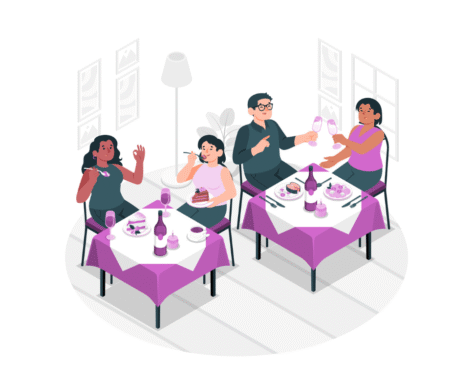
ESL lesson on eating out

LESSON OVERVIEW

The main objectives of this ESL lesson on eating out are to:

  • talk about going out to eat;
  • examine menus and work on useful vocabulary for eating out;
  • listen to restaurant dialogues and role-play dining situations.

Students discuss eating-out experiences, review vocabulary for food places (e.g. food truck, fine dining restaurant, cafeteria) and talk about places to eat on different occasions. They explore restaurant menus, revise menu-related terms (e.g. refill, side dishes, beverages) and share their preferences. Students work with dialogues between customers and waiters, practise dining vocabulary (e.g. takeaway, nut-free, mocktails) and listen to conversations in varied food places. They also role-play eating-out scenarios.

B1 / Intermediate45 min
60 min
Vocabulary LabUnlimited Plan

This is a Vocabulary Lab worksheet. With it, students are introduced to a set of vocabulary on a specific topic and practise it through controlled activities, speaking tasks and games. Learn more about it here.

WARM-UP AND VOCABULARY

This ESL lesson on eating out starts with a warm-up. Students discuss questions about eating out and their favourite restaurants. They then look at photos of food places (e.g. food court, steak house, buffet) and complete their names. Afterwards, students read descriptions (e.g. You can eat good grilled meat there) and say which food place each one is about. Moving on, they examine different situations (e.g. a birthday celebration, a family gathering, a date) and choose one place from the previous task they would go to and one they wouldn’t. Students explain. Following that, they look at a menu and match the words from the menu (e.g. starters, main courses, shareables) with their definitions. After that, students discuss questions about eating habits and choosing food at restaurants. Next, they complete restaurant lines between customers and waiters with words from the previous task. They choose who says each line.

LISTENING AND ROLE-PLAY

In this part of this ESL lesson on eating out, students complete dialogues between customers and waiters with words related to food and drinks (e.g. condiments, mocktails, nut-free). They then do tasks involving naming foods and drinks. Students complete menu phrases, give examples of dishes and places to eat and talk about popular shareables. After that, they listen to a recording of four dialogues. For each dialogue, students decide where the people might be or what type of food place they are talking about. Next, they listen to each dialogue again and try to remember as many details as possible. Then, students role-play it with a partner using as many target words and phrases from the lesson as they can. Finally, they work in pairs and receive cards with eating-out situations. Students role-play dialogues using the menus provided in the lesson.

HOMEWORK/REVISION

This ESL lesson on eating out also includes an additional task that you can use as homework or revision. In the task, students complete texts about eating out experiences with the target words and phrases from the lesson. They then decide what type of restaurant each person would enjoy. The task is available in the teacher’s version of the worksheet. You can print it and hand it out to your students. It’s also included in the e-lesson plan.

WORKSHEETS

Comments

Title separator

Leave a Reply

  1. Владислав

    On page 22, point A says “customer.” Wouldn’t “waiter” be a better option?

    1. Olia

      You’re right, thanks for spotting that! We’ve made the changes 🙂

  2. Claire_g29

    I may be mistaken, but buffet-style restaurants are usually called “self-service” or “self-serve”. Self-serving means selfish (or at least where I’m from). 🙂

    1. Olia

      Hi! Thank you for spotting it, we’ve changed it to ‘self-service’ 🙂

Browse other materials recommended for you

Title separator
ESL lesson on performing arts
B1 / Intermediate
Standard Lesson 60 min

Let’s go to an arts festival

General

Talk about live entertainment with this ESL lesson on performing arts! Students practise useful vocabulary, watch a video about an arts festival and work on pronunciation. They also work in pairs to design their own festival.

ESL lesson on public speaking
B1 / Intermediate | B2 / Upper Intermediate
Standard Lesson 60 min

Public speaking

Business General

Talk about experiences and strategies with this ESL lesson on public speaking! Students practise useful collocations, watch a video about sharing ideas and prepare a two-minute talk. They also exchange peer feedback.

ESL lesson about siblings
B1 / Intermediate
Standard Lesson 60 min

Siblings and success

General

Discuss family dynamics with this ESL lesson about siblings! Students read an article about success and birth order, talk about the family’s impact on achievement and review useful vocabulary.

dental health vocabulary
B1 / Intermediate | B2 / Upper Intermediate
Standard Lesson 60 min

At the dentist’s

General

Help your students master dental health vocabulary! In this lesson, they discuss experiences, watch a video on why some people dislike dental visits and listen to conversations at the dentist’s. They also role-play dental appointments.

patterns and materials vocabulary
B1 / Intermediate | B2 / Upper Intermediate
Vocabulary Lab 45 min / 60 min

I like your checked scarf! (patterns and materials)

General

Discuss clothing with this lesson! Students describe outfits, practise patterns and materials vocabulary and suggest outfits for specific scenarios. They also talk about their preferences and experiences.

B1 / Intermediate
Critical Reading Club 45 min

Is it worth keeping?

General

In this lesson, students read and talk about collectibles! They practise phrases for discussing valuable items, debate collecting objects and write a time capsule note about personal valuable items.

airport vocabulary
A2 / Pre‐Intermediate | B1 / Intermediate
Vocabulary Lab 45 min / 60 min

At the airport

General

Practise useful airport vocabulary! In this lesson, students share their experiences, listen to common phrases used at the airport and collaborate to develop a creative story with the target vocabulary.

ESL lesson on humanities
A2 / Pre‐Intermediate | B1 / Intermediate
Standard Lesson 60 min

Are you into humanities?

General

Talk about human-centred subjects with this ESL lesson on humanities! Students practise key verbs for the discussion, watch a video explaining what the humanities are and debate different scenarios.

clothes vocabulary
B1 / Intermediate
Vocabulary Lab 45 min / 60 min

In the wardrobe

General Lifestyle

Practise clothes vocabulary with this lesson! Students discuss clothing for various situations, listen to a recording with outfit descriptions and work in pairs, playing a guessing game.

Show more lessons

Questions

Title separator

Is there a minimum subscription period if I choose a monthly subscription?

No, there's no minimum required number of subscription months. You can cancel any time you want. Basically, you can sign up and then cancel your subscription the next day, which will mean you have access for 1 month and won't be charged again.

What currencies can I pay in for my subscription?

Our default currency is USD (American dollar), but you can also pay in EUR (euro), GBP (British pound sterling) or PLN (Polish zloty). You can change the currency you want to pay in at the Pricing page before selecting a subscription plan.

How can I edit an e-lesson plan?

You can get your own editable copy of an e-lesson plan and make changes to it. To do so, either (1) make a copy of it on your Google Drive (preferable method) or (2) download it in a Powerpoint format (but formatting might be a bit off so we can’t guarantee that it will work well).
Read more FAQ
Title separator

ESL Brains

Forgot password?
or continue with
Title separator
Title separator