Prices rise in 5 days. Subscribe now to keep today’s price for as long as you stay with us. Subscribe →

In the kitchen

Title separator

Vocabulary
Lab

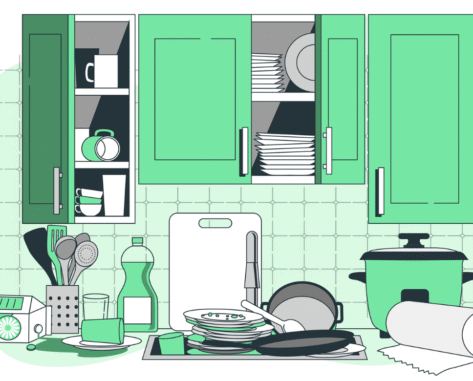
vocabulary for kitchen objects

LESSON OVERVIEW

The main objectives of this vocabulary worksheet are to:

  • practise vocabulary for kitchen objects;
  • play a guessing game related to kitchen items;
  • discuss different scenarios related to kitchen items.

Students learn vocabulary for common kitchen items (e.g. fridge, plate, sink) and discuss when and how to use them. They explore several situations involving kitchen objects and share their experiences and preferences. Students also play a game where they guess kitchen tools and explain why they use different items in various contexts.

A2 / Pre‐Intermediate45 min
60 min
Vocabulary LabUnlimited Plan

This is a Vocabulary Lab worksheet. With it, students are introduced to a set of vocabulary on a specific topic and practise it through controlled activities, speaking tasks and games. Learn more about it here.

WARM-UP AND VOCABULARY FOR KITCHEN OBJECTS

This worksheet starts with a warm-up. Students discuss daily kitchen habits and wishes. They then read sentences about using common kitchen items and use vocabulary for kitchen objects (e.g. microwave, kettle, knife) to name items in some pictures. After that, students complete sentences about more kitchen items with words in pictures (e.g. oven, sink, stove). Moving on, they look at pictures and complete letters to create names of more kitchen items (e.g. dishwasher, coffee maker, toaster) in sentences. Afterwards, students look at the pictures from the previous tasks again and answer questions about kitchen tools, their functions and safety. 

GAME AND DISCUSSION

In this part of the worksheet, students play a game and revise vocabulary for kitchen objects. Student A chooses a word from the previous exercises and says words that come to mind. Student B guesses the kitchen item. Then, students swap places and continue for more rounds. After that, they look at words (e.g. knife, microwave, spoon, plate) and say which one is different from the others. Students explain their choice. There are no incorrect answers. Next, they look at pairs of kitchen items (e.g. oven OR dishwasher) and imagine they can only have one thing in each one. Students choose which one they would like to have and explain. Finally, they say which things they need (e.g. spoon, freezer, toaster) in different situations (e.g. You are making breakfast.) and explain why.

HOMEWORK/REVISION

This worksheet also includes an additional task that you can use as homework or revision. In the task, students complete a crossword about kitchen items. They then create the word using five letters from the crossword. The task is available in the teacher’s version of the worksheet. You can print it and hand it out to your students. It’s also included in the e-lesson plan.

WORKSHEETS

Comments

Title separator

Leave a Reply

  1. Picholas

    This looks an interesting lesson but I don’t want to subscribe to the Unlimited plan.

  2. CantonesePete

    Great lesson, highly recommend. Also great for kids.

    1. Ewa

      Thanks!

Browse other materials recommended for you

Title separator
adjectives to describe personality
A1 / Elementary | A2 / Pre‐Intermediate
Vocabulary Lab 45 min / 60 min

He’s kind, she’s funny (personality adjectives)

General

Teach adjectives to describe personality! Students describe people they know, listen to tips for making friends at a party and play a speaking game with photos.

speaking games for English class
A2 / Pre‐Intermediate
Games & Activities 60 min

Games to get you talking

General

Try these speaking games for English class! Students describe photos, debate pros and cons, build sentences from word pairs and complete tasks decided by a roll of the dice.

talk about Halloween
A2 / Pre‐Intermediate
Standard Lesson 60 min

This is Halloween

General

Talk about Halloween! Students review key vocabulary, watch a clip from a TV show and compare Halloween traditions in their country with celebrations from around the world.

there is/there are
A1 / Elementary | A2 / Pre‐Intermediate
Standard Lesson 60 min

Is there a grey house?

General Grammar

Practise there is/there are. Students learn colour vocabulary, watch a video about the ‘colour hunt’ trend and play speaking games to describe what’s in different places and photos.

units of measurement and container vocabulary
A2 / Pre‐Intermediate
Vocabulary Lab 45 min / 60 min

A litre of milk and a packet of pasta

General

Practise units of measurement and container vocabulary! Students work through a shopping dialogue, a pronunciation task and plan a full shopping list for a dinner with friends.

sharing opinions
A1 / Elementary | A2 / Pre‐Intermediate
Standard Lesson 60 min

What do you think? (sharing opinions)

General

Practise sharing opinions! Students review adjectives for likes and dislikes, listen to a recording of two friends planning their evening and learn phrases for agreeing and disagreeing. 

reading worksheet about boredom
A2 / Pre‐Intermediate | B1 / Intermediate
Reading Corner 60 min

Benefits of boredom

General

Get students reflecting on monotonous moments with this reading worksheet about boredom! They read parts of an article about boredom in childhood, share experiences and review useful words for the discussion.

ESL lesson on sports
A1 / Elementary | A2 / Pre‐Intermediate
Vocabulary Lab 45 min / 60 min

Who’s your favourite athlete?

General

Help students talk about athletes with this ESL lesson on sports! They share experiences and thoughts, practise sports-related vocabulary and play two guessing games, using the target language.

ESL lesson on parties
A1 / Elementary | A2 / Pre‐Intermediate
Vocabulary Lab 45 min / 60 min

Party time

General Lifestyle

Get students to discuss various celebrations with this ESL lesson on parties! They practise vocabulary for social events, work on the pronunciation of /ɛ/ and /ɜː/ sounds and share their opinions and experiences.

Show more lessons

Questions

Title separator

Is there a minimum subscription period if I choose a monthly subscription?

No, there's no minimum required number of subscription months. You can cancel any time you want. Basically, you can sign up and then cancel your subscription the next day, which will mean you have access for 1 month and won't be charged again.

What currencies can I pay in for my subscription?

Our default currency is USD (American dollar), but you can also pay in EUR (euro), GBP (British pound sterling) or PLN (Polish zloty). You can change the currency you want to pay in at the Pricing page before selecting a subscription plan.

How can I edit an e-lesson plan?

You can get your own editable copy of an e-lesson plan and make changes to it. To do so, either (1) make a copy of it on your Google Drive (preferable method) or (2) download it in a Powerpoint format (but formatting might be a bit off so we can’t guarantee that it will work well).
Read more FAQ
ESL Brains Assistant
What are you looking for today?
Tell me your students' level and interests and I'll point you to relevant lessons.

Your chat history will be cleared.

Close
Title separator

ESL Brains

Forgot password?
or continue with
Title separator
Title separator
Close