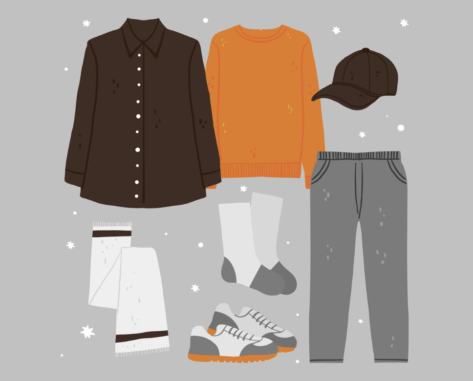
Less is more: minimalist wardrobe

Title separator

Speaking
Class

speaking lesson on clothes

This is a standalone lesson but it can also be used as part of the set titled:

LESSON OVERVIEW

The main objectives of this speaking lesson on clothes are to:

  • watch a video about a minimalist (‘capsule’) wardrobe and discuss the concept;
  • share clothing preferences and talk about personal style;
  • do a role-play in which students have to help each other pack.

In this speaking lesson on clothes, students learn about a ‘capsule’ (minimalist) wardrobe. They watch a video about it, discuss reasons and rules for maintaining one, and share opinions. Students discuss their personal style, including preferences and favourite items. They look at situations and clothing options and say what they’d wear. Students also do a role-play task in which they help each other pack clothes for a trip!

B1 / Intermediate45 min
60 min
Speaking ClassUnlimited Plan

This is a Speaking Class worksheet. It includes a variety of tasks that let your students practise their speaking skills. This lesson format does not focus on grammar or vocabulary. Learn more about it here.

WARM-UP AND ROLE-PLAY

This speaking lesson on clothes starts with a warm-up. Students think of their favourite or most-worn piece of clothing. They have to describe it, say where they got it, and explain why they like it. Next, students look at situations (e.g. a party, a first date). From different options, they choose and explain which item of clothing they’d wear (e.g. a leather jacket/a hoodie/a yellow raincoat/a denim jacket). After that, students read sentences about personal style (e.g. I don’t like graphics on t-shirts because they go out of style quickly). They say if any are true for them and add some details. After that, students do a role-play. On cards, students read about a trip that their partner is taking (e.g. weather, length of trip, luggage size). They ask questions about the trip and advise each other on what clothing items to pack.

VIDEO AND DISCUSSION

At this point in the speaking lesson on clothes, students watch a video about a minimalist wardrobe. Before watching, they say what they think it might be. Then, they watch the video and check their ideas. After that, students look at adjectives in boxes (e.g. brilliant, impractical, complicated). Using them, they comment on the rules for a minimalist wardrobe (e.g. using neutral tones, investing in high-quality pieces). Next, they read reasons for a minimalist wardrobe and rate them from 1 (most convincing) to 5 (least convincing) for you. There is also an extra task idea suggested in the Teacher’s Note. You can ask students to imagine that they are starting a minimalist wardrobe and give them questions to discuss (e.g. What research do you do? How do you decide what new clothes to buy?)

WORKSHEETS

Comments

Title separator

Leave a Reply

  1. AlexF

    I watched about 30 seconds of this guy and decided not to bother with the lesson. Should I have persevered?

    1. Владислав

      the lesson is all right, the video isn’t my favorite though.

  2. KayMysk

    The video is tedious and unclear in various places. Please change it as it is going to put off and disinterest students 😅

  3. Shannon Powell

    This lesson is more of a 30 minute lesson if the student is on level or below level. I have done this twice and ran out of material at under 40 minutes when I needed a 60 minute lesson. Student needs to speak in complete sentences rather than give short answers. There is little negotiation room for conversation, so be prepared with extra questions.

Browse other materials recommended for you

Title separator
convenience culture
B1 / Intermediate | B2 / Upper Intermediate
Speaking Class 45 min / 60 min

The convenience culture

Lifestyle Technology

Discuss convenience culture with this lesson. Students watch a video about a device that combines shopping and food ordering, explore the Convenience Paradox and review vocabulary for talking about self-service and automation.

reading lesson about smartphones
B1 / Intermediate
Reading Corner 60 min

The right age to get a smartphone

Lifestyle Technology

Try this reading lesson about smartphones! Students review vocabulary related to responsibility and online behaviour, read an article about the right age for a first phone and evaluate rules parents might set.

talk about smartphone habits
A2 / Pre‐Intermediate | B1 / Intermediate
Speaking Class 45 min / 60 min

Are we tired of smartphones?

Lifestyle Technology

Talk about smartphone habits with this lesson! Students watch a video about swapping a smartphone for a dumb phone, compare the two and review useful vocabulary about technology and devices.

practise conditional sentences
B1 / Intermediate
Standard Lesson 60 min

Are you paying attention? (Zero, First and Second Conditionals)

Grammar Lifestyle

Help students practise conditional sentences. Students explore the Zero, First and Second Conditional, watch a video about brain exercises for focus and discuss real-life techniques for staying concentrated.

talking about extreme sports
B1 / Intermediate | B2 / Upper Intermediate
Speaking Class 45 min / 60 min

Pushing the limits

Lifestyle

Engage students in talking about extreme sports! They discuss high-risk activities, watch a video about a Mount Everest climber and share their opinions. Students can also do an extra vocabulary task to review useful language.

ESL lesson on overtourism
B1 / Intermediate
Standard Lesson 60 min

Are tourists still welcome?

Global Issues Lifestyle

Get students discussing famous sights with this ESL lesson on overtourism! They debate mass tourism, practise useful phrases and watch a video about annoying tourist behaviour. Students also imagine planning a budget to fight overtourism. 

ESL lesson on third places
B1 / Intermediate
Speaking Class 45 min / 60 min

Shared spaces

Lifestyle

Discuss social spaces with this ESL lesson on third places! Students read about examples of online and offline community groups, watch a video excerpt on shared places and create social spaces for specific profiles.

discussing good and bad designs
B1 / Intermediate
Standard Lesson 60 min

Good and bad designs

Lifestyle Technology

Engage students in discussing good and bad designs with this lesson! They practise useful collocations, watch a video about a hybrid object and create their own multi-functional product.

either, neither and both
B1 / Intermediate | B2 / Upper Intermediate
Standard Lesson 60 min

Choices we make every day (either, neither, both)

Grammar Lifestyle

Practise either, neither and both structures! In this lesson, students discuss the impact of everyday decisions, watch a video on dual perspectives of a single day and read an online debate on improving routines.

Show more lessons

Questions

Title separator

Is there a minimum subscription period if I choose a monthly subscription?

No, there's no minimum required number of subscription months. You can cancel any time you want. Basically, you can sign up and then cancel your subscription the next day, which will mean you have access for 1 month and won't be charged again.

What currencies can I pay in for my subscription?

Our default currency is USD (American dollar), but you can also pay in EUR (euro), GBP (British pound sterling) or PLN (Polish zloty). You can change the currency you want to pay in at the Pricing page before selecting a subscription plan.

How can I edit an e-lesson plan?

You can get your own editable copy of an e-lesson plan and make changes to it. To do so, either (1) make a copy of it on your Google Drive (preferable method) or (2) download it in a Powerpoint format (but formatting might be a bit off so we can’t guarantee that it will work well).
Read more FAQ
Close
Title separator

ESL Brains

Forgot password?
or continue with
Title separator
Title separator