
 |
| LESSON OVERVIEW
The main objectives of this ESL lesson on superstitions are to:
- practise vocabulary for discussing superstitions;
- watch a video on origins of common superstitions;
- practise phrases to express certainty or doubt.
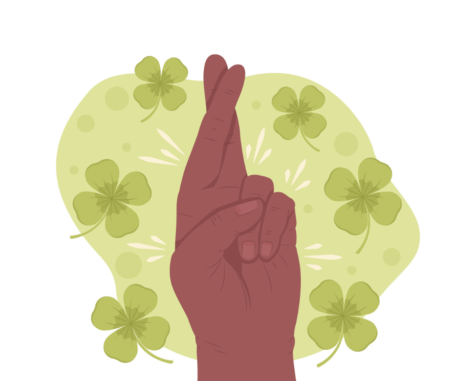
With this lesson, students discover common superstitions (e.g. keeping your fingers crossed, breaking a mirror, etc.), learn useful vocabulary (e.g. coincidence, bring good luck, spooky, etc.) and watch a video about superstitions. They discuss beliefs and talk about their experiences with superstitions. Students also practise phrases to express certainty or doubt (e.g. There’s a good chance that…, I doubt that…, etc.) and react to situations related to luck, superstitions, and the unexplained.
B2 / Upper Intermediate60 minFlipped LessonUnlimited Plan
This is a Flipped Classroom lesson plan. In a nutshell, it means that the first part of the lesson needs to be done by students at home. Learn more about flipped classroom and how we implement it in these lesson plans in our post.
PRE-CLASS ACTIVITIES
In the pre-class part of this ESL lesson on superstitions, students choose the correct word to complete statements (e.g. knock on wood, walk under a ladder, hang a horseshoe above the door, etc.). After that, they read statements about beliefs and actions associated with good and bad luck and match them with the superstitions in the previous task. Then, students read the statements again and find words and phrases related to luck and the supernatural that match the definitions (e.g. bad omen, bring good fortune, lucky charm, etc.).
IN-CLASS ACTIVITIES
In the in-class part of this ESL lesson on superstitions, students look at pictures (a mirror, an umbrella, a broom and a four-leaf clover) and describe or guess the superstitions related to them. They use as many words and phrases related to luck (e.g. bad omen, spooky, coincidence, etc.) as they can. Afterwards, students look at superstitions (e.g. a black cat crossing your path, breaking a mirror, etc.) and discuss questions about beliefs and experiences. Following that, they watch a video about common superstitions. Before they do, students look at numbers people in some countries consider unlucky and match them with the stories explaining their origins. Then, they watch part of the video and verify their answers. Next, students read sentences about the origins and cultural impact of superstitions and guess one missing word for each gap. Then, they watch the video again and check their answers.
At this point in this ESL lesson on superstitions, students choose the options that make sentences about unlucky numbers true for them (e.g. Numbers like 13, 14 or 17 are/aren’t considered unlucky in my culture.). Following that, students continue superstitions by choosing the correct endings. Then, they say if they agree with statements about those beliefs and explain their answers. Afterwards, students choose a topic from a list (e.g. a strange coincidence that happened to me, a superstition I used to believe in, etc.) and create one sentence about it. Their partner reacts to their statement using phrases to express certainty or doubt (e.g. I doubt that…, I’m convinced that…, I’m sceptical about…, etc.). Students take turns discussing each topic. Finally, they read paranormal or inexplicable situations and discuss questions about beliefs and experiences.
HOMEWORK/REVISION
This lesson plan also includes an additional task that you can use as homework or revision. In the task, students react to sentences using words to express certainty or doubt. They also add more details. The task is available in the teacher’s version of the worksheet. You can print it and hand it out to your students. It’s also included in the e-lesson plan.
WORKSHEETS
Subscribe to unlock these and many other Standalone lesson lesson plans with the Unlimited plan
Subscribe








This one worked very well. People have just enough familiarity with most of it to be able to tap into, which gives them a schema for the new learning. Excellent. Thank you!
Thanks for your feedback! We’re happy you and your students liked it!
Exciting lesson! I’m sure my students will love it! Thank you 🙂
Thank you! Please let us know if your students found the topic engaging 🙂
Yes, they found it! They gave absolutely positive feedback. I tried to correct a small mistake—well, it’s not really a mistake, actually. On slide 17, the order of the answers was mixed up. First, we could see definition 6, and then definition 5. I tried editing it, but I’m not very familiar with Google Slides.
We’re glad to hear it worked well! 🙂 Thank you for pointing that out. We’ve corrected it.
This has gone down a treat, thanks! More of the similar!
Thank you, James! 🙂