☀️ Back-to-school ready: Get more with an annual plan - save 25% before the term rush hits. Use code BACK2SCHL25. Ends July 31. Subscribe now →

They did it for money (passive voice)

Title separator

Grammar - passive voice

lesson about passive voice

This is a standalone lesson but it can also be used as part of the set titled:

LESSON OVERVIEW

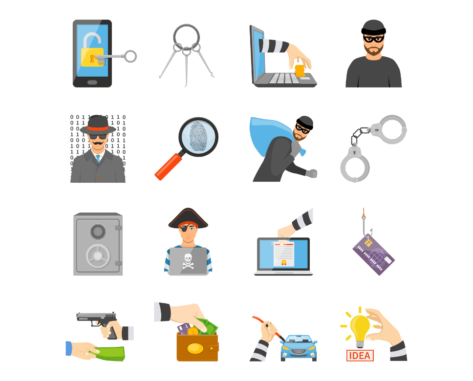
In this lesson about passive voice, students practise using passive voice in the past, present and future, as well as with modal verbs. They also watch a video about a crime and discuss different types of crime people commit for money. 

B1 / Intermediate
B2 / Upper Intermediate
60 minStandard LessonUnlimited Plan

WARM-UP & VIDEO

This lesson about passive voice starts with a short speaking task. Students read three crime headlines and think of two possible details for the story. Then, they do a matching activity. They have to match sentence halves which include vocabulary from the video (e.g. be sentenced to, withdraw money, hack, recover). They also answer some questions about the vocabulary (e.g. What can criminals be sentenced to?). Before watching the video, students look at seven statements and try to put them in the order they occurred. Then, they watch the video and check their answers.They also discuss some questions about the crime from the video and brainstorm possible punishments for it. 

PASSIVE VOICE & SPEAKING

This part of the lesson about passive voice starts with some guided discovery tasks. Students look at four passive voice sentences and do four tasks. First, they decide who does the action in each statement. Then, they need to rewrite the statements into active voice. They also decide which three grammatical elements a passive voice sentence must contain. Finally, they complete a mind map with the correct forms of the verb ‘to be’ in different tenses. After that, students read two texts about crimes and choose correct verb forms. Then, they discuss questions under each of the texts. Next, students look at two pictures and try to guess what the terms catfishing and social engineering mean. They also need to complete gaps in two short texts about catfishing and social engineering with correct forms of verbs in brackets. Finally, students discuss some questions about the crimes. After this lesson about passive voice, the teacher can choose to show students two TV show trailers about catfishing and ask them to predict some details of the stories. The teacher can also ask students to find more cases of catfishing and social engineering online as homework.

WORKSHEETS


Comments

Title separator

Leave a Reply

  1. amironova

    One of the best Lesson Plans ever! Brilliant!

    1. Ewa

      Thank you 🙂

  2. ESLcorpo

    Hello, there’s a problem with the link to the video. Is there anywhere else I could see the video?

    1. Stan

      What seems to be the problem? It works fine for us. Maybe it’s not available in your country?

      1. Languagedude

        Hi I love this lesson too but my students in Australia can’t view the video. Is it available somewhere else?

        1. Languagedude

          Yes – it’s not available there

        2. Stan

          It’s available in other countries (for sure in European countries and in both Americas). Sorry, it doesn’t work in Australia. It sometimes happens like that but we don’t have any chance to check the licensing for all the countries out there.

        3. caverissimo

          Hey! The video is from CBS and I was able to retrieve it here: https://www.cbsnews.com/news/turkish-hacker-convicted-of-intricate-atm-robberies-netting-55-milion/#:~:text=Turkish%20hacker%20convicted%20of%20intricate%20ATM%20robberies%20netting%20%2455%20million,-By%20Josh%20Elliott&text=NEW%20YORK%20%2D%2D%20Ercan%20Findikoglu,of%20cash%20on%20his%20chest.

          1. Ewa

            Thanks!

  3. caverissimo

    The video also doesn’t work in Canada, just fyi.

  4. VilmaKC

    Hi! The video in no longer available for viewing in Europe!

    1. Ewa

      Hi! You can also watch the video here.

  5. Valeriia Soina

    Hello! There’s a problem with the link to the video.

    1. Ewa

      Hi! Are you able to see it here?

  6. Steven James Parker

    Hi! It seems there is a problem with a student pdf

    1. Ewa

      Hi! Could you email us at [email protected] and specify what the problem is?

      1. Steven James Parker

        It looks like is working now. The other day there was a database error. All fixed! Thank you very much for your hard work 🙂

  7. Dyane Espinosa

    Great lesson! Loved the selection of videos.

    1. Ewa

      Thanks! Glad you liked it 🙂

Browse other materials recommended for you

Title separator
homophones and homographs
B2 / Upper Intermediate | C1 / Advanced
Standard Lesson 60 min

Dad jokes (homophones and homographs)

General

Let students tell jokes while practising homophones and homographs! They talk about humour, watch part of a video featuring dad jokes and analyse how wordplay makes things funny.

ESL lesson on conditionals
B2 / Upper Intermediate
Standard Lesson 60 min

Safety on the road (conditionals)

Grammar Technology

Get students discussing traffic regulations with this ESL lesson on conditionals. They practise the four conditionals, watch a video excerpt on a 1983 seat belt law and share their perspectives on road safety.

ESL lesson on performing arts
B1 / Intermediate
Standard Lesson 60 min

Let’s go to an arts festival

General

Talk about live entertainment with this ESL lesson on performing arts! Students practise useful vocabulary, watch a video about an arts festival and work on pronunciation. They also work in pairs to design their own festival.

ESL lesson on public speaking
B1 / Intermediate | B2 / Upper Intermediate
Standard Lesson 60 min

Public speaking

Business General

Talk about experiences and strategies with this ESL lesson on public speaking! Students practise useful collocations, watch a video about sharing ideas and prepare a two-minute talk. They also exchange peer feedback.

ESL lesson about siblings
B1 / Intermediate
Standard Lesson 60 min

Siblings and success

General

Discuss family dynamics with this ESL lesson about siblings! Students read an article about success and birth order, talk about the family’s impact on achievement and review useful vocabulary.

football vocabulary
B2 / Upper Intermediate
Vocabulary Lab 45 min / 60 min

On the football pitch

General

Help students talk about football with this lesson! They discuss the sport from various perspectives, practise key football vocabulary and watch a video of match highlights. They also explore football commentary.

ESL lesson on difficult conversations
B2 / Upper Intermediate | C1 / Advanced
Standard Lesson 60 min

That’s a tough question

General

Practise phrases for navigating uncomfortable topics with this ESL lesson on difficult conversations! Students share thoughts, watch an athlete handle questions at the Olympics and role-play asking and answering tough questions.

dental health vocabulary
B1 / Intermediate | B2 / Upper Intermediate
Standard Lesson 60 min

At the dentist’s

General

Help your students master dental health vocabulary! In this lesson, they discuss experiences, watch a video on why some people dislike dental visits and listen to conversations at the dentist’s. They also role-play dental appointments.

ESL lesson on communication styles
B2 / Upper Intermediate
Standard Lesson 60 min

Direct or indirect? (communication styles)

Business General Lifestyle

Discuss conversational directness across cultures! In this ESL lesson on communication styles, students practise useful adjectives, watch a video excerpt about why the Dutch are direct and work in pairs.

Show more lessons

Questions

Title separator

Is there a minimum subscription period if I choose a monthly subscription?

No, there's no minimum required number of subscription months. You can cancel any time you want. Basically, you can sign up and then cancel your subscription the next day, which will mean you have access for 1 month and won't be charged again.

What currencies can I pay in for my subscription?

Our default currency is USD (American dollar), but you can also pay in EUR (euro), GBP (British pound sterling) or PLN (Polish zloty). You can change the currency you want to pay in at the Pricing page before selecting a subscription plan.

How can I edit an e-lesson plan?

You can get your own editable copy of an e-lesson plan and make changes to it. To do so, either (1) make a copy of it on your Google Drive (preferable method) or (2) download it in a Powerpoint format (but formatting might be a bit off so we can’t guarantee that it will work well).
Read more FAQ
Title separator

ESL Brains

Forgot password?
or continue with
Title separator
Title separator