
LESSON OVERVIEW

The main objectives of this speaking lesson on true crime are to:

  • discuss the true crime genre from a critical perspective;
  • read and talk about the advantages and disadvantages of true crime;
  • watch a video about how forensic linguistics helped investigators catch a criminal.

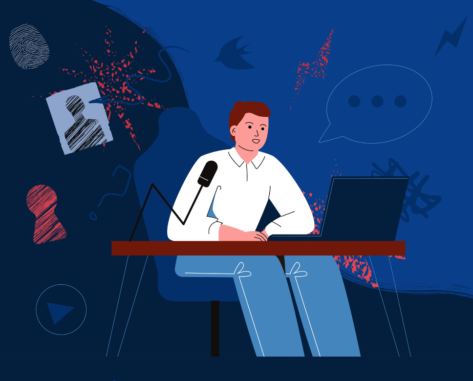
In this speaking lesson, students explore headlines, analyse types of true crime media and share their thoughts. They say to what extent they agree with opinions on the topic, read about the real-world impact of the true crime genre and discuss the ethical dilemmas surrounding true crime entertainment and tourism. Students talk about which scenarios are more likely to make a case go viral, debate how language might help investigators catch criminals and watch a video about a famous criminal case.

C1 / Advanced
C2 / Proficiency
45 min
60 min
Speaking ClassUnlimited Plan

This is a Speaking Class worksheet. It includes a variety of tasks that let your students practise their speaking skills. This lesson format does not focus on grammar or vocabulary. Learn more about it here.

WARM-UP AND DISCUSSION

This speaking lesson on true crime starts with a warm-up. Students read headlines, choose the story that could most easily be turned into a true crime documentary and explain their choice. Following that, they can do an extra vocabulary activity to review useful words (e.g. sensationalize, fabricate, vilify) for the discussion. In the task, students do a word-building activity (e.g. sensitive – desensitize). After that, they look at different types of true crime media (e.g. books, documentaries, podcasts) and their examples. Then, students do tasks where they analyse, discuss and evaluate the true crime genre. Moving on, they read various opinions about true crime and say to what extent they agree with them.

MORE DISCUSSION AND VIDEO

In this part of this speaking lesson on true crime, students read examples of the popularity and real-world impact of the true crime genre. They then discuss the ethical dilemmas, benefits and drawbacks of true crime entertainment and tourism. Afterwards, students look at pairs of scenarios (e.g. an unsolved mystery OR a criminal being caught and punished) and discuss which ones are more likely to make a true crime case go viral. They give reasons and examples. Next, students watch a video about a famous criminal case that was solved through linguistic analysis. First, they discuss how language might help investigators catch criminals. Then, students watch the video and discuss their reactions and the impact of the crime case on police investigations.

WORKSHEETS

Be the 1st to vote.

Comments

Title separator

Leave a Reply

Browse other materials recommended for you

Title separator
ESL lesson on nostalgia
C1 / Advanced | C2 / Proficiency
Standard Lesson 60 min

Feeling nostalgic

General Lifestyle

Talk about the pros and cons of feeling nostalgic! In this ESL lesson on nostalgia, students practise useful phrases, watch a video excerpt on the topic and share their opinions on modern trends and nostalgic influences.

discussing hobbies
B2 / Upper Intermediate | C1 / Advanced
Speaking Class 45 min / 60 min

It’s just a hobby

Lifestyle

Engage students in discussing hobbies! In this lesson, they practise key vocabulary for debating pastimes, watch a video about productivity-focused hobbies and talk about different hobby trends.

discussing social media
C1 / Advanced
Standard Lesson 60 min

How social media is changing

Lifestyle Technology

Engage in discussing social media with this advanced lesson! Students practise useful vocabulary, watch part of a video about changes in digital platforms and talk about the risks of social media.

talking about play
C1 / Advanced | C2 / Proficiency
Speaking Class 45 min / 60 min

Adding more play to your life

Lifestyle

Get students talking about play with this Speaking class! They reflect on ways to unwind, listen to a podcast excerpt on the benefits of play for adults and share their views. Students can also do an extra vocabulary task.

ESL lesson on Christmas consumerism
C1 / Advanced | C2 / Proficiency
Standard Lesson 60 min

Deinfluencing Christmas

Lifestyle

Talk about gift-giving with this ESL lesson on Christmas consumerism! Students practise useful phrases and watch part of a video about giving up giving presents at Christmas. They also share their experiences and opinions.

advanced lesson on tourism
C2 / Proficiency
Standard Lesson 60 min

The changing face of tourism

Lifestyle

Talk about travel trends with this advanced lesson on tourism! Students practise vocabulary for discussing tourism changes, watch a video about a modern travel trend and role-play scenarios involving tourism issues.

will and would for present and past habits
B2 / Upper Intermediate | C1 / Advanced
Standard Lesson 60 min

They just won’t stop playing!

Grammar Lifestyle

Talk about toys from a critical perspective in this lesson! Students review will and would for present and past habits, practise phrases for consumer behaviour and watch a video about the popular toy Labubu.

speaking lesson on pop culture
C1 / Advanced | C2 / Proficiency
Speaking Class 45 min / 60 min

The world of entertainment

Lifestyle

Discuss creative expression in this speaking lesson on pop culture! Students watch a video about a fan convention in Australia, read short texts about pop culture events and share their opinions and experiences.

C2 / Proficiency
Critical Reading Club 45 min

When questions go too far

Lifestyle

In this CRC lesson, students talk about sensitive topics and personal boundaries. They practise phrases for deflecting uncomfortable questions, review strategies and practise deflecting questions they are unwilling to answer.

Show more lessons

Questions

Title separator

Is there a minimum subscription period if I choose a monthly subscription?

No, there's no minimum required number of subscription months. You can cancel any time you want. Basically, you can sign up and then cancel your subscription the next day, which will mean you have access for 1 month and won't be charged again.

What currencies can I pay in for my subscription?

Our default currency is USD (American dollar), but you can also pay in EUR (euro), GBP (British pound sterling) or PLN (Polish zloty). You can change the currency you want to pay in at the Pricing page before selecting a subscription plan.

How can I edit an e-lesson plan?

You can get your own editable copy of an e-lesson plan and make changes to it. To do so, either (1) make a copy of it on your Google Drive (preferable method) or (2) download it in a Powerpoint format (but formatting might be a bit off so we can’t guarantee that it will work well).
Read more FAQ
Title separator

ESL Brains

Forgot password?
or continue with
Title separator
Title separator