
Cracking the case: exploring forensic science

Title separator

Vocabulary - collocations

ESL lesson on forensic science

LESSON OVERVIEW

The main objectives of this ESL lesson on forensic science are to:

  • have an in-depth discussion of a narrow-field topic,
  • practise collocations related to investigations and forensic science.

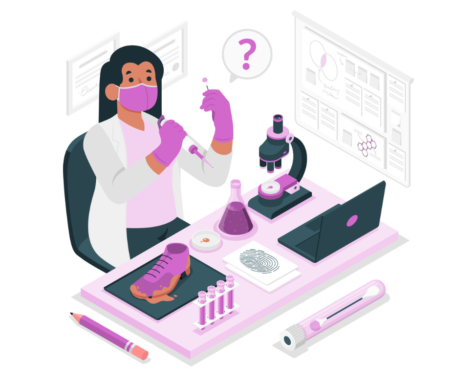
In this lesson, students have a chance to learn more about forensic science and talk about crime investigation on TV and in real life. They also learn and practise collocations with words like ‘evidence’, ‘samples’ and ‘conduct’. Students work with a video about the principles of forensic science and interesting examples and make predictions about forensic science.

C1 / Advanced60 minStandard LessonUnlimited Plan

WARM-UP & COLLOCATIONS

In this part of this ESL lesson on forensic science, students start with a warm-up task. First, they discuss some questions: they talk about content related to crime investigations and discuss solving different crimes. Then, students look at three stages of a forensic procedure (field, laboratory, medical) and think about what each of them might involve. After that, they read about these stages and discuss the new information. Students work with the texts more and find collocations (e.g. seal off a crime scene, lift fingerprints, preserve samples, conclusive evidence, etc.). This ESL lesson on forensic science also includes a discussion in which students need to use the collocations they find. In the discussion, students touch upon the challenges and limitations of forensic science and compare how this field is portrayed in films vs reality. 

VIDEO & DISCUSSION

In this part of the lesson, students work with the video. First, they watch the first part of the video and complete the main principle that forensic science is based on. After that, they look at a few statements about this field and decide which option best completes each statement. Then, students watch the second part of the video and check their ideas. Finally, students watch the third part of the video and tick the facts that are mentioned. To sum up this ESL lesson on forensic science, students do two speaking activities. First, they complete some statements with their ideas. Students also look at some points (AR/VR, pandemics, climate change, etc.) and decide how they might affect forensic science in the future.

HOMEWORK/REVISION

This ESL lesson on forensic science also includes an additional task that you can use as homework or revision. In the task, students revise the collocations. The task is available in the teacher’s version of the worksheet. You can print it and hand it out to your students. It’s also included in the e-lesson plan.

WORKSHEETS

Comments

Title separator

Leave a Reply

  1. TMPB1

    This is an excellent lesson and very interesting. However, the audio is exceptionally poor and made it very difficult for the students to hear and therefore understand.

    1. Justa

      We’re not sure what you mean when saying that ‘the audio is exceptionally poor’. There a few speakers and some background music, however, we’d say the quality of the video and audio is good. Generally, it is a difficult video to understand (in terms of the vocabulary or topic), so that’s why we believe it’s suitable for advanced students.

  2. anna Kaźmierczak

    A great lesson , so educational and interesting . My students loved it.

    1. Justa

      Thrilled to hear that! Thanks for taking the time to comment 🙂

  3. EnglishBusiness

    Blood spatter, the L has slipped in there. I mean, I am not sure why it’s just spatter because when someone is killed it is usually LOTS of blood. Anyway, great lesson and I too learned lots. Video was fine and my intermediate class understood it fine.

    1. Kinga

      Thanks for spotting that! 🙂 We’ve updated the lesson.

Browse other materials recommended for you

Title separator
talking about the hotel industry
C1 / Advanced
Standard Lesson 60 min

The changing hotel industry

Business General

Practise vocabulary for talking about the hotel industry! In this lesson, students discuss trends in hotel rooms, watch part of a video on US hotels and review useful collocations.

ESL lesson on nostalgia
C1 / Advanced | C2 / Proficiency
Standard Lesson 60 min

Feeling nostalgic

General Lifestyle

Talk about the pros and cons of feeling nostalgic! In this ESL lesson on nostalgia, students practise useful phrases, watch a video excerpt on the topic and share their opinions on modern trends and nostalgic influences.

discussing English grammar
C1 / Advanced | C2 / Proficiency
Standard Lesson 60 min

How important is grammar for you?

General Grammar

Get students discussing English grammar from a critical perspective! They practise verbs for debating language norms, talk about non-standard grammar and watch a video on grammar rules and natural speech.

ESL lesson on Gen Z slang
C1 / Advanced | C2 / Proficiency
Standard Lesson 60 min

Ate and left no crumbs (Gen Z slang)

General

Teach modern English words with this ESL lesson on Gen Z slang! Students discuss slang, share their perspectives and practise contemporary and useful expressions. They also watch a video of a senator using slang in parliament.

discussing offence
B2 / Upper Intermediate | C1 / Advanced
Standard Lesson 60 min

Did I cause offence?

General Global Issues

Engage students in discussing offence! They practise useful phrases, watch a video about overcoming offence and listen to a conversation involving a confrontation. Students also role-play managing offensive interactions.

speaking lesson on motherhood
B2 / Upper Intermediate | C1 / Advanced
Speaking Class 45 min / 60 min

Love, mum

General

Spark deep conversations with this speaking lesson on motherhood! Students analyse motherhood in culture, discuss Mother’s Day traditions and watch a video about funny texts from moms. They can also do an extra task to review vocabulary.

discussing micro-dramas
C1 / Advanced | C2 / Proficiency
Speaking Class 45 min / 60 min

Would you watch a micro-drama?

General Technology

Get students discussing micro-dramas! They debate the impact of vertical shorts, watch a video about the rise of micro-dramas and write a micro-drama script. Students can also review useful vocabulary with an extra task.

advanced lesson on films
C1 / Advanced
Standard Lesson 60 min

Are you sick of sequels?

General

Get your students talking about sequels and remakes with this advanced lesson on films! They practise key adjectives for film discussions, watch a video excerpt on sequels and remakes and share their opinions. 

talking about reality TV
B2 / Upper Intermediate | C1 / Advanced
Speaking Class 45 min / 60 min

The reality of reality TV

General

Get students talking about reality TV! They watch trailers, debate the impacts of reality television shows and create their own show ideas. Students can also do an extra vocabulary exercise to practise useful vocabulary.

Show more lessons

Questions

Title separator

Is there a minimum subscription period if I choose a monthly subscription?

No, there's no minimum required number of subscription months. You can cancel any time you want. Basically, you can sign up and then cancel your subscription the next day, which will mean you have access for 1 month and won't be charged again.

What currencies can I pay in for my subscription?

Our default currency is USD (American dollar), but you can also pay in EUR (euro), GBP (British pound sterling) or PLN (Polish zloty). You can change the currency you want to pay in at the Pricing page before selecting a subscription plan.

How can I edit an e-lesson plan?

You can get your own editable copy of an e-lesson plan and make changes to it. To do so, either (1) make a copy of it on your Google Drive (preferable method) or (2) download it in a Powerpoint format (but formatting might be a bit off so we can’t guarantee that it will work well).
Read more FAQ
Title separator

ESL Brains

Forgot password?
or continue with
Title separator
Title separator