
 |
| LESSON OVERVIEW
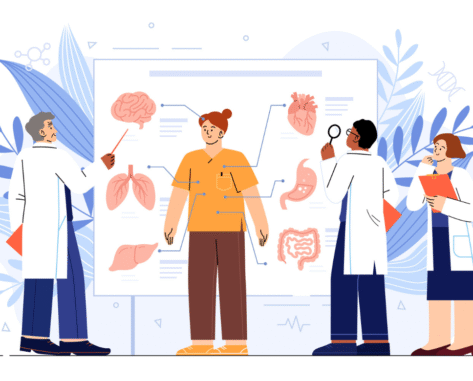
The main objectives of this ESL lesson on human organs are to:
- practise vocabulary about body structures and systems;
- discuss body parts, their functions and health;
- work on word stress and listen to an audio about the health effects of living in a city.
In this lesson, students review words related to body parts, organs and systems (e.g., bones, kidneys, nervous system). They discuss their functions, address health-related issues and practise word stress. Students also listen to a recording about health, talk about how to take care of different systems and share their views on how different lifestyles might affect the human body.
60 minVocabulary LabUnlimited Plan
This is a Vocabulary Lab worksheet. With it, students are introduced to a set of vocabulary on a specific topic and practise it through controlled activities, speaking tasks and games. Learn more about it here.
WARM-UP AND VOCABULARY
This ESL lesson on human organs starts with a warm-up. Students look at body parts (e.g. bones, brain, heart) and explain why humans need them. Afterwards, they match descriptions with organs and other body parts in pictures (e.g. kidneys, bladder, veins). Moving on, students look at questions about the human body and health (e.g. Why might a person have their tonsils removed?). They choose six questions and answer them. Following that, students review pairs of organs (e.g. veins and intestines) and say one thing they have in common. Next, they complete the gaps in statements about the functions of the human body systems (e.g. nervous system, digestive system, respiratory system).
DISCUSSION AND LISTENING PRACTICE
In this part of this ESL lesson on human organs, students look at words for parts and systems of the human body (e.g. respiratory, intestine, appendix) and mark the stressed syllable. Moving on, they match systems with organs and body parts. Students then add one more organ or body part for each system. Afterwards, they look at the systems from the previous task again and discuss the importance of body systems and how to take care of them. Following that, students listen to a recording about the health effects of living in a city. They say what the people in the audio talk about. Then, students listen to the recording again and note the words and phrases from the lesson they hear. Finally, they choose lifestyle features (e.g. smoking, little physical activity). Students say how the systems of the human body and particular organs might be affected by them.
HOMEWORK/REVISION
This ESL lesson on human organs also includes an additional task that you can use as homework or revision. In the task, students read clues and complete a crossword with body organs and systems. They then list five examples of body organs. The task is available in the teacher’s version of the worksheet. You can print it and hand it out to your students. It’s also included in the e-lesson plan.
WORKSHEETS
Subscribe to unlock these and many other Standalone lesson lesson plans with the Unlimited plan
Subscribe









The lesson looks great! I’m excited to give it a try. I think this Vocabulary lab lessons are an awesome idea. It’d be awesome, if you could cover B2 exam vocabulary little by little.
Anyway, thanks for doing a great job!
Thanks! We’re glad you like them 🙂
We will gradually be adding more and more Vocabulary Lab worksheets for all levels, including B2.
Wow! these vocabulary lessons are a great addition to an already excellent library of lesson plans.
I just used the human body lesson with one of my medical students who particularly enjoyed the pronunciation activities.
Well done ESL Brains!
Thanks for the feedback! I’m always thrilled to hear that students (and teachers) like our lessons 🙂