Finders keepers?

Title separator

Vocabulary - history

ESL lesson about history

LESSON OVERVIEW

In this ESL lesson about history, students watch a stand-up comedy piece, talk about history and learn useful vocabulary.

C1 / Advanced60 minStandard LessonPremium Plan

VOCABULARY & VIDEO

This ESL lesson about history starts with an optional warm-up activity in which students discuss some questions about history. Then, they need to match halves to create sentences. The sentences contain the target vocabulary for the lesson (e.g. cultural heritage, make amends, artefacts, loot). Then, students choose two of the statements and elaborate on them. Students should ask follow-up questions to what their partner says. Next, students complete a list of tasks which all include the target vocabulary (e.g. Name an event considered historic for your country.). Finally, students watch the video for the first time and explain what they think about it using some prompts. The prompts refer to the difficulty of the video and the humour in it. 

DISCUSSION & IDIOMS

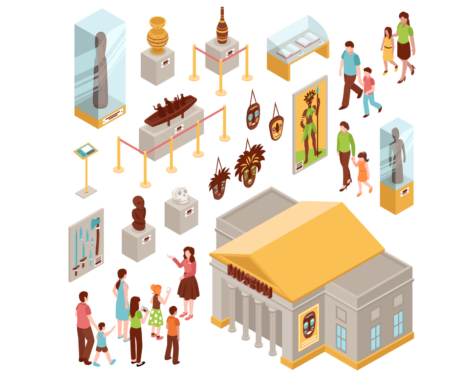
After the video, students read some information about the British Museum which the comedian talked about. The teacher can choose to show students some photos and more information available in the provided link. Students discuss several questions referring to some of the artefacts in the British Museum. Then, they watch the video for the second time and pay attention to four idioms the comedian uses (e.g. not have a leg to stand on, right a wrong). They need to explain what the idioms mean. After that, they practise using the idioms in a short activity. In the activity, they need to react to different situations. The teacher can also ask students to come up with more situations for the teacher to react using the idioms. In the last part of this ESL lesson about history, students look at two comments about history and decide what they would say in support or against them. They need to use some of the language from the lesson.

There is also a link in the teacher’s version of the worksheet to a short video which the teacher can use to supplement the lesson. The video contains some arguments not discussed in the lesson.

WORKSHEETS


Comments

Title separator

Leave a Reply

  1. Robert Kew

    Hi there – love this class, thank you! Very interesting topic, especially this year, with the Crown Jewels about to get some headlines. Couple of errors I’ve found on the slides: It’s “Easter Island” not “Eastern”, and “I gave them some bad investment advice” not “a bad investment advice”

    1. Justa

      Hi Robert! I’m sorry for the errors, we’ve just fixed them. Thanks for taking the time to bring them to our attention!

  2. Matteo Losito

    Interesting and thought-provoking class, well done! The video, however, is more suited to C2 students. C1 students can deal with it aided by subtitles.

    1. Ewa

      Thanks, Matteo. I would still encourage students to try to understand the video without subtitles. 🙂

      1. Matteo Losito

        Definitely, hence my comment on it being more apt for C2 students. On top of the idioms covered in the lesson, there are a lot of colloquial expressions (e.g. “in a jiffy”) that, added to the fact that it is comedy, make it very challenging for them to grasp at lower levels.
        Thank you for the great work by the way!

        1. Ewa

          Thanks for you kind words 🙂
          Sure, humour is generally difficult to understand for a lanaguge learner. I believe many C1 students won’t find the video too challenging, though.

  3. Lesley

    A very simplistic and politically motivated video. Many of the items in the British Museum were bought or gifted to persons who then donated them to the museum but I suspect that does not fit your narrative. I would expect a more educated viewpoint on what is supposedly an educational site.

    1. Ewa

      Hi, thanks for your feedback.
      The lesson provides a perspective on the history of colonialism. Nowhere is it stated that all British Museum artefacts were stolen – students are simply encouraged to discuss why some artifacts have still not been returned to their rightful owners. When it comes to the artefacts mentioned in the lesson, you can read more about their history and how they were looted in this article (you will also find the link in the teacher’s note in ex. 5/slide 11). And it’s also good to keep in mind that the video is stand-up comedy, which should always be taken with a grain of salt.

  4. May Corfield

    This was a really interesting topic and the students loved it – thanks! The video was especially relevant and introduced some expressions that were new to my group – and it was very funny!

    1. Ewa

      Thanks, May! I’m thrilled to hear the lesson was a success 🙂

  5. Irina Kramarovskaya

    here’s a follow-up reading on the topic:
    https://www.theguardian.com/world/2025/jul/31/a-joyous-day-india-celebrates-return-of-ancient-gems-linked-to-the-buddha

    1. Ewa

      Thanks for sharing!

Browse other materials recommended for you

Title separator
ESL lesson on first impressions
C1 / Advanced | C2 / Proficiency
Standard Lesson 60 min

Go with your gut

General

Uncover the world of first impressions with this lesson! Students watch a video about how first impressions affect our opinions, share their views and practise phrases related to intuition and decision-making.

ESL lesson on pronunciation and spelling
C1 / Advanced | C2 / Proficiency
Standard Lesson 60 min

Pronunciation and spelling oddities

General

Talk about pronunciation and spelling with this lesson! Students watch a funny video about silent letters in English, practise words with challenging spelling and pronunciation and discuss various statements.

C1 / Advanced
Critical Reading Club 45 min

Rethinking fairy tales

General

Read and discuss an article about the influence of fairy tales! Students explore phrases inspired by fairy tales, debate their pros and cons for children and talk about their experiences. They also create a plot for a modern fairy tale.

talking about mysteries and theories
C1 / Advanced | C2 / Proficiency
Standard Lesson 60 min

It’s a mystery!

General

With this lesson, students debate mysteries and real-life cases. They practise vocabulary for talking about mysteries and theories, watch a video on Amelia Earhart’s disappearance and share their thoughts.

advanced lesson on education
C1 / Advanced | C2 / Proficiency
Standard Lesson 60 min

Are we losing our educators?

General Global Issues

Talk about teachers and challenges in education with this lesson! Students share their experiences and opinions, practise compound adjectives and watch a video about the challenges teachers face. 

B2 / Upper Intermediate | C1 / Advanced
Vocabulary Lab 45 min / 60 min

In the toolbox

General

Explore tools and projects with this worksheet! Students discuss DIY tasks, practise vocabulary for tools and share experiences. They also practise giving instructions for DIY projects.

vocabulary for doing repairs
B2 / Upper Intermediate | C1 / Advanced
Standard Lesson 60 min

Can you fix this?

General

Talk about fixing things with this lesson! Students practise vocabulary for doing repairs, watch a video segment about fixing an object and discuss how to solve common household problems. They also read about approaches to repairing things. 

speaking lesson on adulthood
C1 / Advanced | C2 / Proficiency
Speaking Class 45 min / 60 min

Adulting: more than a number

General Global Issues

Explore what it means to be grown-up with this ESL lesson on adulthood! Students discuss the reality of being an adult today, watch a video on becoming an adult and share experiences and opinions.

advanced lesson on personality tests
C1 / Advanced
Speaking Class 45 min / 60 min

Personality tests

General

Explore traits with this advanced lesson on personality tests! Students revise useful vocabulary, read about “The Big Five” personality test and watch a video on these assessments. They also share how they would react in situations involving personality tests and other assessments.

Show more lessons

Questions

Title separator

Is there a minimum subscription period if I choose a monthly subscription?

No, there's no minimum required number of subscription months. You can cancel any time you want. Basically, you can sign up and then cancel your subscription the next day, which will mean you have access for 1 month and won't be charged again.

What currencies can I pay in for my subscription?

Our default currency is USD (American dollar), but you can also pay in EUR (euro), GBP (British pound sterling) or PLN (Polish zloty). You can change the currency you want to pay in at the Pricing page before selecting a subscription plan.

How can I edit an e-lesson plan?

You can get your own editable copy of an e-lesson plan and make changes to it. To do so, either (1) make a copy of it on your Google Drive (preferable method) or (2) download it in a Powerpoint format (but formatting might be a bit off so we can’t guarantee that it will work well).
Read more FAQ
Title separator

ESL Brains

Forgot password?
or continue with
Title separator
Title separator
Close icon
Looking for the perfect gift? Give the gift of ESL Brains access!
Gift of ESL Brains access