Did I cause offence?

Title separator

Vocabulary - offence

discussing offence

LESSON OVERVIEW

The main objectives of this lesson are to:

  • engage in discussing offence from various points of view;
  • practise key phrases for handling offence;
  • watch a video on the value of not taking offence.

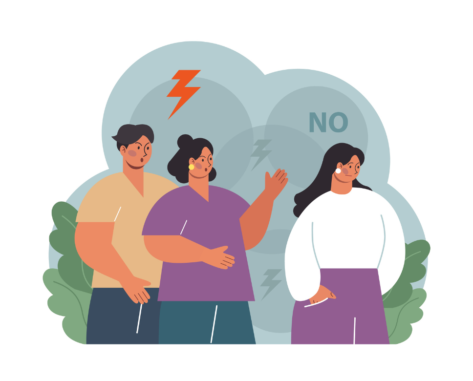
In this lesson, students explore a quote on offence and free expression, share their opinions and watch a video about overcoming offence. They analyse personal and social responses to offence, work with offence-related phrases (e.g. come out, get the wrong idea, sit well with someone) and listen to a conversation involving a confrontation. Students also reflect on the best ways to handle social friction and role-play managing offensive interactions.

B2 / Upper Intermediate
C1 / Advanced
60 minStandard LessonUnlimited Plan

WARM-UP AND VIDEO

This lesson starts with a warm-up. Students read a quote about freedom of speech and offence. They explain the key ideas it presents and briefly say whether they agree with each part of the quote. Afterwards, students engage in discussing offence, etiquette and sensitive topics. Next, they watch a video where a speaker talks about three reasons why it’s important to teach people not to get offended. First, students discuss what they think these reasons are. They then watch part of the video and check. In the second part of the video, students explore advice on responding to offence. They discuss Bruce Lee’s ‘Be like water’ quote and watch the clip to verify their interpretations. After that, students discuss questions about responses to offence and free speech.

USEFUL PHRASES FOR DISCUSSING OFFENCE

In this part of the lesson, students look at pairs of statements and complete the gaps to create phrases for discussing offence (e.g. come off as, sit by, take aback). They then decide whether the speaker of each sentence has been offended or has said something offensive. Afterwards, students rewrite sections of a dialogue using the target phrases from the previous task. Moving on, they examine the dialogue again and guess the topic of discussion. Then, students listen to the full conversation and check. They also identify the relationship between the speakers and evaluate how well they handled the situation. Following that, students evaluate scenarios involving offence and propose the best solutions. Finally, they work in pairs and role-play different scenarios using the target phrases. Student A expresses a strong opinion while Student B plays someone who is easily offended. They then continue, swapping roles and choosing new scenarios.

HOMEWORK/REVISION

This lesson also includes an additional task that you can use as homework or revision. In the task, students find and correct mistakes in sentences, using phrases for discussing offence. They then continue the sentences with their own ideas. The task is available in the teacher’s version of the worksheet. You can print it and hand it out to your students. It’s also included in the e-lesson plan.

WORKSHEETS

Be the 1st to vote.

Comments

Title separator

Leave a Reply

Browse other materials recommended for you

Title separator
C1 / Advanced
Critical Reading Club 45 min

Feral cats in New Zealand

Global Issues

Read and talk about wildlife and animal population management! In this CRC lesson, students discuss ethics and urban animal issues, review animal management vocabulary and share their thoughts and experiences.

ESL lesson on contrasting ideas
B1 / Intermediate | B2 / Upper Intermediate
Standard Lesson 60 min

Despite the social media ban… (contrasting ideas)

Global Issues Grammar

Talk about social media age bans with this ESL lesson on contrasting ideas! Students practise contrast connectors, watch a video on Australia’s social media ban and debate alternatives.

ESL lesson on creativity
B2 / Upper Intermediate
Standard Lesson 60 min

Is it easy to be creative?

General

Practise phrasal verbs related to the creative process in this ESL lesson on creativity! Students watch a video involving a creative block, discuss the nature of inspiration and put freewriting into practice.

speaking lesson on motherhood
B2 / Upper Intermediate | C1 / Advanced
Speaking Class 45 min / 60 min

Love, mum

General

Spark deep conversations with this speaking lesson on motherhood! Students analyse motherhood in culture, discuss Mother’s Day traditions and watch a video about funny texts from moms. They can also do an extra task to review vocabulary.

climate change vocabulary
B1 / Intermediate | B2 / Upper Intermediate
Vocabulary Lab 45 min / 60 min

Let’s talk about climate change

Global Issues

Talk about the environment with this lesson! Students practise climate change vocabulary and read about environmental issues and ways to tackle them. They also practise pronunciation and play a guessing game.

discussing micro-dramas
C1 / Advanced | C2 / Proficiency
Speaking Class 45 min / 60 min

Would you watch a micro-drama?

General Technology

Get students discussing micro-dramas! They debate the impact of vertical shorts, watch a video about the rise of micro-dramas and write a micro-drama script. Students can also review useful vocabulary with an extra task.

advanced lesson on films
C1 / Advanced
Standard Lesson 60 min

Are you sick of sequels?

General

Get your students talking about sequels and remakes with this advanced lesson on films! They practise key adjectives for film discussions, watch a video excerpt on sequels and remakes and share their opinions. 

ESL lesson on delivery services
B1 / Intermediate | B2 / Upper Intermediate
Standard Lesson 60 min

You’ve got mail!

Global Issues

Talk about letters and parcels in this ESL lesson on delivery services! Students watch a video on Denmark’s postal service, practise key vocabulary and discuss shipping problems and solutions.

talking about reality TV
B2 / Upper Intermediate | C1 / Advanced
Speaking Class 45 min / 60 min

The reality of reality TV

General

Get students talking about reality TV! They watch trailers, debate the impacts of reality television shows and create their own show ideas. Students can also do an extra vocabulary exercise to practise useful vocabulary.

Show more lessons

Questions

Title separator

Is there a minimum subscription period if I choose a monthly subscription?

No, there's no minimum required number of subscription months. You can cancel any time you want. Basically, you can sign up and then cancel your subscription the next day, which will mean you have access for 1 month and won't be charged again.

What currencies can I pay in for my subscription?

Our default currency is USD (American dollar), but you can also pay in EUR (euro), GBP (British pound sterling) or PLN (Polish zloty). You can change the currency you want to pay in at the Pricing page before selecting a subscription plan.

How can I edit an e-lesson plan?

You can get your own editable copy of an e-lesson plan and make changes to it. To do so, either (1) make a copy of it on your Google Drive (preferable method) or (2) download it in a Powerpoint format (but formatting might be a bit off so we can’t guarantee that it will work well).
Read more FAQ
Title separator

ESL Brains

Forgot password?
or continue with
Title separator
Title separator