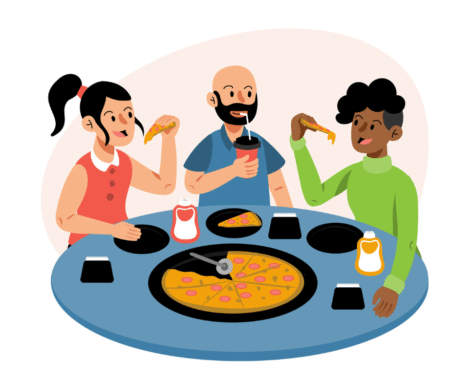

Pineapple pizza isn’t my thing

Title separator

Functional language - likes and dislikes

phrases for likes and dislikes

This is a standalone lesson but it can also be used as part of the set titled:

Students watch the video from 14:47

LESSON OVERVIEW

The main objectives of this lesson are to:

  • discuss dishes and foods from various perspectives;
  • practise phrases for likes and dislikes;
  • watch a video segment on the favourite food of some American presidents.

In this lesson, students discuss traditional dishes from their region, explore vocabulary related to dishes (e.g., pork rinds, chicken enchiladas), and their descriptions. They share their experiences, watch part of a video (from 14:47) about American presidents’ favourite foods, and discuss the influence of famous people on food choices. Students work with dialogues and practise phrases for asking about preference (e.g. How do you feel about…?), expressing likes (e.g. I’m crazy about…) and expressing dislikes (e.g. I’m not a big fan of…). They also work in pairs and role-play trying unusual foods.

A2 / Pre‐Intermediate
B1 / Intermediate
60 minStandard LessonPremium Plan

WARM-UP AND VIDEO

This lesson works with phrases for likes and dislikes and begins with a warm-up. Students think of a traditional dish from their region and list ingredients that it contains. After that, they match pictures of different foods (e.g. chilli, filet-o-fish, pork rinds) with their descriptions (e.g. crispy snacks made from fried pig skin). Moving on, students say which foods from the previous task they have or haven’t tried and which ones they would or wouldn’t like to try. They explain their answers. Afterwards, students watch a video about the favourite food of some American presidents. They watch part of the video and match the names of the presidents with their favourite food. Then, students read statements and guess which American president and their favourite food each sentence is about. They watch the video again and check. Next, students discuss famous people’s influence on their food choices.

PHRASES FOR LIKES AND DISLIKES

In this part of the lesson, students read dialogues about food preferences and identify their setting: party, home, or restaurant. Moving on, they put phrases for expressing likes and dislikes from the previous task (e.g. What do you think of…?, I’m a big fan of…, I can’t stand…) in the correct category (asking about preference, expressing likes and expressing dislikes). Afterwards, students read more dialogues with missing words. They complete them to create likes and dislikes phrases. Moving on, students choose food preferences in different situations (e.g. your favourite childhood food). They talk about them using the key phrases from the lesson. Their partner listens and asks a follow-up question. They then swap roles. Finally, in pairs, students imagine they’re at a restaurant with unusual food. One shares their view on a dish, the other gives the opposite view. They continue with different dishes, switching roles.

HOMEWORK/REVISION

This lesson also includes an additional task that you can use as homework or revision. In the task, students choose the correct word to complete phrases for likes and dislikes. They then put the lines of the interview in the correct order. The task is available in the teacher’s version of the worksheet. You can print it and hand it out to your students. It’s also included in the e-lesson plan.

WORKSHEETS

Comments

Title separator

Leave a Reply

Browse other materials recommended for you

Title separator
ESL speaking lesson about celebrities
A2 / Pre‐Intermediate | B1 / Intermediate
Speaking Class 45 min / 60 min

Life of a celebrity

General Lifestyle

Talk about the lives of famous people in this ESL lesson about celebrities! Students share opinions, explore how celebrities live and watch a video about a retired celebrity who now lives on a farm.

ESL lesson on eating out
B1 / Intermediate
Vocabulary Lab 45 min / 60 min

Let’s eat out!

General

Work on dining situations with this ESL lesson on eating out! Students talk about going out to eat, review useful vocabulary and share experiences. They also listen to restaurant dialogues and role-play dining scenarios.

family and appearance vocabulary
A1 / Elementary | A2 / Pre‐Intermediate
Standard Lesson 60 min

Who’s who?

General

Practise family and appearance vocabulary with this lesson! Students discuss family from various perspectives, review vocabulary for describing people’s appearance and work with the British royal family tree.

ESL lesson on minimal pairs
A2 / Pre‐Intermediate
Standard Lesson 60 min

She sells shells (minimal pairs)

General

Discuss tricky sounds with this ESL lesson on minimal pairs! Students read tongue twisters, watch an advert and practise listening skills. They also work in pairs, creating sentences and guessing minimal pairs.

useful role-play situations
A2 / Pre‐Intermediate | B1 / Intermediate
Standard Lesson 60 min

New place, new start

General

Practise useful language for moving to a new place! In this worksheet, students talk about housing, money, getting around and neighbours. They listen to short conversations and explore real-life dialogues through role-plays.

talking about physical activities
A1 / Elementary | A2 / Pre‐Intermediate
Standard Lesson 60 min

How active are you?

General

Get students talking about physical activities! They read comments, practise collocations for activities and discuss past experiences. They also write short texts and work in pairs!

phrases for complaints
B1 / Intermediate
Standard Lesson 60 min

Sorry to bother you, but… (making complaints)

Business General

Practise useful phrases for complaints! Students watch a video about complaining in restaurants and explore polite ways to make and respond to complaints. They also role-play complaint situations.

practise high numbers
A1 / Elementary | A2 / Pre‐Intermediate
Standard Lesson 60 min

How many people live in your country?

General Lifestyle

Talk about countries, capitals and populations with this lesson! Students review vocabulary for nature and places and practise high numbers. They also read short texts and discuss their own countries.

food vocabulary
A2 / Pre‐Intermediate | B1 / Intermediate
Vocabulary Lab 45 min / 60 min

What’s for lunch?

General

Practise food vocabulary with this worksheet! Students talk about dishes and ingredients and discuss fruits, vegetables, meats and seafood. They also work in pairs and play a word game.

Show more lessons

Questions

Title separator

Is there a minimum subscription period if I choose a monthly subscription?

No, there's no minimum required number of subscription months. You can cancel any time you want. Basically, you can sign up and then cancel your subscription the next day, which will mean you have access for 1 month and won't be charged again.

What currencies can I pay in for my subscription?

Our default currency is USD (American dollar), but you can also pay in EUR (euro), GBP (British pound sterling) or PLN (Polish zloty). You can change the currency you want to pay in at the Pricing page before selecting a subscription plan.

How can I edit an e-lesson plan?

You can get your own editable copy of an e-lesson plan and make changes to it. To do so, either (1) make a copy of it on your Google Drive (preferable method) or (2) download it in a Powerpoint format (but formatting might be a bit off so we can’t guarantee that it will work well).
Read more FAQ
Title separator

ESL Brains

Forgot password?
or continue with
Title separator
Title separator
Close icon
Looking for the perfect gift? Give the gift of ESL Brains access!
Gift of ESL Brains access