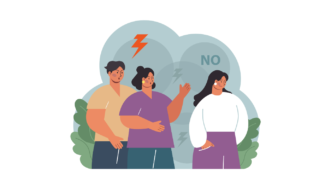

Understanding Gen Z

Title separator

Speaking
Class

talking about Gen Z

Students watch the video to 02:53

LESSON OVERVIEW

The main objectives of this lesson are to:

  • engage in talking about Gen Z, their habits and characteristics;
  • debate generational traits and future impacts of Gen Z;
  • watch a video excerpt on the Gen Z generation.

In this lesson, students explore which time period each generation belongs to, read quotes about Gen Z and share their thoughts. They discuss current shifts in lifestyle and habits, reflect on trends in their country and watch part of a video about Gen Zers. Students evaluate contrasting opinions, talk about the impact of generational traits and work in pairs, debating the future influence of various factors. They can also do an extra vocabulary exercise to practise key vocabulary for the discussion (e.g. be glued to, notorious for, double down on). 

C1 / Advanced45 min
60 min
Speaking ClassUnlimited Plan

This is a Speaking Class worksheet. It includes a variety of tasks that let your students practise their speaking skills. This lesson format does not focus on grammar or vocabulary. Learn more about it here.

WARM-UP AND DISCUSSION

This lesson focuses on talking about Gen Z and starts with a warm-up. Students look at information about generations (e.g. Baby Boomers, Gen X, Millennials) and do tasks where they name people they know and compare their attitudes. At this point, students can do an extra vocabulary task. They read statements about different generations and match useful phrases (e.g. be inclined to, set apart, align with) with their definitions. Then, students discuss to what extent they agree with them and provide examples. After that, they read quotes about Gen Z and say whether they have seen similar conduct among the Gen Zers they know. Next, students discuss the possible downsides of the traits mentioned in the quotes. 

VIDEO AND MORE DISCUSSION

In this part of the lesson, students examine lifestyle categories (e.g. driving license) and identify emerging Gen Z trends. After that, they watch a video excerpt about Gen Zers and compare their ideas from the previous task. Then, students identify similar trends in their local contexts. Moving on, they analyse pairs of opinions about points from the video. In each pair, students choose the opinion they agree with more, explain why and say whether the other view holds any truth. Next, they engage in talking about Gen Z and its common characteristics (e.g. using voice notes). Students discuss the pros, cons and perceptions of generational shifts. Finally, in pairs, they debate various factors (e.g. mental health awareness). Student A argues for the positive impact on Gen Z’s future, while Student B discusses the potential negative consequences. After rotating roles, they decide which factor will be most influential.

WORKSHEETS

Be the 1st to vote.

Comments

Title separator

Leave a Reply

Browse other materials recommended for you

Title separator
discussing offence
B2 / Upper Intermediate | C1 / Advanced
Standard Lesson 60 min

Did I cause offence?

General Global Issues

Engage students in discussing offence! They practise useful phrases, watch a video about overcoming offence and listen to a conversation involving a confrontation. Students also role-play managing offensive interactions.

C1 / Advanced
Critical Reading Club 45 min

Feral cats in New Zealand

Global Issues

Read and talk about wildlife and animal population management! In this CRC lesson, students discuss ethics and urban animal issues, review animal management vocabulary and share their thoughts and experiences.

ESL lesson on noise pollution
C1 / Advanced | C2 / Proficiency
Standard Lesson 60 min

Noise pollution

Global Issues

Share experiences and opinions with this ESL lesson on noise pollution! Students read short texts about noisy places, practise verbs for sounds and watch a video clip about noise pollution. They also discuss noise regulation strategies.

ESL lesson on animal treatment
C1 / Advanced
Speaking Class 45 min / 60 min

How we treat animals

Global Issues

Discuss animals’ roles in human life with this ESL lesson on animal treatment! Students read and talk about the mass use of animals, watch a video about retired hens and do an extra vocabulary task to review useful phrases.

talking about university degrees
C1 / Advanced | C2 / Proficiency
Standard Lesson 60 min

University degrees and the job market

Global Issues

Get students talking about university degrees and job market challenges! They practise phrases for benefits, drawbacks and outcomes, watch a video on why graduates struggle to find work and share their opinions and experiences.

ESL lesson on STEM
B2 / Upper Intermediate | C1 / Advanced
Speaking Class 45 min / 60 min

The importance of STEM

Global Issues

Let students share their ideas about science-related fields! They talk about STEM from different perspectives, watch a video about an unusual science professor and explore statistics.

B2 / Upper Intermediate | C1 / Advanced
Critical Reading Club 45 min

Can we trust this study?

Global Issues

Discuss the reliability of research with this lesson! Students read an article debunking Blue Zones studies, practise vocabulary for talking about studies and explore ways to run research. 

advanced lesson on de-extinction
C1 / Advanced | C2 / Proficiency
Standard Lesson 60 min

Is de-extinction around the corner?

Global Issues Technology

Discuss the revival of animals with this advanced lesson on de-extinction! Students practise verb phrases connected to genetic engineering, watch a video about an experiment and role-play a meeting about the Jurassic Park idea.

discussing farming
C1 / Advanced | C2 / Proficiency
Standard Lesson 60 min

Farming: present and future

Global Issues Technology

Get students to discuss farming with this advanced lesson! They practise vocabulary for talking about farming and agriculture, watch a video on AI in farming and discuss future farming scenarios.

Show more lessons

Questions

Title separator

Is there a minimum subscription period if I choose a monthly subscription?

No, there's no minimum required number of subscription months. You can cancel any time you want. Basically, you can sign up and then cancel your subscription the next day, which will mean you have access for 1 month and won't be charged again.

What currencies can I pay in for my subscription?

Our default currency is USD (American dollar), but you can also pay in EUR (euro), GBP (British pound sterling) or PLN (Polish zloty). You can change the currency you want to pay in at the Pricing page before selecting a subscription plan.

How can I edit an e-lesson plan?

You can get your own editable copy of an e-lesson plan and make changes to it. To do so, either (1) make a copy of it on your Google Drive (preferable method) or (2) download it in a Powerpoint format (but formatting might be a bit off so we can’t guarantee that it will work well).
Read more FAQ
Title separator

ESL Brains

Forgot password?
or continue with
Title separator
Title separator