
 |
| LESSON OVERVIEW
The main objectives of this worksheet are to:
- have conversations about food and dishes;
- practise food vocabulary;
- work in pairs and play games.
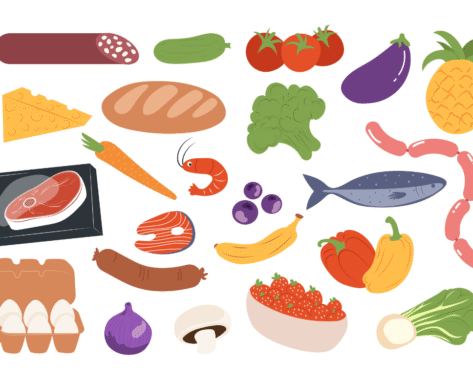
Students talk about foods and learn vocabulary for food items (e.g. peaches, corn, tuna). They share their preferences and habits and discuss fruits, vegetables, meats and seafood. Students review ingredients for dishes, explore different types of meat (e.g. chicken, turkey, beef) and label the picture with seafood names. They also play a word game.
B1 / Intermediate45 min
60 minVocabulary LabFree
This is a Vocabulary Lab worksheet. With it, students are introduced to a set of vocabulary on a specific topic and practise it through controlled activities, speaking tasks and games. Learn more about it here.
WARM-UP AND FOOD VOCABULARY
This worksheet starts with a warm-up. Students think of foods they have at home right now. They compare their list with a partner or teacher to spot similarities. Moving on, students practise food vocabulary. They look at photos of various fruits (e.g. a pineapple, pears, apples) and write the missing words. Students use the words they know and the words under other photos. Afterwards, they answer questions about different fruits. Students then look at the pictures of different food items (e.g. broccoli, bell pepper, mushrooms) and choose the correct name for each of them. After that, they say which of the food words are not in the pictures. Following that, students complete sentences about food preferences and habits with the words from the previous exercise. They add details. Next, they discuss questions about fruits and vegetables.
MORE FOOD VOCABULARY AND DISCUSSION
In this part of the worksheet, students practise more food vocabulary. They write the animal (e.g. cow) that different meats (e.g. beef) come from. After that, students read the definitions for some seafood and fish (e.g. prawns, sardines, tuna) and label them in a picture. Moving on, they talk about the food items from the previous tasks, their cost and traditional dishes. Following that, students work in pairs. Student A picks a dish from a list and Student B names five ingredients. Student A rejects one ingredient, explains why and suggests an alternative using the vocabulary or other foods. They swap roles and discuss more dishes. Finally, students play a word game. They write as many words as they can in categories (e.g. food that is red) in three minutes. Students read and count the correct words. The student with the highest total wins.
HOMEWORK/REVISION
This worksheet also includes an additional task that you can use as homework or revision. In the task, students complete words for food items with the missing letters. They then match the beginnings of statements with their endings to make short stories about what people eat. The task is available in the teacher’s version of the worksheet. You can print it and hand it out to your students. It’s also included in the e-lesson plan.











Excellent job! Keep up these materials. Love you all!
Thank you so much!
Hi from Azerbaijan 🇦🇿
Really cool material!
We’re really glad you’re enjoying the materials 💙
thank you!
P7 – number 2 there are 4 pears (not 3) – and three apples – not 1
Thanks for your comment! We’ve cropped the picture so now it shows only three pears and one apple (the other two are peaches).
Great job! Today I was planning a role play in a restaurant with my students. Your worksheet will be perfect to practise food vocabulary! Thanks a million!
Awesome! Hope your students enjoy it 🙂