Understanding generations

Title separator

Speaking
Class

speaking lesson on generations

This is a standalone lesson but it can also be used as part of the set titled:

LESSON OVERVIEW

The main objectives of this speaking lesson on generations are to:

  • talk about differences among generations;
  • compare their experiences with what’s shown in a short comedy video.

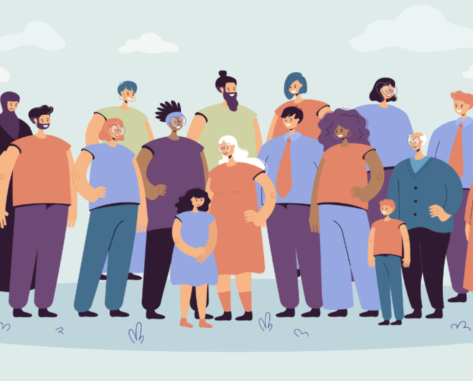
In this lesson, students identify and discuss stereotypes related to different generations. They talk about people they know and think about situations different generations would most likely relate to. Students also watch a comedy video on how generations behave at work and imagine how the youngest generation will behave in different areas of life.

A2 / Pre‐Intermediate
B1 / Intermediate
45 min
60 min
Speaking ClassUnlimited Plan

This is a Speaking Class worksheet. It includes a variety of tasks that let your students practise their speaking skills. This lesson format does not focus on grammar or vocabulary. Learn more about it here.

WARM-UP AND REFLECTION

This speaking lesson on generations starts with a warm-up in which students complete statements with the phrases (e.g. future generations, generation gaps, older generations, etc.). They also share if they agree with the statements. After that, students think about and describe people they know from different generations (baby boomers, Generation X, millennials and Generation Z) in one sentence (e.g. My mum is a baby boomer. She’s really organized and she likes meeting new people.). Then, students read the statements with various opinions and decide which generation might say them.

VIDEO AND DISCUSSION

In this part of the lesson, students discuss questions about stereotypes related to different generations including the one about their attitude to work. Then, they watch a comedy video about how different generations behave at work and compare their ideas. After that, students discuss the behaviour of different generations depicted in the video by answering questions. Then, they look at the activities (e.g. throw a surprise party, start a social media account, etc.) and say which generation would be the worst and the best to do them with and explain their choice. This speaking lesson on generations ends with an activity in which students think about the youngest generation (Generation Alpha, born 2013 onwards) and imagine what they will think about and how they will behave in different areas of life (e.g. family, work, technology, etc.).     

WORKSHEETS


Comments

Title separator

Leave a Reply

  1. laryssacp

    I love this lesson! Super engaging topic.
    Thanks a lot!

    1. Olia

      That’s great! Thanks for your feedback 🙂

  2. Troy

    Is there a way to make this lesson plan more for upper and advanced level students? Thanks very much in advance.

    1. Olia

      Hello! Have you seen our B2 lesson on generations?

      1. Troy

        Hi Olia,

        Yes, I have used it but wanted to adapt the previous lesson plan as I teach upper and advanced level. Thanks!

        Troy

        1. Olia

          Oh I see! Unfortunately, we don’t adapt lessons for different levels. However, I think this one can be used with more advanced students. You can encourage them to use more advanced vocabulary in discussions. Also, if you use e-lessons, you can make your own copy and make any changes you think are necessary 🙂

  3. Lucia K.

    Thanks for the great lesson plan. It definitely made my student talk! 🙂

    1. Olia

      Thanks, I’m glad you like it 🙂

  4. Helen Szabo

    I have subscribed to the newsletter and I still cannot access the visuals.

    1. Olia

      Thank you for subscribing to our newsletter! Are you referring to accessing the full lesson? If so, please note that subscribing to the newsletter alone isn’t enough to access this lesson plan – you’ll need to subscribe to our Unlimited plan. Let me know if you’d like more details on how to upgrade 🙂

  5. jsonnenschein

    This is one of the best lessons yet and easily adapted to multiple levels of students. I teach a multi-level ESL conversation class. By adapting the “copy” and adding a vocabulary list, my students were actively engaged.
    Thank you for a wonderful lesson!

    1. Olia

      That’s amazing to hear🤩 We love that you could easily adapt the lesson for your multi-level class and keep your students engaged. Thanks for sharing your experience!

Browse other materials recommended for you

Title separator
ESL speaking lesson about celebrities
A2 / Pre‐Intermediate | B1 / Intermediate
Speaking Class 45 min / 60 min

Life of a celebrity

General Lifestyle

Talk about the lives of famous people in this ESL lesson about celebrities! Students share opinions, explore how celebrities live and watch a video about a retired celebrity who now lives on a farm.

ESL lesson on eating out
B1 / Intermediate
Vocabulary Lab 45 min / 60 min

Let’s eat out!

General

Work on dining situations with this ESL lesson on eating out! Students talk about going out to eat, review useful vocabulary and share experiences. They also listen to restaurant dialogues and role-play dining scenarios.

family and appearance vocabulary
A1 / Elementary | A2 / Pre‐Intermediate
Standard Lesson 60 min

Who’s who?

General

Practise family and appearance vocabulary with this lesson! Students discuss family from various perspectives, review vocabulary for describing people’s appearance and work with the British royal family tree.

ESL lesson on minimal pairs
A2 / Pre‐Intermediate
Standard Lesson 60 min

She sells shells (minimal pairs)

General

Discuss tricky sounds with this ESL lesson on minimal pairs! Students read tongue twisters, watch an advert and practise listening skills. They also work in pairs, creating sentences and guessing minimal pairs.

useful role-play situations
A2 / Pre‐Intermediate | B1 / Intermediate
Standard Lesson 60 min

New place, new start

General

Practise useful language for moving to a new place! In this worksheet, students talk about housing, money, getting around and neighbours. They listen to short conversations and explore real-life dialogues through role-plays.

talking about physical activities
A1 / Elementary | A2 / Pre‐Intermediate
Standard Lesson 60 min

How active are you?

General

Get students talking about physical activities! They read comments, practise collocations for activities and discuss past experiences. They also write short texts and work in pairs!

phrases for complaints
B1 / Intermediate
Standard Lesson 60 min

Sorry to bother you, but… (making complaints)

Business General

Practise useful phrases for complaints! Students watch a video about complaining in restaurants and explore polite ways to make and respond to complaints. They also role-play complaint situations.

phrases for likes and dislikes
A2 / Pre‐Intermediate | B1 / Intermediate
Standard Lesson 60 min

Pineapple pizza isn’t my thing

General

Talk about favourite dishes with this lesson! Students share experiences, watch part of a video on American presidents’ favourite foods and practise phrases for asking about preferences and expressing likes and dislikes.

practise high numbers
A1 / Elementary | A2 / Pre‐Intermediate
Standard Lesson 60 min

How many people live in your country?

General Lifestyle

Talk about countries, capitals and populations with this lesson! Students review vocabulary for nature and places and practise high numbers. They also read short texts and discuss their own countries.

Show more lessons

Questions

Title separator

Is there a minimum subscription period if I choose a monthly subscription?

No, there's no minimum required number of subscription months. You can cancel any time you want. Basically, you can sign up and then cancel your subscription the next day, which will mean you have access for 1 month and won't be charged again.

What currencies can I pay in for my subscription?

Our default currency is USD (American dollar), but you can also pay in EUR (euro), GBP (British pound sterling) or PLN (Polish zloty). You can change the currency you want to pay in at the Pricing page before selecting a subscription plan.

How can I edit an e-lesson plan?

You can get your own editable copy of an e-lesson plan and make changes to it. To do so, either (1) make a copy of it on your Google Drive (preferable method) or (2) download it in a Powerpoint format (but formatting might be a bit off so we can’t guarantee that it will work well).
Read more FAQ
Title separator

ESL Brains

Forgot password?
or continue with
Title separator
Title separator
Close icon
Looking for the perfect gift? Give the gift of ESL Brains access!
Gift of ESL Brains access