
 |
| LESSON OVERVIEW
The main objectives of this ESL lesson on the First Conditional are to:
- discuss the benefits and drawbacks of driverless buses and robots;
- practise the First Conditional;
- watch a video about self-driving buses in Seoul.
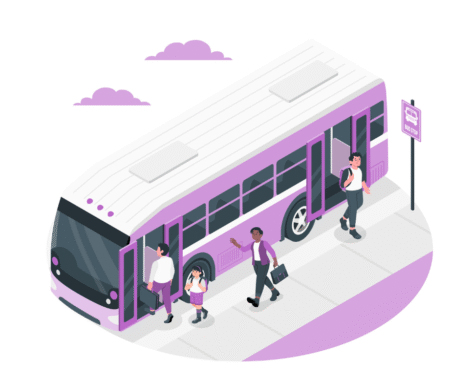
Students discuss the advantages and disadvantages of working as a bus driver. They learn about driverless buses, watch a video about autonomous buses in South Korea and share their opinions. Students discuss the impact of self-driving buses, explore statements and practise the First Conditional with words and phrases like ‘unless’ and ‘as soon as’. They say whether they agree or disagree with opinions on driverless vehicles and think of conditions for people to accept other types of robots.
B2 / Upper Intermediate60 minStandard LessonPremium Plan
WARM-UP AND GRAMMAR
This ESL lesson on the First Conditional starts with a warm-up. Students think about the pros and cons of working as a bus driver. Afterwards, they watch a video about self-driving buses in South Korea. Then, students choose the best summary for it. Moving on, they watch part of the video again. Students write down different opinions or predictions they hear about this type of bus. They then discuss questions about driverless buses and their impact. After that, students match halves of sentences about conditions for using driverless buses. Next, they complete the First Conditional structure and revisit the statements from the previous task to find phrases that replace ‘if’ (e.g. as long, as soon as, as long as) and words that replace ‘will’ (e.g. may, might, could).
DISCUSSION AND MORE PRACTICE
In this part of this ESL lesson on the First Conditional, students read sentences about conditions for driverless vehicles. They complete them by choosing the correct options (e.g. Driverless taxis in big cities will not be popular until/unless they can attract tourists). Following that, students look at the statements from the previous task again. They say if they agree or disagree and give reasons. Moving on, students read First Conditional sentences and complete them with their own ideas. They use the target words and phrases from the lesson (e.g. as soon as, might, unless). Afterwards, students look at different types of robotic technologies (e.g. humanoid, Optimus, robotic hotel receptionist) and think of conditions that will make people accept them.
HOMEWORK/REVISION
This ESL lesson on the First Conditional also includes an additional task that you can use as homework or revision. In the task, students write conditional sentences using prompts and words and phrases from the lesson. The task is available in the teacher’s version of the worksheet. You can print it and hand it out to your students. It’s also included in the e-lesson plan.
WORKSHEETS
Subscribe to unlock these and many other Standalone lesson with the Premium plan
Subscribe






Busses (U.S. spelling) in the heading but buses (G.B. spelling) in the description? I don’t think one is better than the other, but you need to use either British or American English throughout, not a mixture.
Hi! Thanks for spotting that. It’s fixed now.
This is an excellent lesson for practising the conditional. I’m glad it doesn’t only focus on the basic *if + will* structure, but covers most of the possible forms in a comprehensive way. Many thanks for that!
This is exactly what we intended to do so I’m glad you found it helpful. Thank you!
I like buses.