
Food culture, coffee culture

Title separator

Grammar - nouns that are both countable and uncountable

ESL lesson about coffee

LESSON OVERVIEW

In this ESL lesson about coffee and food culture students have a lot of discussion, watch a video, study nouns that can be both countable and uncountable, and have a lot of fun practice.

A2 / Pre‐Intermediate60 minStandard LessonUnlimited Plan

DISCUSSION & VIDEO

This ESL lesson about coffee and food culture starts with a warm-up. Students examine two pictures, discuss them and talk about their food preferences, food culture in their country, etc. After that, students read three short texts about hummus, dumplings, and coffee. They discuss whether they like them and if they are part of their country’s food culture. Before the reading part, students get a chance to revise the difference between countable and uncountable nouns

Afterwards, students move on to a video. First, students are told that they are going to watch a video about coffee culture in Naples. Students look at some aspects and decide which of them the coffee culture of Naples comprises. Then, they watch the video for the first time and check their answers. Students watch another part of the video again to correct the mistakes in sentences about one particular tradition – caffè sospeso. After students have finished the activities related to the video, they participate in a discussion. They talk about their coffee preferences and similar traditions. 

GRAMMAR & PRACTICE

In this part of the ESL lesson about coffee and food culture, students work with grammar more. They look at the sentences from the video and decide what the differences in meaning between coffee and coffees are. After that, they look at some more similar examples (e.g. food vs foods, fruit vs fruits, a cake vs cake, etc.) and try to come up with their own examples. Then, students have more practice and choose a word to complete sentences. They also do a more creative task and think of two consequences for situations (e.g. Two friends are in a café but one of them is on a diet.) using words in two different forms (e.g. cheese and cheeses).

HOMEWORK/REVISION

The ESL lesson about coffee also includes a supplementary task to practise grammar. In the task, students need to complete the questions with one of the words and match them to the responses. The task is available in the teacher’s version of the worksheet and can be printed for students or accessed in the e-lesson plan for online teaching.

WORKSHEETS

Comments

Title separator

Leave a Reply

  1. ergenebru

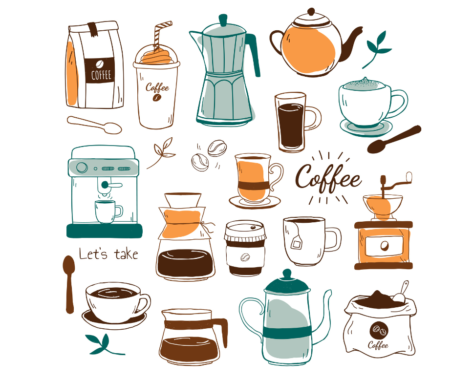
    Great lesson. And I love the coffee illustrations! Who is the artist, please? Thank you

    1. Justa

      Thanks for the comment! You can find the author of these illustrations here.

  2. Lignum Nyelviskola

    It cheered me up 🙂 it is a vibrating summer lesson! Pls make more 😀

    1. Inna

      Thank you so much! We’re happy you liked it 🙂

  3. Noelle Sol

    great lesson! however, I noticed that in all the esl brains the word practice is misspelled… you say ‘let’s practise’ when you should say ‘lets practice’

    1. Justa

      Actually, when we talk about the verb ‘practise’/’practice’, both are correct. At ESL Brains, we tend to use the BrE one more often. You can see both options in this dictionary entry.

  4. Marie Richard

    This is fab and the video in Napoli is great! Thanks!

    1. Inna

      Thank you so much for your comment! We’re happy you enjoyed this lesson 🙂

  5. AnastSh

    Another great lesson, thank you! I just wanted to say there’s a mistake, the same one actually on pages 28, 29, 31 and 33 — you’ve missed “you” in question ‘I’ (Would you like more cake?).

    1. Justa

      I’m sorry for the slip-up, we’ve just fixed that. Thank you for spotting that and we’re happy you enjoyed the lesson 🙂

  6. Andrew Forster

    A good lesson, but Ex 10 looks like it was created by A.I. An A2 student isn’t going to understand these instructions, I’m not even sure of them myself.

    1. Inna

      Thank you for your feedback! In ex. 10, the idea was to get students thinking creatively about consequences while practicing different noun forms (e.g., singular, plural, uncountable). If you find this task too complex for your students, more scaffolding and guidance could be a viable solution.
      Here’s what we suggest:
      – doing a few examples together first
      – providing a few sentence starters to help your students along.
      Hope this helps!

Browse other materials recommended for you

Title separator
talking about brands
A2 / Pre‐Intermediate | B1 / Intermediate
Speaking Class 45 min / 60 min

The power of brands

Business Lifestyle

Get students talking about brands with this lesson! They share their views, learn the brand and the common name for products and watch a video on this topic. Students can also do an extra vocabulary task.

ESL speaking lesson about celebrities
A2 / Pre‐Intermediate | B1 / Intermediate
Speaking Class 45 min / 60 min

Life of a celebrity

General Lifestyle

Talk about the lives of famous people in this ESL lesson about celebrities! Students share opinions, explore how celebrities live and watch a video about a retired celebrity who now lives on a farm.

speaking lesson on art
A2 / Pre‐Intermediate | B1 / Intermediate
Speaking Class 45 min / 60 min

Art at home

Lifestyle

Get students talking about art with this lesson! They discuss items people have at home, watch a video about an art collector’s house and describe rooms with artworks. They can also do an extra task to review useful words.

practise high numbers
A1 / Elementary | A2 / Pre‐Intermediate
Standard Lesson 60 min

How many people live in your country?

General Lifestyle

Talk about countries, capitals and populations with this lesson! Students review vocabulary for nature and places and practise high numbers. They also read short texts and discuss their own countries.

practise will and going to
A2 / Pre‐Intermediate
Standard Lesson 60 min

I’ll do that now! (will and going to)

Business Grammar

Practise will and going to with this lesson! Students talk about work situations, share planning experiences and watch a humorous video on how to look busy at work.

lesson about going on holiday
A2 / Pre‐Intermediate
Speaking Class 45 min / 60 min

Going on holiday

Lifestyle

Discuss holidays and travel with this lesson! Students talk about holiday preferences, watch a video on Australia’s attractions and share their experiences. They also explore tourist problems and practise functional language for asking for help.

ESL lesson on Present Continuous
A1 / Elementary | A2 / Pre‐Intermediate
Standard Lesson 60 min

What are you doing now? (Present Continuous)

General Grammar

Learn and practise Present Continuous with your beginner students! Students review the Present Continuous tense and describe what people are doing by asking and answering questions.

practise Present Continuous
A2 / Pre‐Intermediate
Standard Lesson 60 min

We are playing! (Present Continuous)

General Grammar

Practise Present Continuous while talking about games! With this lesson, students watch an excerpt from a sitcom, read about guessing games and explore the Present Continuous tense.

expressions of frequency
A1 / Elementary | A2 / Pre‐Intermediate
Standard Lesson 60 min

How much time do you spend…?

Lifestyle

Talk about how people spend their time! Students watch a video on teenagers’ phone habits, share their routines and practise expressions of frequency. They also discuss a graph about people’s routines in different countries.

Show more lessons

Questions

Title separator

Is there a minimum subscription period if I choose a monthly subscription?

No, there's no minimum required number of subscription months. You can cancel any time you want. Basically, you can sign up and then cancel your subscription the next day, which will mean you have access for 1 month and won't be charged again.

What currencies can I pay in for my subscription?

Our default currency is USD (American dollar), but you can also pay in EUR (euro), GBP (British pound sterling) or PLN (Polish zloty). You can change the currency you want to pay in at the Pricing page before selecting a subscription plan.

How can I edit an e-lesson plan?

You can get your own editable copy of an e-lesson plan and make changes to it. To do so, either (1) make a copy of it on your Google Drive (preferable method) or (2) download it in a Powerpoint format (but formatting might be a bit off so we can’t guarantee that it will work well).
Read more FAQ
Title separator

ESL Brains

Forgot password?
or continue with
Title separator
Title separator