Chores in the house

Title separator

Vocabulary - house chores

ESL lesson on chores

EXERCISE 5. Students watch the video to 01:11

EXERCISE 8

EXERCISE 10

LESSON OVERVIEW

The main objectives of this ESL lesson on chores are to:

  • discuss chore routines and preferences;
  • practise key housework vocabulary;
  • watch videos and listen to a recording related to chores;
  • role-play a flatmate discussion on housework.

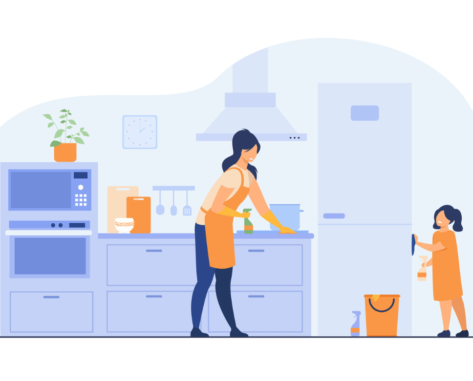
In this lesson, students compare pictures of a clean and a messy living room. They explore vocabulary for housework (e.g. wash the clothes, vacuum, walk the dog) and talk about their experiences, preferences and habits. Students watch part of a video (to 01:11) about a child getting paid for chores, debate childhood chores, compensation and technology and read short texts about how to make chores more fun. They watch another video where a robot does chores, share their opinions on the future of robotic housework and listen to a dialogue about weekend chores. Students also work in pairs and role-play chore negotiations with a flatmate.

A1 / Elementary
A2 / Pre‐Intermediate
60 minStandard LessonUnlimited Plan

WARM-UP AND VOCABULARY

This ESL lesson on chores starts with a warm-up. Students look at two living rooms and complete sentences about them. After that, they examine statements about chores and match phrases (e.g. make the bed, unload the dishwasher, take out the rubbish) with pictures. Moving on, students look at the sentences from the previous task and make them true about them. Following that, they use the chores from the previous exercise to complete sentences on their personal attitudes toward housework. Students add details. They then watch part of the video where a child gets money for doing chores. Students tick the chores the boy does. Afterwards, they discuss questions about childhood chores, compensation and technology. 

VIDEO AND ROLE-PLAY

In this part of this ESL lesson on chores, students read short texts about how to make chores more fun. They then do tasks where they evaluate and propose creative approaches to daily tasks. After that, students watch a video in which a robot does chores and name three things the robot can do. They then give their opinions by choosing words in sentences about the role of robots in housework. Students also add details. Moving on, they listen to a recording in which two flatmates are talking about the chores they want to do at the weekend. Students tick useful language (e.g. I can…, Can you…?, OK!) they hear. Finally, they work in pairs and look at a table with some chores. Students role-play weekend chore negotiations with a flatmate, using the language from the previous task.

HOMEWORK/REVISION

This ESL lesson on chores also includes an additional task that you can use as homework or revision. In the task, students read different situations and write which chore the person needs to do. They then choose three of the chores and say when they last did them. The task is available in the teacher’s version of the worksheet. You can print it and hand it out to your students. It’s also included in the e-lesson plan.

WORKSHEETS

Be the 1st to vote.

Comments

Title separator

Leave a Reply

Browse other materials recommended for you

Title separator
possessives for beginners
A1 / Elementary
Standard Lesson 60 min

My family and their things

Lifestyle

Get students practising possessives for beginners! In this lesson, they discuss common objects, talk about family and practise reading comprehension skills through short texts. Students also identify and describe people in photos.

ESL lesson on holiday activities
A1 / Elementary
Standard Lesson 60 min

Holiday likes and dislikes

General Lifestyle

Discuss plans and preferences with this ESL lesson on holiday activities! Students practise useful holiday expressions, watch a video on kids’ favourite holiday activities and practise phrases for likes and preferences.

ESL lesson on big cities
A2 / Pre‐Intermediate
Standard Lesson 60 min

Big cities, big plans

Lifestyle

Talk about capitals with this ESL lesson on big cities! Students share the pros and cons of large cities, express their preferences and practise phrases for city activities. They also watch a funny ad about Oslo.

talking about transport
A2 / Pre‐Intermediate | B1 / Intermediate
Speaking Class 45 min / 60 min

Transport today and tomorrow

General Lifestyle

Get students talking about transport with this lesson! They review transport vocabulary, watch two short videos about new transport options and discuss the advantages and disadvantages of transport choices.

talking about Christmas time
A1 / Elementary | A2 / Pre‐Intermediate
Standard Lesson 60 min

It’s Christmas time!

Lifestyle

Get students talking about Christmas time with this lesson! They discuss Christmas traditions, watch a video about decorations for the holidays and practise useful collocations. They also play a guessing game.

talking about brands
A2 / Pre‐Intermediate | B1 / Intermediate
Speaking Class 45 min / 60 min

The power of brands

Business Lifestyle

Get students talking about brands with this lesson! They share their views, learn the brand and the common name for products and watch a video on this topic. Students can also do an extra vocabulary task.

ESL speaking lesson about celebrities
A2 / Pre‐Intermediate | B1 / Intermediate
Speaking Class 45 min / 60 min

Life of a celebrity

General Lifestyle

Talk about the lives of famous people in this ESL lesson about celebrities! Students share opinions, explore how celebrities live and watch a video about a retired celebrity who now lives on a farm.

speaking lesson on art
A2 / Pre‐Intermediate | B1 / Intermediate
Speaking Class 45 min / 60 min

Art at home

Lifestyle

Get students talking about art with this lesson! They discuss items people have at home, watch a video about an art collector’s house and describe rooms with artworks. They can also do an extra task to review useful words.

practise high numbers
A1 / Elementary | A2 / Pre‐Intermediate
Standard Lesson 60 min

How many people live in your country?

General Lifestyle

Talk about countries, capitals and populations with this lesson! Students review vocabulary for nature and places and practise high numbers. They also read short texts and discuss their own countries.

Show more lessons

Questions

Title separator

Is there a minimum subscription period if I choose a monthly subscription?

No, there's no minimum required number of subscription months. You can cancel any time you want. Basically, you can sign up and then cancel your subscription the next day, which will mean you have access for 1 month and won't be charged again.

What currencies can I pay in for my subscription?

Our default currency is USD (American dollar), but you can also pay in EUR (euro), GBP (British pound sterling) or PLN (Polish zloty). You can change the currency you want to pay in at the Pricing page before selecting a subscription plan.

How can I edit an e-lesson plan?

You can get your own editable copy of an e-lesson plan and make changes to it. To do so, either (1) make a copy of it on your Google Drive (preferable method) or (2) download it in a Powerpoint format (but formatting might be a bit off so we can’t guarantee that it will work well).
Read more FAQ
Title separator

ESL Brains

Forgot password?
or continue with
Title separator
Title separator