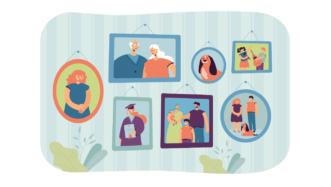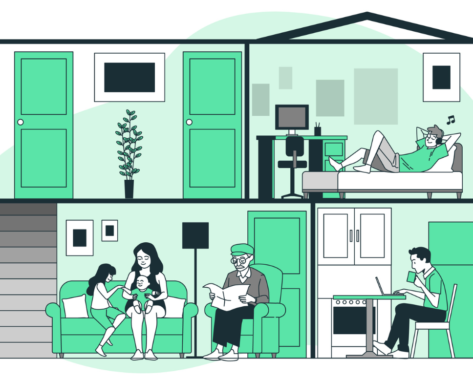
This is my home

Title separator

Vocabulary - homes

beginner lesson on homes

LESSON OVERVIEW

The main objectives of this beginner lesson on homes are to:

  • discuss homes and their features;
  • watch a video about a family living in a small flat in New York;
  • listen to a recording;
  • practise pronunciation skills.

With this beginner lesson on homes, students talk about activities they do at home (e.g. have dinner, get dressed, read books), discuss important rooms and places for them and watch a video about a family living in a small flat. Students listen to a recording, explore the pronunciation of /θ/ and /ð/ and compare their homes with the one from the video. They also share their opinions and discuss the advantages and disadvantages of different types of homes.

A1 / Elementary
A2 / Pre‐Intermediate
60 minStandard LessonPremium Plan

WARM-UP AND VIDEO

This beginner lesson on homes begins with a warm-up where students discuss questions about their homes. After that, they say where people usually do some activities (e.g. watch films, brush their teeth, do exercise) by choosing rooms or places for each activity (e.g. study, garden, terrace). Then, students look at pairs of options (e.g. a gym OR a garage), choose which room or place is more important for their home and explain why. Afterwards, they watch a video and choose what it is about from some options. Following that, students choose the correct answers to questions about the flat in the video. They then watch the video again and check. Next, students listen to a recording about a flat and living conditions. They decide which sound (/θ/ or /ð/) is pronounced in words featuring the -th letter combination (There are three rooms.).

DISCUSSION

In this part of the beginner lesson on homes, students examine home features (e.g. two bedrooms, four children, a cat) and compare them to what the couple in the video has and what they have. They add some details. After that, students say if they agree with sentences about opinions on living in a small flat (e.g. If you live in a small flat, you don’t have to clean it very often.). Students use phrases for expressing opinions and agreement (e.g. I think/don’t think that… because…) and add some details. Then, they imagine the family in the video wants to move to a different city. Students decide which place is better for them. They give reasons why one place is better and why the other place is worse. 

HOMEWORK/REVISION

This lesson plan also includes an additional task that you can use as homework or revision. In the task, students complete gaps with question words (e.g. how, how many, what). Then, they answer the questions. The task is available in the teacher’s version of the worksheet. You can print it and hand it out to your students. It’s also included in the e-lesson plan.

WORKSHEETS

Comments

Title separator

Leave a Reply

  1. Veronika Sunová

    Thank you very much for this lesson at A1 to A2 level. I missed this level here. I hope that more lessons will be added.

    1. Ewa

      Hi! Yes, more A1/A2 lessons are coming 🙂

    2. dienerl

      Totally agree, I think it’s the first A1-A2 lesson, which I love because it makes for a great transition from A1 to more complex language!

      1. Ewa

        Glad to hear that!

  2. chinicha nana

    Unfortunately, the video is absolutely not A1/A2.

    1. Ewa

      Hi! I’d say an authentic video is never A1/A2. It’s rather about how the video is used in the lesson. Here, students need to get the gist first and then are asked to recognize some of the words they already know (like numbers) in different contexts. It might be a challenge, sure, but being exposed to authentic materials helps students become better communicators outside the controlled environment of the classroom.
      To help students understand the video, you can change the speed to 0.75 and play the video or its parts several times.

  3. patibenve

    I’ll use this lesson for the first time today. I hope things turn out well. I’ll ask my student to produce a short vlog in her house, showing a bit of it, to personalize it even more 🙂

    1. Ewa

      Thanks for sharing, hope your student enjoys it!

Browse other materials recommended for you

Title separator
talking about brands
A2 / Pre‐Intermediate | B1 / Intermediate
Speaking Class 45 min / 60 min

The power of brands

Business Lifestyle

Get students talking about brands with this lesson! They share their views, learn the brand and the common name for products and watch a video on this topic. Students can also do an extra vocabulary task.

ESL speaking lesson about celebrities
A2 / Pre‐Intermediate | B1 / Intermediate
Speaking Class 45 min / 60 min

Life of a celebrity

General Lifestyle

Talk about the lives of famous people in this ESL lesson about celebrities! Students share opinions, explore how celebrities live and watch a video about a retired celebrity who now lives on a farm.

speaking lesson on art
A2 / Pre‐Intermediate | B1 / Intermediate
Speaking Class 45 min / 60 min

Art at home

Lifestyle

Get students talking about art with this lesson! They discuss items people have at home, watch a video about an art collector’s house and describe rooms with artworks. They can also do an extra task to review useful words.

practise high numbers
A1 / Elementary | A2 / Pre‐Intermediate
Standard Lesson 60 min

How many people live in your country?

General Lifestyle

Talk about countries, capitals and populations with this lesson! Students review vocabulary for nature and places and practise high numbers. They also read short texts and discuss their own countries.

lesson about going on holiday
A2 / Pre‐Intermediate
Speaking Class 45 min / 60 min

Going on holiday

Lifestyle

Discuss holidays and travel with this lesson! Students talk about holiday preferences, watch a video on Australia’s attractions and share their experiences. They also explore tourist problems and practise functional language for asking for help.

beginner lesson on seasons
A1 / Elementary
Standard Lesson 60 min

There’s a season for everything

Lifestyle

Talk about habits in different weather and seasons! Students explore collocations for different activities, discuss personal experiences and share seasonal habits in their country.

irregular verbs for beginners
A1 / Elementary
Standard Lesson 60 min

Celebrities helping people (Past Simple irregular verbs)

Grammar Lifestyle

Explore stories of famous people helping others! With this lesson, students watch a video about an actor who saves a woman, practise Past Simple and focus on irregular verbs. They also ask and answer questions about various past events.

expressions of frequency
A1 / Elementary | A2 / Pre‐Intermediate
Standard Lesson 60 min

How much time do you spend…?

Lifestyle

Talk about how people spend their time! Students watch a video on teenagers’ phone habits, share their routines and practise expressions of frequency. They also discuss a graph about people’s routines in different countries.

beginner lesson on foods and drinks
A1 / Elementary
Standard Lesson 60 min

Good food for good mood

Lifestyle

Talk about food choices and tastes with this lesson! Students read a text about someone’s eating habits, practise vocabulary for discussing meals and share their food preferences.

Show more lessons

Questions

Title separator

Is there a minimum subscription period if I choose a monthly subscription?

No, there's no minimum required number of subscription months. You can cancel any time you want. Basically, you can sign up and then cancel your subscription the next day, which will mean you have access for 1 month and won't be charged again.

What currencies can I pay in for my subscription?

Our default currency is USD (American dollar), but you can also pay in EUR (euro), GBP (British pound sterling) or PLN (Polish zloty). You can change the currency you want to pay in at the Pricing page before selecting a subscription plan.

How can I edit an e-lesson plan?

You can get your own editable copy of an e-lesson plan and make changes to it. To do so, either (1) make a copy of it on your Google Drive (preferable method) or (2) download it in a Powerpoint format (but formatting might be a bit off so we can’t guarantee that it will work well).
Read more FAQ
Title separator

ESL Brains

Forgot password?
or continue with
Title separator
Title separator