Unusual ways of using food

Title separator

Vocabulary - food idioms

food idioms practice

This is a standalone lesson but it can also be used as part of the set titled:

LESSON OVERVIEW

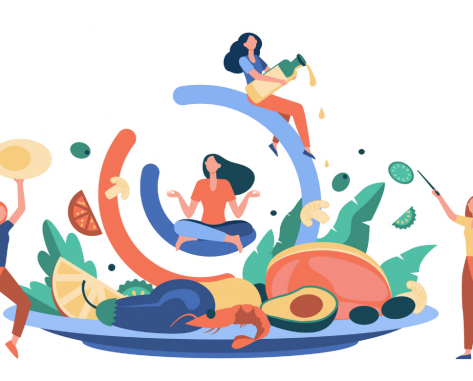
In this lesson about foodscape design, students practise listening, reflect on unusual ways of using food and learn several food idioms through a series of written and oral exercises. 

B2 / Upper Intermediate60 minStandard LessonUnlimited Plan

WARM-UP & VIDEO

The warm-up starts with six photos presenting different kinds of food. Students try to guess what they are using some expressions for speculating. Then, they look at a list of short tasks related to food and have to come up with as many answers to each of them as possible in only one minute (e.g. name three ways to prepare eggs). They finish this task brainstorming ways of using food other than eating.

The aim of the next task is to introduce the topic of the lesson – foodscape design. Students look at a photo of a foodscape and think of three pieces of information they’d like to learn from a video they’re about to watch. Next, they watch the video for the first time and check how many questions they managed to answer.

Afterwards, students look at a list of four foods, watch the first part of the video again and write what role these foods play in the artist’s design. They move on to listening for details and listen to the second part of the video trying to answer seven questions about the food artist. They engage in a discussion and reflect on the video.

FOOD IDIOMS PRACTICE

The second part of the lesson starts with a matching activity. Students look at nine food idioms (e.g. spill the beans) and match them with their meanings. Next, they analyse nine gapped sentences and complete them with a suitable idiom from the previous task. Written practice is followed by oral exercises. Students work in pairs.  Each of them has a set of sentences and reads them one by one. The other student needs to reply using at least one idiom from the lesson. You can finish the lesson here or help your students consolidate the idioms by discussing a few additional questions included in the worksheet.

WORKSHEETS

Comments

Title separator

Leave a Reply

  1. ann_pe

    Great lesson, thanks!
    For anybody who would like a follow-up of another unusual way of using food, here is Vienna’s Vegetable Orchestra: https://www.youtube.com/watch?v=pwOXFOTagSE

    1. Kasia

      Thank you for your comment and the link!

  2. Kasiania

    A fantastic lesson and a compelling video. You simply want to know more:) thx

    1. Stan

      That’s true! It’s a really interesting topic – and the lesson is nice too 🙂

  3. Zhanat Soyuzova

    Amazing, my students found the topic entertaining. They also had an opportunity to share various opinions on the video, the discussion questions helped a lot. Finally, the pair work with the idioms generated truly fun dialogues. Thanks a lot for your work.

    1. Justa

      Great to hear the lesson was so engaging for your students! Thanks for the feedback!

Browse other materials recommended for you

Title separator
either, neither and both
B1 / Intermediate | B2 / Upper Intermediate
Standard Lesson 60 min

Choices we make every day (either, neither, both)

Grammar Lifestyle

Practise either, neither and both structures! In this lesson, students discuss the impact of everyday decisions, watch a video on dual perspectives of a single day and read an online debate on improving routines.

discussing hobbies
B2 / Upper Intermediate | C1 / Advanced
Speaking Class 45 min / 60 min

It’s just a hobby

Lifestyle

Engage students in discussing hobbies! In this lesson, they practise key vocabulary for debating pastimes, watch a video about productivity-focused hobbies and talk about different hobby trends.

talking about theories
B2 / Upper Intermediate
Speaking Class 45 min / 60 min

Viral theories

Lifestyle

Get students talking about theories! They watch a video excerpt about a social media phenomenon, debate the nature and credibility of claims and formulate original theories. Students can also do an extra vocabulary task.

speaking lesson on big cities
B1 / Intermediate | B2 / Upper Intermediate
Speaking Class 45 min / 60 min

Problems in modern cities

Global Issues Lifestyle

Talk about urban life and its challenges in this speaking lesson on big cities! Students share their viewpoints, watch a video about the world’s largest city and discuss future city problems. They also read about urban planning projects.

talking about resolutions
B1 / Intermediate | B2 / Upper Intermediate
Standard Lesson 60 min

Do you stick to your resolutions?

Lifestyle

Talk about resolutions and how to stick to goals! Students practise phrasal verbs related to achieving goals, watch a video on tips to keep New Year’s resolutions and offer advice for overcoming personal challenges.

will and would for present and past habits
B2 / Upper Intermediate | C1 / Advanced
Standard Lesson 60 min

They just won’t stop playing!

Grammar Lifestyle

Talk about toys from a critical perspective in this lesson! Students review will and would for present and past habits, practise phrases for consumer behaviour and watch a video about the popular toy Labubu.

talking about spending and saving money
B2 / Upper Intermediate | C1 / Advanced
Standard Lesson 60 min

No-spend trend

Lifestyle

Chat about spending habits and purchase choices with this lesson! Students practise money-related phrases, watch a video about a no-spend trend and share their experiences and opinions.

have/get something done
B1 / Intermediate | B2 / Upper Intermediate
Standard Lesson 60 min

I will get it checked!

Grammar Lifestyle

Discuss everyday problems and ways to get them fixed! In this lesson, students practise the structure have/get something done. They watch a video about a repair café, describe photos and share their own experiences.

talking about tattoos
B2 / Upper Intermediate | C1 / Advanced
Speaking Class 45 min / 60 min

What does your tattoo mean?

Lifestyle

Engage in talking about tattoos with this lesson! Students discuss why people get tattoos, watch part of a video where an artist shows his tattoos and share their opinions. They can also do a vocabulary activity to review useful phrases.

Show more lessons

Questions

Title separator

Is there a minimum subscription period if I choose a monthly subscription?

No, there's no minimum required number of subscription months. You can cancel any time you want. Basically, you can sign up and then cancel your subscription the next day, which will mean you have access for 1 month and won't be charged again.

What currencies can I pay in for my subscription?

Our default currency is USD (American dollar), but you can also pay in EUR (euro), GBP (British pound sterling) or PLN (Polish zloty). You can change the currency you want to pay in at the Pricing page before selecting a subscription plan.

How can I edit an e-lesson plan?

You can get your own editable copy of an e-lesson plan and make changes to it. To do so, either (1) make a copy of it on your Google Drive (preferable method) or (2) download it in a Powerpoint format (but formatting might be a bit off so we can’t guarantee that it will work well).
Read more FAQ
Title separator

ESL Brains

Forgot password?
or continue with
Title separator
Title separator