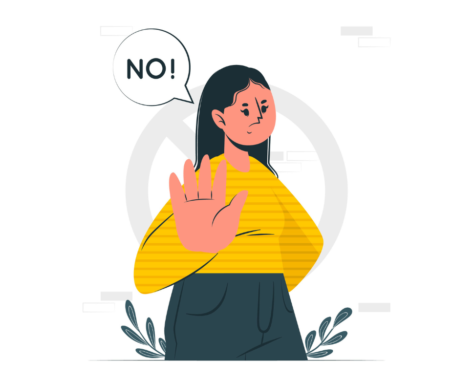
Learning to cope with rejection

Title separator

Speaking
Class

ESL lesson on rejection

Video from 02:38 to 06:24

LESSON OVERVIEW

The main objectives of this ESL lesson on rejection are to:

  • discuss rejection and how people handle it;
  • explore strategies for coping with rejection;
  • watch a podcast clip on ‘rejection therapy’ and share opinions.

Students talk about rejection with this lesson. They discuss quotes, reflect on being turned down and speak about how people experience those situations. Students discuss tips for dealing with rejection, watch part of a podcast (02:38-06:24) about ‘rejection therapy’ and explore unusual and funny situations where people are likely to answer ‘no’. They can also do an extra vocabulary activity where they practise helpful vocabulary for the discussion (e.g. get cold feet, make someone cringe, get flustered). 

C1 / Advanced
C2 / Proficiency
45 min
60 min
Speaking ClassUnlimited Plan

This is a Speaking Class worksheet. It includes a variety of tasks that let your students practise their speaking skills. This lesson format does not focus on grammar or vocabulary. Learn more about it here.

WARM-UP AND DISCUSSION

This ESL lesson on rejection begins with a warm-up. Students look at quotes about rejection (e.g. “I have learned not to allow rejection to move me” – Cicely Tyson). Afterwards, they choose one and say what they like or don’t like about it. Then, students can do an additional vocabulary task to help them discuss the topic. In the task, they choose the correct words to create phrases to describe emotions and reactions (e.g. punch to the gut, feel crushed, a bag of nerves). Following that, students discuss questions about rejection and how people cope with it. Next, they look at situations related to rejection (e.g. an employer rejecting a job candidate) and discuss them considering ways people experience them.

PODCAST AND MORE DISCUSSION

In this part of the ESL lesson on rejection, students look at tips for dealing with rejection (e.g. Don’t take things personally.). They comment on them and explain whether they are helpful and, if so, how. Afterwards, students guess the meaning of ‘rejection therapy’ before watching part of a podcast on the topic. Then, they watch it and say what they think about ‘rejection therapy’. Following that, students look at situations in which they are likely to be faced with a ‘no’ (e.g. ask a stranger if they’d like to play ‘rock, paper, scissors’). They say which they would rather do and why. Then, students discuss questions about the difficulty of making those requests.

WORKSHEETS

Comments

Title separator

Leave a Reply

  1. BTLTEACH

    Great lesson Megan!

  2. EveSmith

    Really fun topic that everyone can relate to! Looking forward to using this one with my student tonight. Keep ’em comin’!

    1. Megan

      So glad you like it; let us know how it goes with your student!

Browse other materials recommended for you

Title separator
talking about friends
C1 / Advanced | C2 / Proficiency
Standard Lesson 60 min

What type of friend are you?

General

Get students talking about friends with this advanced lesson! They practise useful vocabulary for discussing friendships, watch part of a video about types of friends and share their opinions and experiences.

sounds people make
C1 / Advanced | C2 / Proficiency
Vocabulary Lab 45 min / 60 min

Sounds people make

General

Talk about people’s reactions in this lesson! Students practise verbs for sounds people make, discuss how their culture views different behaviours in public and share their opinions and experiences.

ESL lesson on first impressions
C1 / Advanced | C2 / Proficiency
Standard Lesson 60 min

Go with your gut

General

Uncover the world of first impressions with this lesson! Students watch a video about how first impressions affect our opinions, share their views and practise phrases related to intuition and decision-making.

engineering vocabulary
C2 / Proficiency
Vocabulary Lab 45 min / 60 min

From engineering to metaphors

General Technology

Dive into engineering and figurative language with this lesson! Students talk about engineering and machines, practise vocabulary for mechanical parts and structures and explore the figurative meaning of expressions.

ESL lesson on pronunciation and spelling
C1 / Advanced | C2 / Proficiency
Standard Lesson 60 min

Pronunciation and spelling oddities

General

Talk about pronunciation and spelling with this lesson! Students watch a funny video about silent letters in English, practise words with challenging spelling and pronunciation and discuss various statements.

C1 / Advanced
Critical Reading Club 45 min

Rethinking fairy tales

General

Read and discuss an article about the influence of fairy tales! Students explore phrases inspired by fairy tales, debate their pros and cons for children and talk about their experiences. They also create a plot for a modern fairy tale.

talking about mysteries and theories
C1 / Advanced | C2 / Proficiency
Standard Lesson 60 min

It’s a mystery!

General

With this lesson, students debate mysteries and real-life cases. They practise vocabulary for talking about mysteries and theories, watch a video on Amelia Earhart’s disappearance and share their thoughts.

advanced lesson on education
C1 / Advanced | C2 / Proficiency
Standard Lesson 60 min

Are we losing our educators?

General Global Issues

Talk about teachers and challenges in education with this lesson! Students share their experiences and opinions, practise compound adjectives and watch a video about the challenges teachers face. 

B2 / Upper Intermediate | C1 / Advanced
Vocabulary Lab 45 min / 60 min

In the toolbox

General

Explore tools and projects with this worksheet! Students discuss DIY tasks, practise vocabulary for tools and share experiences. They also practise giving instructions for DIY projects.

Show more lessons

Questions

Title separator

Is there a minimum subscription period if I choose a monthly subscription?

No, there's no minimum required number of subscription months. You can cancel any time you want. Basically, you can sign up and then cancel your subscription the next day, which will mean you have access for 1 month and won't be charged again.

What currencies can I pay in for my subscription?

Our default currency is USD (American dollar), but you can also pay in EUR (euro), GBP (British pound sterling) or PLN (Polish zloty). You can change the currency you want to pay in at the Pricing page before selecting a subscription plan.

How can I edit an e-lesson plan?

You can get your own editable copy of an e-lesson plan and make changes to it. To do so, either (1) make a copy of it on your Google Drive (preferable method) or (2) download it in a Powerpoint format (but formatting might be a bit off so we can’t guarantee that it will work well).
Read more FAQ
Title separator

ESL Brains

Forgot password?
or continue with
Title separator
Title separator
Close icon
Looking for the perfect gift? Give the gift of ESL Brains access!
Gift of ESL Brains access