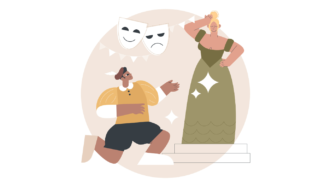
Culture shock

Title separator

Speaking
Class

talking about culture shock

This is a standalone lesson but it can also be used as part of the set titled:

LESSON OVERVIEW

The main objectives of this lesson are to:

  • talk about the meaning and impact of culture shock;
  • watch and discuss a video about culture shock experiences;
  • analyse opinions on culture shock and express agreement or disagreement. 

This lesson focuses on talking about culture shock. Students share their experiences and perspectives on the topic, examine the stages of culture shock and discuss what the experience of a foreign exchange student might be. They watch and discuss a short video about experiencing culture shock, examine viewpoints about it and share whether they agree or disagree with them. Students can also do a vocabulary activity at the beginning of the lesson.

B1 / Intermediate
B2 / Upper Intermediate
45 min
60 min
Speaking ClassUnlimited Plan

This is a Speaking Class worksheet. It includes a variety of tasks that let your students practise their speaking skills. This lesson format does not focus on grammar or vocabulary. Learn more about it here.

TALKING ABOUT CULTURE SHOCK

Before the main part of the lesson, you can do an extra vocabulary activity where students match halves to create phrases related to adapting to a new environment and culture. Then, the lesson starts with a warm-up in which students explain what the phrase ‘culture shock’ means using the words confusion, misunderstandings and unfamiliar. After that, they discuss questions about culture shock, its effects and their own experiences. Afterwards, students examine the stages of culture shock (honeymoon, frustration, adaptation and acceptance) and describe what they think the experience of a foreign exchange student might be like.

VIDEO AND MORE DISCUSSION

In this part of the lesson, students watch a video in which people describe culture shock. They complete statements about the things that surprised them in the video. After that, students answer questions and talk about different aspects of culture shock, advice for dealing with it and its impact on individuals. Then, they analyse and discuss things (e.g. values and beliefs, language, infrastructure and service, etc.) that might cause culture shock for foreigners coming to live in their country. Finally, students evaluate more statements about culture shock and explain whether they agree or disagree with them.

WORKSHEETS


Comments

Title separator

Leave a Reply

  1. Troy

    Perfect. More on culture related topic lessons would be great. Thank you!

    1. Ewa

      Thanks, Troy. We’ll do our best to deliver more! In the meantime, see other lessons on culture here.

  2. EveSmith

    Nice! As Troy said below, love these lessons related to culture as my students are very diverse.

    1. Ewa

      Great to hear that, Eve 🙂

  3. Natale Emerich Armani

    Hey, cool lesson. It’s just missing the first page with the title on the presentation

    1. Ewa

      Thanks, Natale!
      The title is shown on the fourth slide because the first three slides are of an optional vocabulary activity.

Browse other materials recommended for you

Title separator
ESL lesson on difficult conversations
B2 / Upper Intermediate | C1 / Advanced
Standard Lesson 60 min

That’s a tough question

General

Practise phrases for navigating uncomfortable topics with this ESL lesson on difficult conversations! Students share thoughts, watch an athlete handle questions at the Olympics and role-play asking and answering tough questions.

dental health vocabulary
B1 / Intermediate | B2 / Upper Intermediate
Standard Lesson 60 min

At the dentist’s

General

Help your students master dental health vocabulary! In this lesson, they discuss experiences, watch a video on why some people dislike dental visits and listen to conversations at the dentist’s. They also role-play dental appointments.

ESL lesson on communication styles
B2 / Upper Intermediate
Standard Lesson 60 min

Direct or indirect? (communication styles)

General Lifestyle

Discuss conversational directness across cultures! In this ESL lesson on communication styles, students practise useful adjectives, watch a video excerpt about why the Dutch are direct and work in pairs.

street and traffic vocabulary
B2 / Upper Intermediate
Vocabulary Lab 45 min / 60 min

On the road

General

Practise street and traffic vocabulary with this lesson! Students debate infrastructure design, explore traffic signs and play a memory game. They share experiences, read about a driver’s day in traffic and give a two-minute speech.

patterns and materials vocabulary
B1 / Intermediate | B2 / Upper Intermediate
Vocabulary Lab 45 min / 60 min

I like your checked scarf! (patterns and materials)

General

Discuss clothing with this lesson! Students describe outfits, practise patterns and materials vocabulary and suggest outfits for specific scenarios. They also talk about their preferences and experiences.

B1 / Intermediate
Critical Reading Club 45 min

Is it worth keeping?

General

In this lesson, students read and talk about collectibles! They practise phrases for discussing valuable items, debate collecting objects and write a time capsule note about personal valuable items.

airport vocabulary
A2 / Pre‐Intermediate | B1 / Intermediate
Vocabulary Lab 45 min / 60 min

At the airport

General

Practise useful airport vocabulary! In this lesson, students share their experiences, listen to common phrases used at the airport and collaborate to develop a creative story with the target vocabulary.

discussing offence
B2 / Upper Intermediate | C1 / Advanced
Standard Lesson 60 min

Did I cause offence?

General Global Issues

Engage students in discussing offence! They practise useful phrases, watch a video about overcoming offence and listen to a conversation involving a confrontation. Students also role-play managing offensive interactions.

ESL lesson on humanities
A2 / Pre‐Intermediate | B1 / Intermediate
Standard Lesson 60 min

Are you into humanities?

General

Talk about human-centred subjects with this ESL lesson on humanities! Students practise key verbs for the discussion, watch a video explaining what the humanities are and debate different scenarios.

Show more lessons

Questions

Title separator

Is there a minimum subscription period if I choose a monthly subscription?

No, there's no minimum required number of subscription months. You can cancel any time you want. Basically, you can sign up and then cancel your subscription the next day, which will mean you have access for 1 month and won't be charged again.

What currencies can I pay in for my subscription?

Our default currency is USD (American dollar), but you can also pay in EUR (euro), GBP (British pound sterling) or PLN (Polish zloty). You can change the currency you want to pay in at the Pricing page before selecting a subscription plan.

How can I edit an e-lesson plan?

You can get your own editable copy of an e-lesson plan and make changes to it. To do so, either (1) make a copy of it on your Google Drive (preferable method) or (2) download it in a Powerpoint format (but formatting might be a bit off so we can’t guarantee that it will work well).
Read more FAQ
Title separator

ESL Brains

Forgot password?
or continue with
Title separator
Title separator