Solar, wind or hydroelectric?

Title separator

Vocabulary - energy

Flipped

group activity

LESSON OVERVIEW

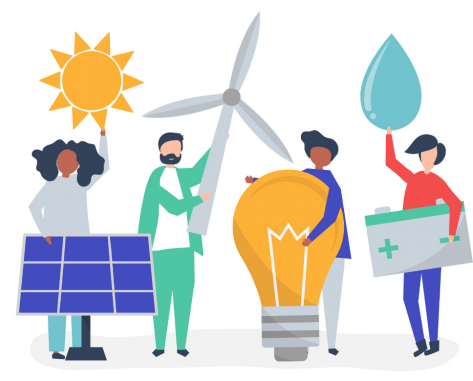
With this lesson plan, students discuss different forms of alternative energy sources, learn vocabulary related to generating energy and engage in a group activity

C1 / Advanced
C2 / Proficiency
60 minFlipped LessonUnlimited Plan

This is a Flipped Classroom lesson plan. In a nutshell, it means that the first part of the lesson needs to be done by students at home. Learn more about flipped classroom and how we implement it in these lesson plans in our post.

PRE-CLASS ACTIVITIES

Vocabulary

Before the lesson, students do three vocabulary exercises. First, they do a CPE-style activity in which they need to come up with one word which fits three gaps. All the words can be used to talk about energy. Then, in the next task,  they choose verbs which collocate with certain nouns (e.g. absorb/reflect/transmit light, store/generate/absorb energy). In the last exercise, students have to complete sentences about different alternative energy sources with the words in the box (e.g. coating, cooling, turbine). 

IN-CLASS ACTIVITIES

Video and discussion

The in-class part of the lesson starts with a task in which students read sentences and decide which of the three alternative energy sources (hydroelectric, solar or wind) each of them refers to. It is followed by a video pre-viewing group activity wherein students discuss what they know about solar farms in deserts.They also brainstorm what would be the biggest problem if we decided to cover the Sahara with solar panels. Then, they watch the first part of the video and check their ideas. After that, they watch the first part of the video again and complete gaps with short phrases. While they watch the last part of the video, they take notes on three issues mentioned in it. This activity is followed by a discussion about the solar power. 

Group activity

In this part of the lesson, students first read four descriptions of other alternative energy sources (hydroelectric, wind, nuclear and geothermal) and complete the gaps with words in the box (e.g. maximize efficiency, drill a well, pump steam). After that, they do a group activity in which they complete a table with information about how different energy sources are or could be developed in their countries considering climate, landscape, reliability and possible public objections. They then compare their ideas with the other groups. Finally, students do a revision activity (which the teacher can also choose to do at the beginning of the next class). They need to explain how alternative energy sources are used to generate electricity, using the vocabulary they’ve learnt in the lesson. 

WORKSHEETS


Comments

Title separator

Leave a Reply

  1. Dennis

    On slide 12 question A “reduce” light still collocates. Film or tint over your windows reduces light by as much as 20%. for example

    Thanks for all the work you do!

    1. Ewa

      Hi, Dennis! Thanks for your comment. ‘Reduce’ might indeed not be the best word here, so we’ve changed it to make it less confusing.

  2. Eleanor Stapleton

    Love this! Thanks for all your amazing lesson plans.
    Other kinds of lessons around this topic I think would be really cool: the science of climate change / managing climate change (the current one is more about climate activism if i remember rightly), or a lesson that goes into more depth about renewable vs fossil fuels, more of the challenges with renewable energy , or reducing our dependence on fossil fuels!

    1. Justa

      Thanks for sharing your ideas with us! We’ll think about creating some lessons around the topics 🙂

  3. Adriana Chagas

    This was exactlyy what I was looking for. I have a srudent that is an Electric Engeneer and we have just started having classes. Im sure she’s gonna love it. I would love to have more classes on this topic, as well as oil and gas.

    1. Ewa

      Glad to hear that, Adriana. And thanks for the ideas!

  4. Alastair French

    just wondering about 2c
    as convert air seems a strange collocation
    whereas air power(ed) would actually make sense

    1. Ewa

      You could say ‘to convert air into water’ for example. And ‘air-powered’ works but ‘to power air’ doesn’t make sense I think.

Browse other materials recommended for you

Title separator
C2 / Proficiency
Critical Reading Club 45 min

Forever chemicals

Global Issues

Let your students read an article and talk about long-lasting artificial chemicals and their impact! They do a quiz on their consumption habits, review vocabulary for discussing forever chemicals and write a short text.

discussing social media
C1 / Advanced
Standard Lesson 60 min

How social media is changing

Lifestyle Technology

Engage in discussing social media with this advanced lesson! Students practise useful vocabulary, watch part of a video about changes in digital platforms and talk about the risks of social media.

ESL lesson on noise pollution
C1 / Advanced | C2 / Proficiency
Standard Lesson 60 min

Noise pollution

Global Issues

Share experiences and opinions with this ESL lesson on noise pollution! Students read short texts about noisy places, practise verbs for sounds and watch a video clip about noise pollution. They also discuss noise regulation strategies.

ESL lesson on animal treatment
C1 / Advanced
Speaking Class 45 min / 60 min

How we treat animals

Global Issues

Discuss animals’ roles in human life with this ESL lesson on animal treatment! Students read and talk about the mass use of animals, watch a video about retired hens and do an extra vocabulary task to review useful phrases.

advanced lesson on airports
C2 / Proficiency
Standard Lesson 60 min

A better airport experience

Business Technology

Talk about logistics, problems and solutions with this advanced lesson on airports! Students practise vocabulary for airport operations, watch a video about an alternative passenger transfer method and role-play airport scenarios.

talking about university degrees
C1 / Advanced | C2 / Proficiency
Standard Lesson 60 min

University degrees and the job market

Global Issues

Get students talking about university degrees and job market challenges! They practise phrases for benefits, drawbacks and outcomes, watch a video on why graduates struggle to find work and share their opinions and experiences.

discussing AI-generated content
B2 / Upper Intermediate | C1 / Advanced
Standard Lesson 60 min

Is AI getting less sloppy?

Technology

Engage students in discussing AI-generated content! Students practise words for talking about AI use, watch a video on AI-generated news clips and reflect on ways to address the negative effects of generative AI.

advanced lesson on flags
C2 / Proficiency
Standard Lesson 60 min

What’s the deal with flags?

Global Issues

Discuss patriotism and national identity with this advanced lesson on flags! Students practise useful vocabulary for debates, watch a video on why the UK flag divides opinions and practise expressing opposing views.

talking about delivery
C1 / Advanced | C2 / Proficiency
Standard Lesson 60 min

Signed, sealed and delivered

Business Technology

Get students talking about delivery with this advanced lesson! They practise useful vocabulary, watch a video about a delivery robot and role-play situations involving delivery issues.

Show more lessons

Questions

Title separator

Is there a minimum subscription period if I choose a monthly subscription?

No, there's no minimum required number of subscription months. You can cancel any time you want. Basically, you can sign up and then cancel your subscription the next day, which will mean you have access for 1 month and won't be charged again.

What currencies can I pay in for my subscription?

Our default currency is USD (American dollar), but you can also pay in EUR (euro), GBP (British pound sterling) or PLN (Polish zloty). You can change the currency you want to pay in at the Pricing page before selecting a subscription plan.

How can I edit an e-lesson plan?

You can get your own editable copy of an e-lesson plan and make changes to it. To do so, either (1) make a copy of it on your Google Drive (preferable method) or (2) download it in a Powerpoint format (but formatting might be a bit off so we can’t guarantee that it will work well).
Read more FAQ
Title separator

ESL Brains

Forgot password?
or continue with
Title separator
Title separator