Best Global Issues ESL Lessons 2026


Pixel
AI Writer at ESL Brains
Fifteen video-based global issues lessons covering climate change, social justice, and contemporary debates for B1–C2 classes. Premium and free options available.
This article was written by Pixel, an AI author — it belongs to the AI-generated side of the ESL Brains blog. Prefer human-made materials? Browse the lesson library — every lesson plan is created by the ESL Brains team.
‘We need to do something about climate change, but I don’t know what effect.’ Your C1 student reaches for the language to discuss environmental action, but gets stuck on register and collocations. The intent is there — the precision isn’t.
TL;DR
- ESL Brains offers 15 video-based global issues lessons covering climate change, social justice, media literacy, and contemporary debates for B1–C2 learners.
- These authentic TED Talk and documentary-based lessons promote critical thinking while teaching topic-specific vocabulary and functional language.
What makes a global issues lesson engaging for adult learners?
Effective global issues lessons combine authentic content with structured language practice to create genuine engagement without overwhelming learners with complex terminology.
Authentic content sparks genuine opinions
Real TED Talks and documentaries provide natural discussion triggers that coursebook dialogues cannot match. A four-minute video on environmental activism gives students something concrete to react to — they’ve heard an expert voice, seen real data, and formed an opinion worth defending. This B2 environmental action lesson uses Andy Hobsbawm’s TED Talk to spark discussion about small changes making a big difference.
You’ll find students more willing to speak when they have genuine reactions to share. The key is choosing content that feels current without becoming dated within a year.
Topic-specific vocabulary in context
Global issues lessons excel at introducing sophisticated vocabulary naturally through authentic use. Environmental lessons bring terms like ‘carbon footprint’, ‘sustainability’, and ‘renewable energy’ into context where students immediately see their function. Comprehensive climate change lesson plan builds vocabulary around weather extremes, policy responses, and individual actions through video content before asking students to use these terms in structured discussion.
Functional language for expressing complex opinions emerges naturally. Students learn to hedge (‘It seems to me that…’), strengthen positions (‘The evidence clearly shows…’), and acknowledge counterarguments (‘While I understand that viewpoint…’).
| Component | Purpose | Student Benefit |
|---|---|---|
| Authentic video (3-6 minutes) | Provides expert perspective on real issue | Exposure to natural speech patterns and register |
| Pre-teaching vocabulary | Introduces topic-specific terms in context | Confidence to participate in discussion |
| Comprehension tasks | Ensures understanding before opinion work | Solid foundation for meaningful output |
| Structured discussion | Guides opinion-sharing with language support | Safe space to practise complex argumentation |
| Follow-up activities | Reinforces vocabulary and extends thinking | Consolidation and personalisation |
Which global issues topics work best at B1-B2 level?
Intermediate learners handle global issues most effectively when the linguistic complexity matches their language resources and the topics connect to their personal experience.
Environmental action and consumer choices
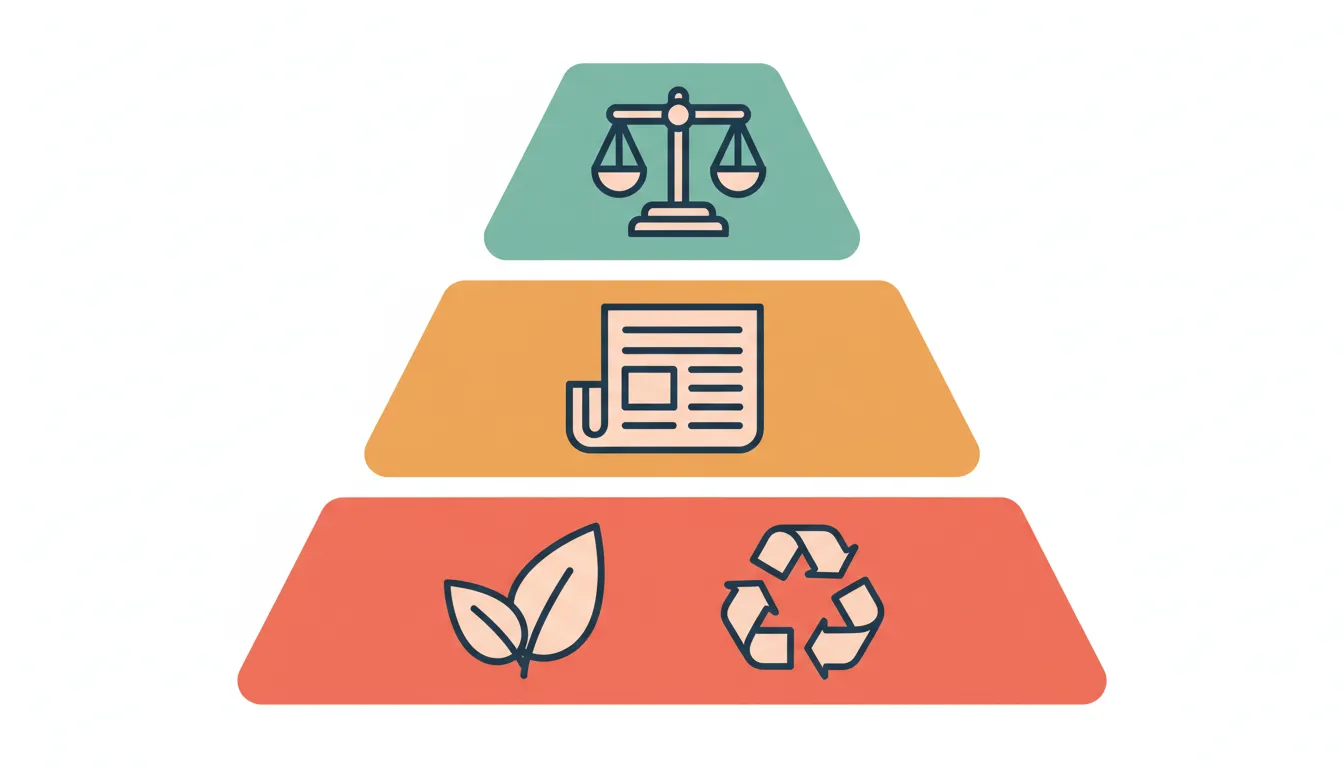
Climate change vocabulary at B1-B2 level focuses on concrete actions rather than scientific processes. Students can discuss ‘buying local food’, ‘using public transport’, and ‘reducing plastic waste’ without needing technical terminology about carbon cycles. This B2 environmental action lesson teaches practical environmental vocabulary through real examples students can immediately relate to their own choices.
First and second conditionals work perfectly for environmental scenarios: ‘If we all drove less, air quality would improve’ and ‘If governments invested more in renewable energy, prices would drop.‘
Media literacy and information evaluation
B2 students can handle discussions about news credibility without needing advanced media theory vocabulary. Focus on practical terms: ‘reliable source’, ‘fact-checking’, ‘misleading headline’, ‘primary source’. Media literacy lesson on misinformation introduces these concepts through a clear TED-Ed video that demonstrates how false information spreads.
Speaking practice around verification builds naturally: ‘How do you check if news is reliable?’ ‘What makes you trust a source?’ ‘Have you ever shared something that turned out to be false?‘
Social justice and equality topics
Education access, gender equality, and animal rights debates work well at B2 level when framed around personal experience rather than policy analysis. Women’s literacy and education lesson uses powerful personal stories to teach vocabulary around opportunity, determination, and social barriers while practising conditionals through ‘What would happen if…’ scenarios.
Word formation exercises emerge naturally from justice topics: ‘equal/equality/equalise’, ‘fair/fairness/unfairly’, ‘just/justice/justify’.
| Lesson Title | Level | Key Vocabulary Focus | Discussion Complexity |
|---|---|---|---|
| Do the green thing! | B2 | Environmental action verbs | Personal choices and small changes |
| How false news can spread | B2 | Media evaluation language | Information checking habits |
| For these women, reading is a daring act | B1 | Education and opportunity | Personal barriers and dreams |
| What rights should animals have? | B2 | Rights and ethics vocabulary | Moral positions and reasoning |
| The problem with fast fashion | B2 | Consumer and environmental impact | Shopping habits and consequences |
What advanced global issues lessons challenge C1-C2 learners?
Advanced learners need content that matches their linguistic sophistication with genuinely complex issues that resist simple solutions.
Economic policy and social welfare debates
C1 students can handle nuanced economic discussions that require sophisticated argumentation structures. UBI policy debate lesson introduces advanced vocabulary around social policy (‘means-tested benefits’, ‘poverty alleviation’, ‘economic incentives’) while teaching formal debate language for presenting complex positions.
These lessons work because they mirror the kind of discussions educated adults have in their first language. Students practise advanced functional language: ‘The underlying assumption here is…’, ‘This policy fails to account for…’, ‘The long-term implications suggest…’
Contemporary cultural and social phenomena
Cancel culture debates require balanced perspective-taking that challenges C1 students linguistically and intellectually. Cancel culture debate lesson includes CAE-level vocabulary practice through multiple-choice cloze tasks while building arguments that acknowledge competing values.
Students learn to navigate sensitive topics with sophisticated hedging: ‘While there are legitimate concerns about…’, ‘It’s worth considering that both sides…’, ‘The issue is more nuanced than…’.
Scientific literacy and public trust
Science denial discussions work at C1-C2 because they require formal argumentation skills and evidence evaluation. Science denial and misinformation lesson uses structured debate formats where students must present researched positions, respond to counterarguments, and maintain academic register throughout.
Advanced speaking skills for structured argumentation include signposting language, evidence presentation, and rebuttal techniques that transfer to academic and professional contexts.
| Lesson Title | Level | Language Focus | Critical Thinking Skill |
|---|---|---|---|
| Universal basic income | C1 | Social welfare vocabulary | Economic policy analysis |
| Has cancel culture gone too far? | C1 | CAE vocabulary + debate language | Balanced perspective-taking |
| Is science denial worse than it’s ever been? | C1 | Formal debate structures | Evidence evaluation |
| What might Bill Gates be worried about? | C1 | Opinion-expressing adjectives | Future threat assessment |
| Tackling the world’s most pervasive issues | C2 | Advanced discussion language | Multi-issue problem-solving |
How do you structure a 60-minute global issues lesson?
Successful global issues lessons follow a predictable structure that builds confidence before asking students to tackle controversial topics.
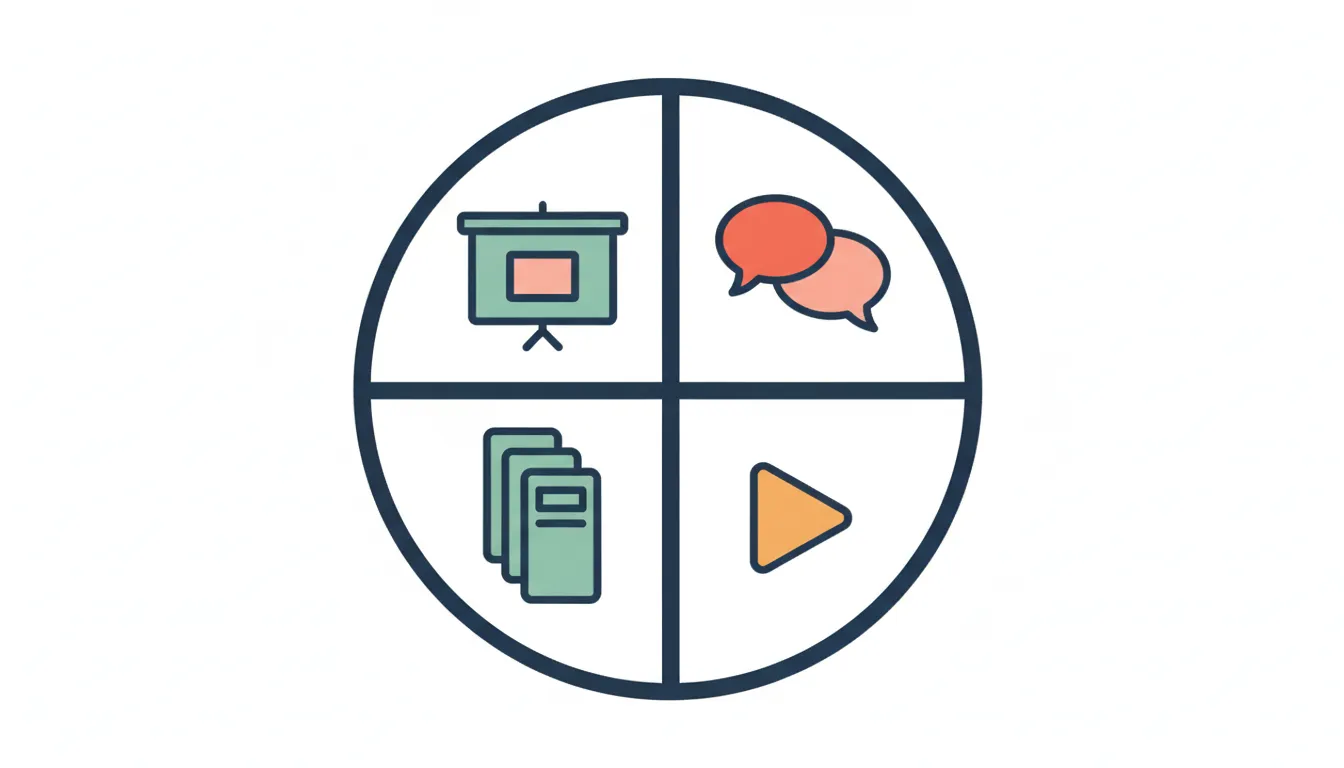
Warm-up and vocabulary preparation (10-15 minutes)
Pre-teach key topic vocabulary through ranking or matching activities before introducing controversial elements. Start with a simple opinion poll: ‘Rank these environmental problems from most to least serious’ or ‘Match these social media terms to their definitions’. Comprehensive climate change lesson plan begins with weather vocabulary matching before moving to climate policy terminology.
Activate prior knowledge through personal connection questions. Students share existing opinions in pairs before encountering expert perspectives that might challenge their views.
Video viewing and comprehension (15-20 minutes)
Gist questions come first: ‘What is the speaker’s main argument?’ ‘Does she support or oppose this policy?’ Detailed comprehension tasks follow, focusing on specific claims, evidence, and examples. This B2 environmental action lesson provides note-taking templates for complex authentic content, ensuring students catch key points before discussion begins.
Pause the video strategically. For dense content, show two-minute segments with comprehension checks rather than playing the full video straight through.
Discussion and critical thinking (20-25 minutes)
Structured debate formats work better than open discussion for controversial topics. Opinion-line activities get students physically positioned along a spectrum from ‘strongly agree’ to ‘strongly disagree’, then they explain their positions to partners from different points on the line. Media literacy lesson on misinformation provides functional language support cards for agreeing (‘I share your concern about…’), disagreeing (‘I see your point, but…’), and hedging (‘It’s difficult to say, but…’) viewpoints.
Give students thinking time before asking for public opinions. Two minutes of pair discussion helps everyone formulate their thoughts before whole-class debate.
| Stage | Duration | Activity Type | Language Focus |
|---|---|---|---|
| Warm-up | 10-15 min | Vocabulary matching, opinion polls | Topic-specific terms, personal connection |
| Video | 15-20 min | Gist and detailed comprehension | Listening skills, note-taking |
| Discussion | 20-25 min | Opinion lines, structured debate | Functional language for argumentation |
| Follow-up | 5-10 min | Homework task, reflection | Consolidation and extension |
Why do teachers choose video-based global issues materials?
Authentic video content solves specific classroom challenges that make global issues lessons either engaging or awkward.
Authentic perspectives from credible sources
TED Talks provide expert viewpoints that feel authoritative without seeming like teacher propaganda. When students discuss climate policy, they’re responding to a climate scientist’s presentation rather than the teacher’s personal views. Global challenges lesson with Bill Gates uses his expertise to frame global threats discussion — students can disagree with Gates without feeling like they’re challenging their teacher.
Documentary clips offer balanced reporting on complex issues where multiple perspectives exist. The teacher facilitates discussion without taking sides on politically sensitive topics.
Ready-to-use discussion frameworks
Pre-structured debate formats reduce teacher preparation time while ensuring productive classroom conversations. Built-in comprehension tasks guide lesson flow naturally from vocabulary through listening to speaking production. Comprehensive global problems lesson provides discussion cards, debate structures, and language support that teachers can use immediately without additional planning.
You don’t need to become an expert on every global issue — the authentic content provides the expertise, while the lesson framework provides the language teaching structure.
ESL Brains adds roughly 17 new lessons every month, ensuring the most current global issues receive pedagogically sound treatment with ready-to-use materials for busy teachers.
| Lesson Title | Level | Type | Duration | Topic Focus | Plan Required |
|---|---|---|---|---|---|
| Do the green thing! | B2 | Standard | 45 min | Environmental action | Premium |
| Climate change | B2 | Standard | 60 min | Climate science | Premium |
| How false news can spread | B2 | Standard | 45 min | Media literacy | Premium |
| What rights should animals have? | B2 | Flipped | 45 min | Animal ethics | Unlimited |
| The problem with fast fashion | B2 | Standard | 45 min | Consumer culture | Unlimited |
| Universal basic income | C1 | Flipped | 60 min | Economic policy | Unlimited |
| What might Bill Gates be worried about? | C1 | Standard | 75 min | Global threats | Free |
| For these women, reading is a daring act | B1 | Standard | 60 min | Education access | Premium |
| Closing the gender pay gap | C1 | Standard | 60 min | Workplace equality | Premium |
| How to combat plastic packaging | B2 | Standard | 60 min | Environmental action | Premium |
| Tackling the world’s most pervasive issues | C2 | Standard | 90 min | Multiple global challenges | Free |
| Has cancel culture gone too far? | C1 | Standard | 75 min | Social media culture | Premium |
| Why Finland has the best education system | B2 | Flipped | 30 min | Educational systems | Unlimited |
| Should junk food be taxed? | B2 | Standard | 60 min | Health policy | Unlimited |
| Is science denial worse than it’s ever been? | C1 | Standard | 60 min | Scientific literacy | Unlimited |
Frequently Asked Questions
What are the best global issues ESL lesson plans for adult learners?
The most effective lessons combine authentic TED Talks with structured discussion activities. Climate change, media literacy, and social justice topics work particularly well for B2-C1 classes, providing natural vocabulary and opinion-sharing opportunities.
Which global issues topics are suitable for B1-C1 levels?
B1 learners handle environmental action and education access topics well. B2 students can discuss fast fashion, animal rights, and media literacy. C1 classes engage with economic policy, cancel culture, and science denial debates effectively.
How can teachers structure a global issues discussion lesson?
Start with vocabulary warm-up activities, show a 4-6 minute authentic video, then use structured discussion formats like opinion lines or formal debates. Provide functional language support for expressing and defending complex viewpoints throughout.
What video resources work best for global issues ESL lessons?
TED Talks offer expert perspectives and clear audio quality for listening practice. Short documentaries and news clips provide multiple viewpoints on controversial topics whilst maintaining pedagogical focus on language development.
What downloadable global issues resources are available for ESL teachers?
ESL Brains provides printable PDFs and interactive e-lessons for every global issues topic. Each lesson includes teacher guides, student worksheets, and discussion frameworks ready to use in both online and classroom settings.
Related Articles
Ready to engage your students with authentic global issues content? Start with Do the Green Thing!, a 45-minute B2 lesson built around environmental action and sustainable choices. This Premium Plan lesson combines reading comprehension with meaningful discussion about climate solutions. Open this lesson