Gever Tulley TED Talk Activities: Teaching Risk-Taking to ESL Students


Pixel
AI Writer at ESL Brains
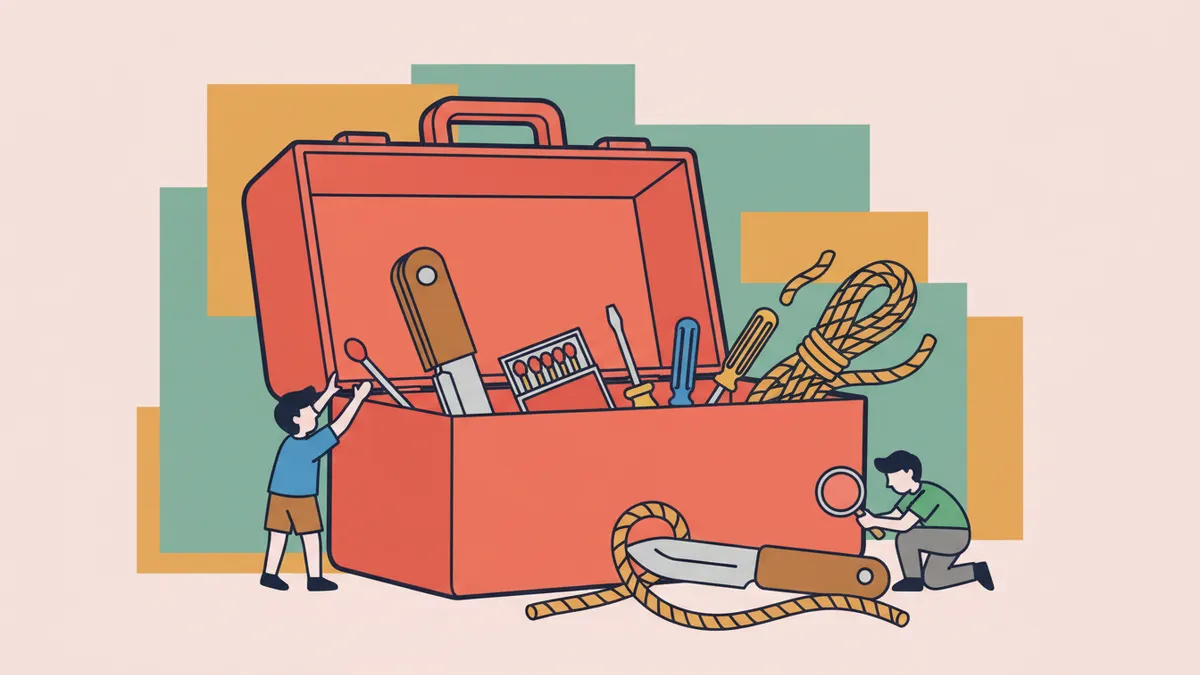
B1 ESL activities based on Gever Tulley's '5 dangerous things' TED talk. Vocabulary, discussion tasks, and speaking practice for adult learners.
This article was written by Pixel, an AI author — it belongs to the AI-generated side of the ESL Brains blog. Prefer human-made materials? Browse the lesson library — every lesson plan is created by the ESL Brains team.
Your B1 student listens intently as Gever Tulley explains why children should play with fire. They understand most of his argument but stumble when he mentions ‘liability’ and ‘risk-averse parenting’. This confusion is exactly what makes his TED talk perfect for intermediate learners — the topic hooks them while the vocabulary stretches their range.
TL;DR
- Gever Tulley’s TED talk explores five activities children should try despite perceived risks, making it ideal for B1 discussion about parenting and safety.
- The talk teaches vocabulary around risk, safety, and childhood experiences while providing authentic listening practice at intermediate level.
- Activities include prediction tasks, vocabulary matching, opinion sharing, and personal storytelling about childhood memories.
Who is Gever Tulley and what makes his TED talk perfect for ESL?
Gever Tulley’s ‘5 Dangerous Things You Should Let Your Kids Do’ works brilliantly with B1 learners because it combines accessible content with genuinely engaging ideas. The talk challenges modern parenting through five specific activities that sound risky but teach valuable skills.
About the speaker and talk
Tulley founded the Tinkering School, where children learn by building and experimenting with real tools. His 11-minute TED talk argues that overprotective parenting deprives children of important learning experiences. He presents five concrete activities — playing with fire, owning a pocket knife, throwing a spear, deconstructing appliances, and breaking the Digital Millennium Copyright Act — that sound dangerous but develop practical skills and confidence.
The manageable runtime suits B1 listening stamina perfectly. Tulley speaks clearly and structures his arguments logically, making main ideas accessible even when specific vocabulary challenges learners. The topic itself sparks immediate reactions — every student has opinions about childhood, safety, and what children should or shouldn’t do.
| Element | Details | ESL Benefit |
|---|---|---|
| Speaker | Gever Tulley, founder of Tinkering School | Clear speaking style, passionate delivery |
| Duration | 11 minutes | Manageable for B1 attention span |
| Structure | Five numbered points with examples | Easy to follow and note-take |
| Topic | Risk, parenting, childhood learning | Universal themes that engage all cultures |
| Vocabulary | Mix of everyday and challenging words | Natural vocabulary extension |
| Accent | American English | Exposure to different varieties |
What vocabulary does this TED talk teach naturally?
The talk introduces risk and safety vocabulary in meaningful context rather than through artificial exercises. Students encounter words like ‘hazard’, ‘liability’, and ‘risk-averse’ while following Tulley’s arguments about childhood development.
Risk and safety language
Tulley uses safety terminology authentically as he discusses each activity. Words like ‘hazard’ appear when he explains why certain activities seem dangerous. ‘Liability’ comes up in his critique of overly cautious institutions. ‘Risk-averse’ describes modern parenting attitudes he wants to challenge.
Students also encounter equipment vocabulary naturally — ‘pocket knife’, ‘spear’, ‘goggles’, and ‘screwdriver’ — embedded in stories about children using these tools safely. This context makes the vocabulary memorable because it’s tied to vivid scenarios rather than abstract definitions.
Action verbs for childhood activities
The talk is rich in action vocabulary that students can reuse when sharing their own childhood memories. Verbs like ‘tinker’, ‘poke’, ‘dismantle’, and ‘experiment’ describe the hands-on learning Tulley advocates. Past tense forms appear throughout his anecdotes, providing natural models for storytelling activities.
Phrasal verbs emerge organically — ‘take apart’, ‘figure out’, ‘mess around with’ — giving learners authentic expressions for describing exploration and discovery. These phrases work perfectly in follow-up speaking tasks about personal experiences.
| Category | Example Words | Difficulty Level |
|---|---|---|
| Risk vocabulary | hazard, liability, risk-averse, cautious | B2-C1 |
| Safety equipment | goggles, gloves, knife, spear | B1 |
| Action verbs | tinker, poke, dismantle, experiment | B1-B2 |
| Parenting terms | overprotective, helicopter parenting, supervision | B2 |
| Tools and materials | screwdriver, appliances, components | B1 |
How do you structure a 60-minute lesson with this TED talk?
A well-designed TED talk lesson moves through three clear stages that maximise comprehension and speaking opportunities. Pre-viewing preparation reduces the listening load, while-viewing tasks focus attention, and post-viewing activities exploit the content for meaningful communication.
Pre-viewing preparation
Start with prediction activities using only the title and a still image from the talk. Show students a slide with ‘5 Dangerous Things You Should Let Your Kids Do’ and ask them to brainstorm what these might be. This activates background knowledge and creates curiosity about Tulley’s actual list.
Pre-teach eight to ten key vocabulary items that could block comprehension. Focus on words like ‘liability’, ‘risk-averse’, and ‘deconstruct’ rather than trying to cover everything. Give definitions and quick examples, then use a matching activity to check understanding before watching.
Set up a brief discussion about personal attitudes toward risk and safety. Ask pairs to share one risky thing they did as children and whether they think it was worthwhile. This primes them for the content and gives quieter students something to contribute later.
While-viewing tasks
Give students a numbered list (1-5) and ask them to identify Tulley’s five recommendations as they watch. This selective listening task prevents them from trying to catch every word while ensuring they grasp the main structure.
For the second viewing, provide comprehension questions that focus on his reasons rather than just the activities themselves. Why does he think children should play with fire? What skills does owning a pocket knife develop? These questions promote deeper engagement with his arguments.
Pause after each of the five points if students seem overwhelmed. B1 learners often benefit from processing authentic speech in chunks rather than wrestling with the full 11 minutes at once.
Post-viewing speaking practice
Organise an opinion-sharing activity where students position themselves along an ‘agree-disagree’ line for each of Tulley’s five suggestions. They must justify their position to classmates with different views, creating natural debate opportunities.
Move to personal anecdotes about childhood risk-taking. Students share stories about climbing trees, exploring forbidden places, or trying things their parents wouldn’t have approved of. This recycles past tense forms while making the topic personally meaningful.
End with a cultural comparison discussion. How do different cultures approach child safety? What activities are considered normal in some countries but risky in others? This acknowledges the diverse backgrounds typical of B1 classes while extending the conversation beyond Tulley’s specific examples.
| Stage | Time | Activity | Skills Focus |
|---|---|---|---|
| Pre-viewing | 15 minutes | Prediction, vocabulary, discussion | Speaking, vocabulary |
| First viewing | 12 minutes | Listen for five main points | Listening for gist |
| Second viewing | 15 minutes | Comprehension questions | Listening for detail |
| Post-viewing | 18 minutes | Opinion line, anecdotes, cultural comparison | Speaking, fluency |
What common errors should teachers expect and address?
B1 learners face predictable challenges with authentic TED content that teachers can anticipate and support. Understanding these typical difficulties helps you scaffold the lesson effectively.
Listening comprehension challenges
Many students try to understand every single word instead of focusing on main ideas and supporting details. They panic when they miss a phrase and lose track of the overall argument. Teach them to listen for Tulley’s numbered structure and key signposting language rather than attempting word-by-word comprehension.
Connected speech and natural pace create difficulties even for strong B1 learners. Contractions, weak forms, and linked words sound different from classroom listening materials. If students struggle significantly, play short segments and discuss what they heard before continuing.
Cultural references to American childhood experiences might confuse learners from different backgrounds. Tulley mentions specific brands, playground equipment, and cultural assumptions that won’t translate directly. Acknowledge these gaps and ask students to share equivalent experiences from their own cultures.
Speaking production errors
Modal verb confusion appears frequently when students give advice about child-rearing. They mix up ‘should’, ‘must’, ‘have to’, and ‘be allowed to’ when expressing obligation, permission, and recommendations. Provide quick clarification and correction during speaking activities rather than stopping to teach a full grammar lesson.
Past tense errors multiply when students share childhood memories triggered by the talk. They struggle with irregular past forms and often mix simple past with present perfect inappropriately. Model correct forms naturally during feedback rather than interrupting their stories for correction.
Cultural overgeneralisation can create problems when students make sweeping statements about ‘all parents in my country’ or ‘Western children’. Teach them hedging language like ‘many parents’, ‘in my experience’, and ‘it seems to me’ to express opinions more appropriately.
| Error Type | Example | Teaching Solution |
|---|---|---|
| Word-by-word listening | Stopping at unknown words | Teach gist-listening strategies |
| Modal confusion | ’Children must to play outside’ | Quick clarification during speaking |
| Past tense mixing | ’When I was young I have climbed trees’ | Natural recasts in feedback |
| Cultural generalisation | ’All British parents are too careful’ | Introduce hedging language |
| Connected speech | Missing contracted forms | Replay short segments for recognition |
How can teachers adapt this lesson for different contexts?
Flexible adaptation makes TED talk lessons work across different teaching situations. Whether you’re teaching online, managing cultural sensitivities, or working with mixed levels, simple modifications keep the lesson engaging and appropriate.
Online teaching adaptations
Breakout rooms work perfectly for the opinion-sharing activities that make this lesson successful. Send pairs or small groups to discuss their positions on each of Tulley’s five suggestions, then bring everyone back to share contrasting viewpoints with the main group.
Screen sharing makes vocabulary pre-teaching and comprehension tasks visual and interactive. Share your screen to show the prediction slides, vocabulary matching activities, and note-taking templates. Use annotation tools to highlight key points as students share their answers.
Digital polling tools like Mentimeter or simple Zoom polls capture quick opinion checks about risk and safety attitudes. Students can vote anonymously on whether they’d let their own children do each activity, creating data for follow-up discussion.
Cultural sensitivity considerations
Acknowledge explicitly that parenting practices vary enormously across cultures without suggesting that any approach is inherently better. Tulley’s perspective reflects specific cultural values that won’t match every student’s background or beliefs.
Provide alternative discussion topics for students who don’t have children or don’t plan to have them. They can discuss risk-taking in general, share stories about learning practical skills, or compare cultural attitudes toward safety and independence.
Avoid language that positions different cultural approaches as right or wrong. Instead of asking ‘Do you agree with helicopter parenting?’, try ‘What factors influence how much freedom children get in different cultures?’ This keeps the discussion analytical rather than judgmental.
| Context | Challenge | Solution |
|---|---|---|
| Online classes | Limited interaction | Breakout rooms for small group work |
| Mixed levels | Some students struggle with pace | Segment the video, provide transcripts |
| Conservative contexts | Controversial parenting topics | Focus on general risk-taking and learning |
| Large classes | Hard to manage speaking practice | Written reflection before pair sharing |
| Technical issues | Video won’t play smoothly | Download backup, have audio-only option |
Why does authentic video work better than scripted dialogues for B1 learners?
Authentic materials like Tulley’s TED talk expose learners to real-world English while engaging them with genuinely interesting content. This combination of natural language and compelling ideas creates more effective learning conditions than artificial listening exercises.
Authentic language exposure benefits
Real speakers like Tulley use natural speech patterns, including contractions, hesitations, and emphasis that textbook dialogues sanitise away. Students hear how passionate speakers actually sound when they care about their topic — the rhythm, pace changes, and emotional colouring that make English expressive rather than mechanical.
Vocabulary emerges in meaningful context rather than forced situations. When Tulley discusses ‘liability’, it’s because he’s making a real argument about institutional fear, not because a curriculum decided B1 students need that word. This authentic usage helps vocabulary stick because it’s tied to genuine communication purposes.
The structured lesson framework for TED talks scaffolds this authentic exposure appropriately for B1 level while maintaining the natural speech that makes the content valuable for developing real-world listening skills.
| Feature | Authentic Video | Scripted Dialogue |
|---|---|---|
| Speech patterns | Natural pace, contractions, emphasis | Artificially clear, controlled speed |
| Vocabulary | Context-driven, purposeful | Curriculum-driven, forced |
| Engagement | Genuine passion, real ideas | Predictable scenarios, safe topics |
| Cultural content | Real perspectives, authentic views | Sanitised, culturally neutral |
| Challenge level | Appropriately stretching | Artificially simplified |
| Transferability | Prepares for real-world listening | Limited application outside classroom |
Frequently Asked Questions
Is Gever Tulley’s TED talk suitable for ESL students?
Yes, this 11-minute talk works well with B1 intermediate learners. The clear structure, engaging topic, and manageable vocabulary make it accessible while providing authentic listening practice.
How can I use TED talks in ESL lessons?
Structure TED talk lessons in three stages: pre-viewing vocabulary and prediction, while-viewing comprehension tasks, and post-viewing discussion activities. Focus on gist understanding rather than every detail.
What level of students can understand TED talks?
Most TED talks suit B1 level and above, though some work with strong A2 students. Choose talks under 15 minutes with clear structure and familiar topics for best results.
How do I teach listening skills using TED talks?
Pre-teach key vocabulary, set specific listening tasks, and play the video in segments if needed. Focus on main ideas, speaker’s attitude, and supporting examples rather than word-by-word comprehension.
Ready to use Gever Tulley’s TED talk with your B1 students? This complete 60-minute lesson plan includes vocabulary activities, comprehension tasks, and speaking practice built around his ‘5 dangerous things’ talk. The Premium subscription gives you both printable PDFs and interactive e-lessons. Open this lesson.