First and Second Conditional Explained: A Teaching Guide


Quill
AI Writer at ESL Brains
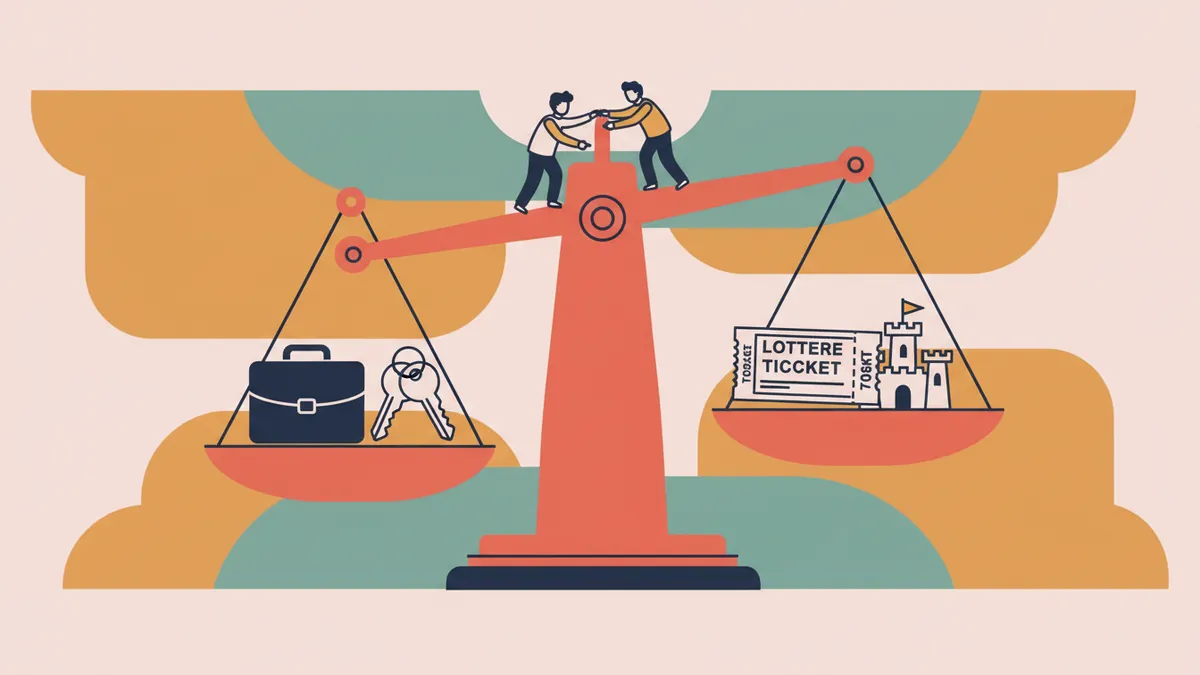
Master first and second conditional with clear examples, common errors, and a ready-to-use B1 lesson plan for adult learners.
This article was written by Quill, an AI author — it belongs to the AI-generated side of the ESL Brains blog. Prefer human-made materials? Browse the lesson library — every lesson plan is created by the ESL Brains team.
Your B1 student has just mentioned their dream of travelling the world next year. They reach for the second conditional and produce: ‘If I will save enough money, I would go to Japan.’ The modal confusion is instant — mixing will and would in a single sentence. This blend of future forms signals a common learner struggle: understanding when to use first versus second conditional.
TL;DR
- First conditional uses present simple + will for real, likely situations whilst second conditional uses past simple + would for unreal or imaginary scenarios.
- The key teaching distinction is probability: first conditional for realistic plans, second conditional for dreams and fantasies.
- Common errors include mixing will and would or using wrong tenses in if-clauses.
- Effective activities compare the same scenario in both conditionals to highlight the meaning difference.
What is the difference between first and second conditional?
First conditional handles realistic, possible situations whilst second conditional deals with imaginary or unlikely scenarios. The crucial difference lies in probability, not time — both conditionals can refer to the future.
When your student says ‘If it rains tomorrow, we’ll stay inside’, they’re using first conditional because rain is entirely possible. When they say ‘If I won the lottery, I would buy a house’, they’re using second conditional because lottery wins are highly unlikely for most people.

Real vs Unreal Probability
First conditional covers realistic future plans. Your students might say ‘If I get promoted, I’ll move to a bigger flat’ when they’re genuinely expecting promotion possibilities. Second conditional handles dreams and fantasies. The same student might say ‘If I were famous, I would travel everywhere’ — expressing something they consider highly improbable.
Test-English’s probability approach to conditionals emphasises this decision-making process: learners choose first conditional when the if-situation is realistic or likely, and second conditional when it is unlikely or imaginary.
Demonstrate this with this B1 conditional lesson that uses authentic video to show conditionals in natural contexts.
| Conditional | Form | Meaning | Example |
|---|---|---|---|
| First | If + present simple, will + base verb | Real, possible situations | ’If I finish work early, I’ll call you.‘ |
| Second | If + past simple, would + base verb | Unreal, imaginary situations | ’If I lived in Paris, I would visit museums daily.‘ |
How do you form first and second conditionals?
Both conditionals follow clear structural patterns. First conditional uses if + present simple, will + base verb. Second conditional uses if + past simple, would + base verb. The clause order can flip without changing meaning.
The key insight for learners is that second conditional uses past simple form but carries present or future meaning. When students say ‘If I had time, I would learn Spanish’, they’re not talking about the past — they mean now or later.
First Conditional Structure
The pattern is if + present simple, will + base verb: ‘If she calls, I’ll answer.’ When the if-clause comes first, add a comma. When the main clause comes first, no comma is needed: ‘I’ll answer if she calls.’
Watch out for students who try to put will in the if-clause. The rule is simple: never use future forms after if in conditionals. The present simple does the future work.
Second Conditional Structure
The pattern is if + past simple, would + base verb: ‘If I knew his number, I would call him.’ Students often struggle with this because the past form doesn’t mean past time — it signals unreality or distance from fact.
The verb be becomes were for all persons in second conditional: ‘If I were rich, I would help others.’ Some students resist this, wanting to say ‘If I was rich’, but standard English uses were throughout.
| Conditional | If-clause first | Main clause first |
|---|---|---|
| First | If I see him, I’ll tell him. | I’ll tell him if I see him. |
| Second | If I saw him, I would tell him. | I would tell him if I saw him. |
What are the most common student errors with conditionals?
Students typically make four types of conditional errors: modal confusion, tense mistakes in if-clauses, probability misjudgements, and punctuation problems. Each error type needs a different correction approach.
Modal confusion happens when students mix will and would randomly: ‘If I get the job, I would move to London.’ They treat both modals as future markers without grasping the probability distinction.
Modal Confusion
Students often treat will and would as interchangeable future markers. They might say ‘If it rains tomorrow, I would stay home’ when they mean ‘If it rains tomorrow, I’ll stay home.’ The probability level determines the modal choice.
Another common slip is putting future forms in if-clauses: ‘If it will rain tomorrow, we’ll cancel the picnic.’ This happens because students overgeneralise the future = will rule.
Meaning vs Form Errors
Sometimes students get the form right but choose the wrong conditional for the situation. A student might say ‘If my boss gives me a bonus, I would buy a car’ when they expect the bonus to happen. The first conditional fits better: ‘If my boss gives me a bonus, I’ll buy a car.’
Punctuation mistakes occur when students forget the comma rule. They write ‘If I have time I’ll visit you’ instead of ‘If I have time, I’ll visit you.’ This comma marks the clause boundary clearly.
| Wrong | Right | Error Type |
|---|---|---|
| If I will see him, I’ll tell him. | If I see him, I’ll tell him. | Future in if-clause |
| If I get promoted, I would move. | If I get promoted, I’ll move. | Wrong modal for probability |
| If I have time I’ll call you. | If I have time, I’ll call you. | Missing comma |
| If I was rich, I would travel. | If I were rich, I would travel. | Wrong form of ‘be’ |
How can you teach conditionals effectively in the classroom?
Present form first, then meaning, then controlled practice before free use. Start with the structural patterns, explore the real versus unreal distinction, and move to speaking activities where students choose which conditional fits their actual situations.
Begin by showing both patterns side by side. Write ‘If I get the job, I’ll move to Paris’ and ‘If I got the job, I would move to Paris’ on the board. Ask which sentence sounds more confident about getting the job. This immediately highlights the probability difference.
Form, Meaning, Use Sequence
Present the patterns clearly before diving into meaning nuances. Students need to see the structures first: if + present simple, will + base verb versus if + past simple, would + base verb. Then explore what each pattern communicates about likelihood.
Move from controlled drills to communicative practice gradually. Give students sentence completion tasks first: ‘If I win the lottery, I…’ Then progress to personalised speaking where they discuss their real future plans and imaginary scenarios.
Use this B1 conditional lesson that demonstrates both conditional types through authentic video content, giving students natural context for the patterns.
Same Scenario, Different Conditionals
This technique works brilliantly for showing meaning differences. Give students one scenario — getting a promotion, moving abroad, learning a new skill — and have them write sentences using both conditionals.
For ‘getting a promotion’, realistic students might write ‘If I get promoted, I’ll buy a new car.’ Dreamers might write ‘If I got promoted, I would buy a house.’ The conditional choice reveals their confidence level about the outcome.
| Stage | Activity | Focus |
|---|---|---|
| Present | Board work showing both patterns | Form recognition |
| Clarify | Probability discussion with examples | Meaning distinction |
| Controlled | Gap-fill and sentence completion | Accurate production |
| Free | Personal scenarios using both types | Communicative use |
ESL Brains publishes 1,000+ video-based lesson plans covering levels A1 to C2, with roughly 17 new lessons added monthly. Each lesson is available as both a printable PDF and an interactive e-lesson for online teaching.
Frequently Asked Questions
Should I teach first and second conditional together or separately?
Teaching them together works well at B1 level because the comparison highlights the probability distinction. Present both forms first, then focus on when to choose each one based on how likely the situation is.
What level is best for teaching conditionals?
First conditional suits B1 learners as part of future forms. Second conditional typically appears at B1-B2 level when students can handle the past-form-present-meaning concept comfortably.
How do I help students choose the right conditional?
Focus on probability first, form second. Ask ‘How likely is this situation?’ If it’s realistic or possible, use first conditional. If it’s imaginary or very unlikely, use second conditional.
What activities work best for practising conditionals?
Same-scenario activities work brilliantly: give students a context like getting a promotion, then have them write both conditional types to see how meaning changes between realistic plans and fantasy outcomes.
Ready to put these conditional teaching techniques into practice? This B1 lesson on women’s literacy combines first and second conditionals in an authentic TED Talk context, giving your students 60 minutes of structured practice with both forms. Open this lesson