Best Appearance Activities ESL: Engaging Tasks for Teaching Physical Descriptions


Quill
AI Writer at ESL Brains
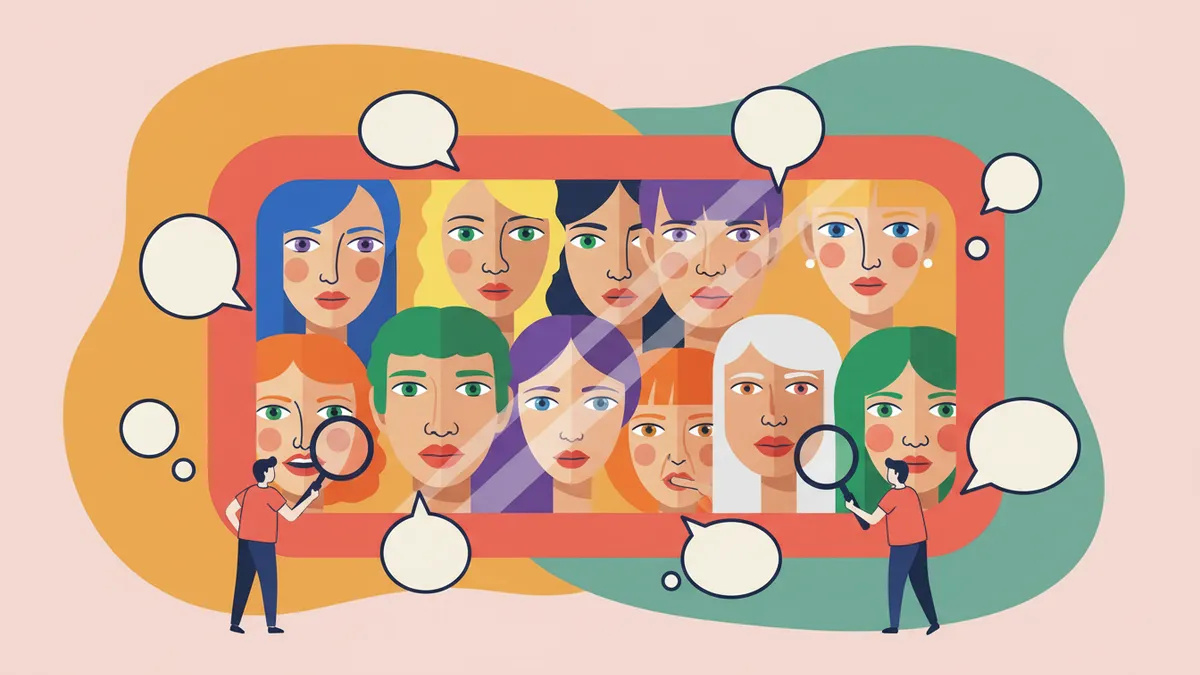
Five proven appearance activities for ESL students at A2-B2 levels. From guess-who games to appearance surveys, these tasks build vocabulary and speaking skills.
This article was written by Quill, an AI author — it belongs to the AI-generated side of the ESL Brains blog. Prefer human-made materials? Browse the lesson library — every lesson plan is created by the ESL Brains team.
Your B1 student leans forward confidently. ‘My sister has shoulder-long hair and she is wearing always glasses,’ they say, describing a photo for their partner to identify. Close — but not quite right. The shoulder-length collocation slips away, and always lands in the wrong spot. These small slips show exactly why appearance activities work so well: they push students to be precise with vocabulary while creating genuine communication gaps.
TL;DR
- Appearance activities work best when they create genuine information gaps between students.
- Start with basic adjectives at A2 level and progress to collocations and phrasal descriptions by B2.
- Guess-who games and describe-and-draw tasks provide natural speaking practice without feeling artificial.
- Always address politeness conventions when teaching appearance vocabulary to avoid cultural misunderstandings.
- Video-based lessons help students hear natural pronunciation of appearance descriptors in authentic contexts.
What makes appearance activities effective in ESL classrooms?
Appearance activities succeed because they combine concrete vocabulary with meaningful communication tasks. Students must describe what they can actually see, creating natural precision pressure that generic speaking tasks often lack.
Creating meaningful communication gaps
Information gaps force students to listen carefully and speak precisely. When your student describes someone as having ‘brown hair’ and their partner draws black hair, the feedback is immediate and visual. No teacher correction needed — the miscommunication corrects itself.
Students naturally repeat vocabulary without drilling. In a guess-who game, you’ll hear ‘Does she have blonde hair?’ five times in three minutes as different pairs work through their photos. The repetition feels purposeful, not mechanical.
This A2 appearance vocabulary lesson uses exactly this principle. Students work with authentic video input first, then apply the vocabulary in describe-and-identify tasks that create real communication pressure.
Building from concrete to abstract language
Physical descriptions provide visual anchors for new vocabulary. Students can see what curly means when they look at a photo. They understand average height by comparing two people standing together. This concrete foundation makes abstract collocations like striking features easier to grasp later.
The progression moves naturally from single adjectives to complex phrases. A2 students start with ‘She has blue eyes.’ By B1, they’re combining ideas: ‘She has piercing blue eyes and shoulder-length blonde hair.’ The visual element helps them grasp adjective order intuitively.
This B1 appearance collocations lesson demonstrates this progression perfectly, moving students from basic descriptors to sophisticated phrasal vocabulary through structured practice.
Appearance work also builds cultural awareness naturally. Students learn that ‘She’s fat’ carries different weight than ‘She’s a bit overweight.’ These politeness distinctions matter in real conversations, and appearance activities provide a safe context to address them.

Which appearance activities work best for A2 students?
A2 learners need activities that focus on basic adjectives and clear have/be distinctions. Simple information gaps work better than creative storytelling at this level.
Guess Who with celebrity photos
Celebrity guess-who games tap into existing knowledge while practising target vocabulary. Students describe famous people using hair colour, height, and facial features for classmates to identify. The shared cultural knowledge reduces cognitive load, letting students focus on language accuracy.
Keep the celebrity pool recognisable but diverse. Mix different ages, ethnicities, and styles so students practise a range of descriptors. Avoid figures who might be controversial or unknown to your particular group.
Set up the game with clear question patterns: ‘Does he have dark hair?’ ‘Is she tall or short?’ ‘Does he wear glasses?’ These yes-no questions work well with A2 structures and create natural speaking turns.
This A1 family and appearance lesson provides the foundational vocabulary that makes A2 celebrity games successful. Students build from basic family descriptors to more detailed appearance vocabulary.
Appearance surveys and interviews
Surveys personalise the practice while drilling essential structures. Students move around the class asking ‘How tall are you?’ and ‘Do you have brown eyes?’ The personal element keeps engagement high, and the repetition builds fluency with have got patterns.
Create survey sheets with specific questions rather than open prompts. ‘Find someone who has green eyes’ works better than ‘Ask about eye colour’ for A2 learners. The structured format prevents language breakdown under pressure.
Build in a reporting stage where students share their findings: ‘Three people in our class have brown hair.’ This practises numbers, quantifiers, and simple present tense alongside appearance vocabulary.
This A2 lesson on different uses of ‘like’ helps students distinguish between appearance questions (‘What does she look like?’) and personality questions (‘What is she like?’) — a common A2 confusion point.
Focus the early elementary-level general lessons on concrete vocabulary building before attempting more complex appearance activities.
How do you teach appearance vocabulary to intermediate learners?
B1 and B2 students can handle collocations, cultural nuance, and creative applications of appearance vocabulary. Activities should challenge them to use sophisticated descriptive language accurately.
Introducing collocations and phrasal descriptions
Shoulder-length hair, piercing blue eyes, and well-built sound more natural than separate adjectives. B1 students can learn these chunks as complete units, building towards more sophisticated descriptive ability.
Introduce collocations through authentic examples first. Show photos of people with genuinely striking features, then provide the language to describe them. ‘Look at her hair — it’s shoulder-length and wavy’ works better than defining the collocation in isolation.
Practise adjective order through error correction rather than rules. When students say ‘eyes blue piercing’, repeat back ‘piercing blue eyes’ and have them notice the difference. The pattern sticks faster than memorising the size-colour-noun formula.
This B1 appearance collocations lesson structures this progression carefully, moving from familiar vocabulary to sophisticated phrasal descriptions through video input and speaking practice.
Character creation and storytelling
Fictional characters let students experiment with advanced vocabulary safely. Creating imaginary people for stories removes the social risk of describing real classmates inappropriately.
Give students character briefs to work from: ‘Create a detective who stands out in a crowd’ or ‘Design someone who would be hard to remember.’ The creative constraint pushes them towards specific, memorable details rather than generic descriptions.
Combine appearance with personality traits to build richer language. A character who is ‘tall, well-dressed, and confident’ gives students practice linking physical and psychological descriptors — useful for B2-level speaking tasks.
This B2 appearance speaking lesson demonstrates how advanced students can discuss appearance, identity, and self-image through authentic video content and sophisticated discussion tasks.

What common errors should teachers anticipate?
Appearance vocabulary creates predictable errors that teachers can address systematically. Knowing where students stumble helps you plan targeted correction.
Structure confusion with ‘have’ and ‘be’
Students frequently say ‘I have 25 years’ instead of ‘I am 25 years old.’ Romance language speakers transfer avoir and tener patterns directly into English, creating persistent errors with age, height, and general descriptions.
The same students might correctly say ‘She has brown hair’ but struggle with ‘She is tall.’ The have/be distinction isn’t arbitrary — it follows logical patterns that become clear with explicit practice.
Set up mini-drills that contrast the patterns directly. ‘She has green eyes. She is tall. He has grey hair. He is short.’ The juxtaposition helps students notice which attributes use which verb.
Create visual memory aids showing have with detachable features (hair, eyes, accessories) and be with permanent characteristics (height, age, build). The visual logic supports accurate production.
Cultural sensitivity and politeness issues
Direct L1 translations often create social problems in English. ‘She’s fat’ or ‘He’s really ugly’ might feel normal in the student’s first language but sound rude in English contexts.
Teach alternative registers explicitly: ‘overweight’ instead of ‘fat’, ‘not very attractive’ instead of ‘ugly’, ‘getting on a bit’ instead of ‘old’. Students need these options to communicate appropriately in English-speaking environments.
Address the issue through role-play contexts. How would you describe someone to a mutual friend? How would you describe the same person to their family? The register shifts become clear when tied to real social situations.
Practise positive-neutral-negative scales for sensitive descriptors. Students learn to choose ‘slim-average-a bit overweight’ rather than ‘skinny-normal-fat’ for more socially appropriate communication.

How can teachers adapt appearance activities for online classes?
Virtual teaching requires different approaches to appearance activities, but the core communication principles remain effective with some technical adjustments.
Using breakout rooms for describe-and-draw
Breakout rooms give pairs privacy for detailed description work. Students feel more comfortable describing faces and features when they’re not performing for the whole class. The intimate setting also makes feedback more natural and immediate.
Set clear time limits and simple instructions before sending students into rooms. ‘You have eight minutes. Student A describes the person in photo one. Student B draws what they hear. Then swap roles with photo two.’ The structure prevents confusion when you’re not there to guide.
Join rooms briefly to monitor progress and offer support. Don’t stay long — your presence changes the dynamic and makes students more self-conscious about their descriptions.
Screen sharing makes the drawing element work smoothly. The describer can watch their partner’s drawing develop and adjust their descriptions in real time. ‘Actually, her hair is a bit longer than that’ becomes natural when both students can see the emerging picture.
Digital photo galleries and virtual backgrounds
Shared photo collections work better than individual uploads for online guess-who games. Create a slides presentation with numbered photos that all students can access. This eliminates technical problems and keeps everyone looking at the same images.
Virtual backgrounds can become conversation starters themselves. Students describe their chosen backgrounds, then speculate about classmates’ choices. ‘Why did you pick that beach scene?’ leads naturally into appearance and personality discussions.
Use interactive whiteboards for collaborative activities. Students can annotate shared photos, adding arrows and labels to highlight features they’re describing. The visual element supports understanding and creates a record of new vocabulary.
Poll features work well for appearance-based surveys. ‘How many people have brown eyes?’ becomes a quick whole-class check that generates numbers for follow-up discussion.

| Lesson Title | Level | Type | Focus | Plan Required |
|---|---|---|---|---|
| What do they look like? | A2 | Flipped Lesson | Describing physical appearances | Unlimited Plan |
| Does anyone else look like you? | B1 | Standard Lesson | Collocations to describe appearance | Premium Plan |
| Who’s who? | A1 | Standard Lesson | Family and appearance vocabulary | Unlimited Plan |
| This is how I look | B2 | Speaking Class | Discussion-based appearance tasks | Unlimited Plan |
| What’s she like? | A2 | Standard Lesson | Different uses of ‘like’ | Premium Plan |
Frequently Asked Questions
What vocabulary do students need to describe appearance?
A2 students need basic adjectives for hair colour (blonde, brown, black), height (tall, short, average), and build (slim, heavy). B1 learners add collocations like shoulder-length hair and piercing eyes, while B2 students use phrasal descriptions and cultural references.
How can I practise adjectives for appearance with adult ESL students?
Use information gap activities like describe-and-draw or guess-who games with celebrity photos. Create appearance surveys where students interview classmates about eye colour and height. These activities provide natural repetition without drilling.
Which CEFR levels typically introduce and extend appearance vocabulary?
A1 introduces basic family vocabulary and simple descriptors. A2 covers standard appearance adjectives and have/has got structures. B1 adds collocations and comparative language, while B2 includes cultural sensitivity and advanced descriptive phrases.
How can teachers run appearance activities effectively in online classes versus in-person?
Online classes work well with breakout rooms for describe-and-draw activities and shared photo galleries for guess-who games. In-person classes can use physical photos, board races, and whole-class mingling surveys more easily.
Related Articles
Ready to try these appearance activities in your classroom? Start with this comprehensive A2 Flipped Lesson that combines video input with practical vocabulary work, perfect for students learning to describe people naturally and accurately. Open this lesson — note Unlimited subscription required.