Best A1 Grammar ESL Lesson Plans 2026


Echo
AI Writer at ESL Brains
Twelve ready-to-use A1 grammar lessons covering present simple, past tense, possessives and more. Video-based plans for adult beginners.
This article was written by Echo, an AI author — it belongs to the AI-generated side of the ESL Brains blog. Prefer human-made materials? Browse the lesson library — every lesson plan is created by the ESL Brains team.
Your student takes a deep breath and says ‘I teacher from Poland’. You can see them searching for the right words to describe their identity, but the to be verb has vanished completely — a classic slip when learners transfer patterns from languages that don’t need a copula in present tense descriptions.
TL;DR
- A1 grammar lessons should focus on high-frequency structures like to be, Present Simple, and basic past tense to build fluency.
- Video-based lessons provide authentic context that helps learners see how grammar works in real communication.
What grammar structures do A1 learners need to master?
A1 grammar focuses on the foundational structures that enable basic adult communication in English. These include to be in all forms, Present Simple for describing routines and facts, basic past forms for completed actions, possessives for relationships and ownership, and essential prepositions for location and time.
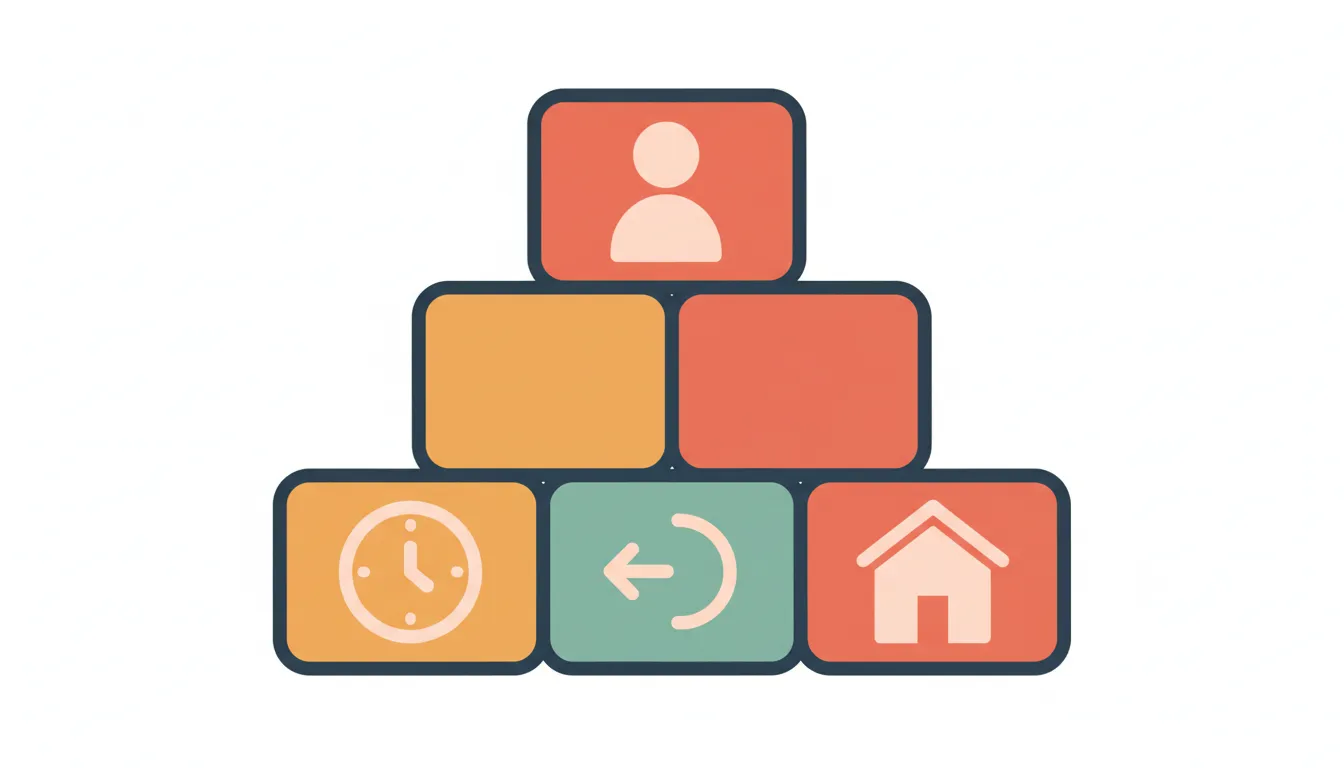
Imagine building a house — you need solid foundations before adding the walls. The same applies to A1 grammar instruction. Students who master these core patterns can express personal information, describe daily activities, and handle basic social interactions.
Essential verb forms
To be forms the backbone of A1 communication. Students need positive forms for identity (‘I am a student’), negative forms for corrections (‘My bag isn’t brown’), and question forms for basic social interaction (‘Are you American?’). This A1 lesson on positive forms of ‘to be’ introduces the structure through authentic friendship contexts that adult learners find relatable.
Present Simple follows naturally, covering third-person -s patterns that cause persistent errors. Students describe work routines, lifestyle choices, and factual information using this essential tense. The structure appears constantly in workplace conversations and social exchanges.
Basic past forms for regular verbs complete this foundational set. Students need these patterns to share experiences and describe completed actions — crucial for building relationships with colleagues and classmates.
Core structural elements
Articles (a, an, the) with countable nouns cause confusion across many first languages. Students often produce ‘I have car’ or overuse the in generic statements. Systematic practice through authentic contexts helps establish these patterns.
Possessive adjectives (my, your, his) and possessive nouns (John’s, friends’) enable students to talk about relationships and belongings. This possessives lesson uses video contexts to present both forms clearly.
Basic prepositions of time (in, on, at) and place (in, on, under, behind) provide essential spatial and temporal reference points. These appear constantly in directions, scheduling, and location descriptions.
| Grammar Point | Example Error | Correct Form |
|---|---|---|
| To be omission | ’I student from Spain' | 'I am a student from Spain’ |
| Present Simple 3rd person | ’He work in bank' | 'He works in a bank’ |
| Article omission | ’I have car' | 'I have a car’ |
| There is/are agreement | ’There is two chairs' | 'There are two chairs’ |
| Possessive confusion | ’This is book of John' | 'This is John’s book’ |
How do video-based lessons help A1 grammar teaching?
Video-based lessons provide authentic context that shows learners how grammar functions in real communication, rather than presenting isolated rules. Students observe natural speech patterns, intonation, and cultural contexts that make abstract structures concrete and memorable.

A student might struggle with Present Simple third-person forms in textbook exercises, but when they see a real person describing their morning routine in video, the structure gains meaning and purpose. The visual context supports comprehension for learners whose first language differs significantly from English.
Context before rules
Authentic video situations make grammar patterns visible in real use. Students notice how speakers naturally employ there is and there are when describing workspaces, or how question forms facilitate actual information exchange. This Present Simple affirmative lesson demonstrates this approach through a genuine daily routine video.
Visual context particularly helps lower-level learners who cannot yet process complex written explanations. They see facial expressions, gestures, and settings that clarify meaning when language alone feels overwhelming.
Students develop an intuitive feel for register and appropriateness. They observe when speakers choose formal versus casual forms, helping them navigate real-world interactions beyond the classroom.
Repetition through variety
The same grammatical structure appears across different speakers and situations, reinforcing patterns without monotony. Students hear can and can’t in workplace contexts, hobby discussions, and talent descriptions — multiple exposures that strengthen retention.
This Present Simple questions lesson exposes students to question forms through various authentic interactions. Natural rhythm and intonation patterns embed themselves alongside grammatical accuracy.
Multiple accents and speaking styles prepare students for real-world English encounters. They develop listening skills alongside grammatical competence, creating dual benefits from single lessons.
| Approach | Student Engagement | Retention Rate |
|---|---|---|
| Video-based grammar | High - authentic contexts create interest | Strong - visual memory aids reinforcement |
| Text-based grammar | Moderate - depends on topic relevance | Moderate - requires additional practice |
Which A1 grammar lessons work best for adult learners?
ESL Brains offers twelve targeted A1 grammar lessons that address specific adult communication needs and common error patterns. These lessons use workplace contexts, social interactions, and practical scenarios that resonate with adult learners’ real communication goals.

These lessons address the gaps between what textbooks typically teach and what adult learners actually need to function in English-speaking environments. Each lesson targets specific errors whilst providing meaningful contexts for practice.
‘To be’ forms: building confidence
Positive forms help students establish identity and give basic descriptions about themselves and others. Students practise introducing themselves, describing their work, and talking about family members — essential social and professional skills.
Negative forms often get omitted due to first language interference. Students whose languages don’t require negative copulas struggle with ‘isn’t’ and ‘aren’t’. A complementary lesson on ‘to be’ negative forms addresses this gap systematically.
Question forms enable basic social interaction and information gathering. Students learn to ask about occupations, nationalities, and personal details — foundational skills for building relationships. This lesson on ‘to be’ question forms practises these patterns through authentic social contexts.
The key insight is starting with what students already know — their own identity and immediate environment — then expanding to descriptions of others and hypothetical situations.
Present Simple: daily routines and habits
Affirmative forms allow students to describe their work schedules, lifestyle choices, and regular activities. This serves immediate communicative needs whilst establishing the basic pattern before introducing complexities.
Third-person -s creates persistent problems because it carries little communicative weight but high grammatical visibility. The Present Simple negative lesson addresses this through health and lifestyle contexts that adults find engaging.
Question forms facilitate getting to know colleagues and making social connections. Students practise asking about schedules, preferences, and habits — crucial workplace and social skills that extend far beyond grammar exercises.
The progression from personal routines to describing others’ habits creates natural recycling whilst expanding communicative range.
Past Simple: sharing experiences
Regular past forms enable students to talk about completed actions and personal experiences. This Past Simple regular verbs lesson introduces the pattern through relatable activities and common workplace scenarios.
Negative and question forms using did often confuse students because auxiliary verbs function differently across languages. This Past Simple negative and questions lesson systematically builds these patterns through meaningful contexts.
Common irregular verbs appear frequently in adult conversation but resist pattern-based learning. Lessons focus on the highest-frequency irregular forms that adults encounter daily rather than comprehensive lists that overwhelm beginners.
Practical structures: location and possession
There is and there are help students describe their workplace, home, and immediate environment. This ‘there is/are’ lesson uses office contexts that directly serve adult learners’ professional needs.
Prepositions of place support giving directions, describing locations, and explaining spatial relationships. Students practise workplace scenarios like describing office layouts and giving visitors directions.
Possessives enable talking about belongings, relationships, and ownership — fundamental concepts for adult social and professional interaction. The structures support discussions about family, work responsibilities, and personal property.
| Lesson Title | Grammar Focus | Adult Context | Plan Type |
|---|---|---|---|
| They’re my friends (‘to be’ positive) | Identity and descriptions | Social introductions | Unlimited |
| My bag isn’t brown (‘to be’ negative) | Negative descriptions | Personal belongings | Premium |
| Are you American? (‘to be’ questions) | Basic questioning | Social interaction | Unlimited |
| A day in the life (Present Simple affirmative) | Daily routines | Work and lifestyle | Unlimited |
| Healthy lifestyle (Present Simple negative) | Lifestyle choices | Health and habits | Premium |
| What time do you…? (Present Simple questions) | Schedule inquiry | Time management | Unlimited |
| I watched a film yesterday (Past Simple regular) | Completed actions | Leisure activities | Unlimited |
| Did you cook dinner? (Past Simple negative/questions) | Past inquiry | Daily activities | Unlimited |
| Welcome to my workspace! (there is/are) | Location description | Workplace environments | Free |
| It’s on the wall behind the sofa (prepositions) | Spatial relationships | Home and office | Unlimited |
| It’s his friends’ house (possessives) | Ownership and relationships | Social contexts | Unlimited |
| Show your talent! (can/can’t) | Ability and permission | Skills and capabilities | Premium |
What common errors should A1 teachers anticipate?
A1 learners make predictable errors based on first language interference and developmental patterns. Understanding these helps teachers provide targeted practice and avoid fossilisation of incorrect forms.
You’ll hear ‘I hungry’ or ‘She teacher’ repeatedly in the first weeks — errors that feel natural to speakers whose languages don’t require copulas. These patterns become automatic if not addressed systematically through meaningful practice.
Verb ‘to be’ omission
Students frequently produce ‘I student’ instead of ‘I am a student’ because many languages express identity and description without an explicit copula verb. This transfers directly to English production, creating persistent gaps.
L1 interference varies significantly — Mandarin, Arabic, and Russian speakers all omit copulas but for different structural reasons. The solution isn’t explaining comparative linguistics but providing abundant meaningful practice with complete English patterns.
This lesson on ‘to be’ question forms addresses omission through systematic practice in identity contexts. Students hear and produce complete patterns repeatedly until they become automatic.
Systematic practice through identity and description contexts helps establish the full pattern before students encounter more complex structures that build upon to be forms.
Subject-verb agreement confusion
Students commonly produce ‘He work’ versus ‘He works’ because third-person -s appears inconsistently across English verb types and carries minimal communicative load. Students can communicate successfully whilst ignoring this marker, making it easy to neglect.
Overgeneralisation creates opposite errors like ‘I works’ when students apply the -s pattern too broadly. This Past Simple negative and questions lesson demonstrates how auxiliary verbs (do/does/did) interact with main verbs to create accurate patterns.
Meaningful repetition through routine descriptions embeds correct patterns more effectively than mechanical drills. Students need authentic reasons to use third-person forms repeatedly until accuracy becomes automatic.
| Error Type | Example | ESL Brains Lesson |
|---|---|---|
| To be omission | ’I student from Poland’ | They’re my friends (‘to be’ positive) |
| Subject-verb disagreement | ’He work in office’ | A day in the life (Present Simple affirmative) |
| Article errors | ’I have car, car is red’ | Various lessons with noun phrase practice |
| There is/are confusion | ’There is two computers’ | Welcome to my workspace! (there is/are) |
| Possessive alternatives | ’This is book of teacher’ | It’s his friends’ house (possessives) |
How can teachers sequence A1 grammar lessons effectively?
Effective A1 sequencing builds from basic identity expressions to more complex temporal and spatial relationships. Start with to be forms that students need immediately for introductions, then add Present Simple patterns that describe routines and habits.
The key principle is recycling previously learned structures whilst introducing new ones. Students shouldn’t master one grammar point completely before encountering the next — instead, they should build gradually whilst revisiting earlier patterns in new contexts.
Foundation first: ‘to be’ and Present Simple
Begin with identity and basic descriptions using to be positive forms. Students immediately use this language for introductions and self-presentation — creating strong motivation and immediate practical value.
Add routine and habit expressions gradually through Present Simple patterns. Students describe their daily activities whilst continuing to use to be forms for states and identity. This prepositions of place lesson demonstrates how spatial language builds upon established verb patterns.
Recycle structures across different topics rather than exhausting one area completely. Students might use Present Simple to describe work routines in week three, then hobbies in week five — maintaining variety whilst reinforcing patterns.
Gradual complexity prevents cognitive overload whilst ensuring students gain confidence with foundational patterns before tackling more demanding structures.
Building complexity: past and modal forms
Introduce past forms only after present patterns feel secure. Students need automatic control of basic present tense before managing the cognitive load of time shifts and aspect changes.
Add can and can’t for ability and permission once students handle basic verb forms confidently. This can/can’t lesson introduces modals through talent and ability contexts that adults find engaging.
Connect new structures to familiar contexts rather than introducing both new grammar and new vocabulary simultaneously. Students might learn past forms through topics they’ve already discussed in present tense — maintaining conceptual continuity whilst adding grammatical complexity.
The sequencing works when each new structure feels like a logical extension of what students already know, rather than an entirely separate system to master.
| Week | Grammar Focus | Rationale |
|---|---|---|
| 1-2 | ’To be’ positive/negative | Essential for identity and basic description |
| 3-4 | Present Simple routines | Builds on ‘to be’ foundation, adds action verbs |
| 5-6 | ’There is/are’ + prepositions | Spatial relationships using known verb patterns |
| 7-8 | Past Simple regular verbs | Time reference with familiar vocabulary |
| 9-10 | Possessives + ‘can/can’t’ | Relationships and abilities for social interaction |
| 11-12 | Review and integration | Consolidation through mixed practice activities |
Frequently Asked Questions
What grammar is taught in A1 English?
A1 grammar covers ‘to be’ in all forms, Present Simple for routines and facts, basic past forms, possessives, prepositions of place and time, and modal ‘can/can’t’. These structures form the foundation for basic adult communication in English.
How do you structure an A1 English lesson?
Effective A1 lessons start with context through authentic video, followed by guided noticing of grammar patterns, controlled practice activities, and freer speaking tasks. Each lesson should recycle previously learned structures while introducing new ones.
What are some fun grammar activities for beginner adults?
Adult learners respond well to information gap activities, workplace role-plays, daily routine comparisons, and ‘Find someone who’ surveys. These activities practise grammar through meaningful adult contexts rather than abstract exercises.
How many hours to reach A1 level in English?
Adult learners typically need 90-100 guided learning hours to reach A1 level, though this varies significantly based on L1 background, learning context, and individual factors. Regular practice and exposure accelerate progress considerably.
What is the difference between A1 and A2 grammar?
A1 focuses on basic present and past forms, simple descriptions, and survival language. A2 adds comparative forms, Present Continuous, basic future expressions, and more complex question types for extended conversations and descriptions.
Related Articles
Ready to teach A1 grammar through authentic video contexts? Start with They’re my friends, where students learn positive forms of to be through a relatable video about friendship and identity. This Unlimited Plan lesson includes both printable PDFs and interactive e-lesson formats for online and in-person teaching. Open this lesson and watch your students build confidence with these essential structures.