Best A1 General ESL Lessons 2026


Quill
AI Writer at ESL Brains
Ten ready-to-use A1 general lessons covering food, weather, family and daily routines. Video-based materials with printable PDFs and online formats. Start teaching today.
This article was written by Quill, an AI author — it belongs to the AI-generated side of the ESL Brains blog. Prefer human-made materials? Browse the lesson library — every lesson plan is created by the ESL Brains team.
Your new A1 student points to the canteen menu and says ‘I want eat sandwich’. They know the vocabulary but can’t quite string it together yet. This is the reality of teaching beginners — they have islands of words but lack the bridges to connect them into natural speech.
TL;DR
- These ten A1 general ESL lessons cover essential vocabulary and grammar through authentic videos and meaningful topics that adults encounter daily.
- Each lesson includes printable PDFs and interactive e-lesson formats for both in-person and online teaching scenarios.
- Topics range from food preferences and weather descriptions to transport vocabulary and ability statements, all designed with clear learning outcomes.
- All lessons follow a structured approach: vocabulary preview, video comprehension, controlled practice, and speaking activities that build confidence step by step.
What makes a great A1 general ESL lesson in 2026?
Effective A1 lessons combine authentic video content with topics that adults actually use in their daily lives, delivered through a clear structure that supports anxious beginners while challenging them to communicate.
The key is matching lesson content to what your students genuinely need to say. A lesson on ordering coffee matters more than discussing childhood toys when you’re teaching working professionals.
Adult-relevant topics and contexts
The most successful A1 lessons focus on situations adults encounter regularly — introducing themselves at work, asking for directions, or describing their daily routine to a colleague. Avoid themes that feel juvenile or disconnected from real life.
Imagine teaching ‘What colours do you like?’ versus teaching how to describe what you’re wearing today. Both cover colour vocabulary, but one connects to immediate, practical communication needs. Your students can use clothing descriptions the moment they leave class.
Start with this first lesson for A1 students that focuses on essential classroom language and introductions. It builds confidence from the very beginning by teaching phrases students need immediately.
Visual support through authentic video
Authentic video provides the visual context that beginners desperately need. When students see someone ordering food while hearing the language, they connect words to meaning more naturally than with audio-only materials.
Real people speaking natural English also exposes students to authentic pronunciation and intonation patterns. The gestures, facial expressions, and situational context all support comprehension at a level where every word counts.
Choose videos where the speakers use simple, clear language naturally — not scripted dialogues that nobody actually speaks. A real person describing their breakfast routine beats an artificial conversation every time.

| Feature | Why it matters | Example in practice |
|---|---|---|
| Adult-focused topics | Immediate relevance and motivation | Learning food vocabulary through cafe interactions rather than cartoon characters |
| Authentic video content | Natural pronunciation and cultural context | Real people describing their daily routines instead of scripted classroom dialogues |
| Clear visual support | Reduces anxiety for anxious beginners | Pictures accompanying every new vocabulary item before spoken practice |
| Predictable lesson structure | Builds confidence through routine | Same warm-up → video → practice → speaking sequence every lesson |
| Controlled practice before free speaking | Prevents fossilisation of incorrect forms | Gap-fill exercises and drilling before open conversation activities |
Which essential vocabulary topics should A1 lessons cover?
A1 vocabulary lessons should prioritise the words adults use most often in everyday communication — food for shopping and socialising, weather for small talk, and places for navigation.
Every vocabulary set you teach needs immediate practical value. Students should leave thinking ‘I can actually use this tomorrow’ rather than ‘That was interesting but irrelevant’.
Food and daily meals
Food vocabulary serves multiple real-world functions — shopping, ordering, describing preferences, and basic social interaction. It’s consistently useful across cultures and situations.
Teach food through authentic contexts like cafe visits or describing breakfast habits rather than just naming items in isolation. Students need to know ‘I’d like coffee, please’ and ‘Do you have any milk?’ not just ‘coffee’ and ‘milk’.
Try this A1 food vocabulary lesson that uses an authentic video of people discussing their favourite foods. Students learn vocabulary naturally while practising the language of preferences and giving reasons.
Weather and clothing
Weather vocabulary enables the most universal small-talk topic across cultures. Combined with basic clothing words, it covers daily practical needs — getting dressed appropriately and making conversation with colleagues or neighbours.
Connect weather and clothing naturally rather than teaching them separately. ‘It’s cold today’ leads naturally to ‘I’m wearing a warm jacket’. Students see the logical connection between describing conditions and responding to them.
Use this weather vocabulary lesson that teaches students to describe weather conditions through short video clips. The visual element helps students connect weather words to actual conditions they experience.
Places and transportation
Every adult needs to navigate their environment — getting to work, finding shops, explaining where they live. Transport vocabulary combined with places creates immediately useful communication tools.
Focus on the language of asking for and giving directions, not just naming locations. ‘Excuse me, where’s the bank?’ matters more than memorising ‘bank, hospital, school’ without context.
This approach works well with this transport vocabulary lesson that connects transport methods to daily work routines, making the vocabulary immediately relevant to working adults.
| Topic | Priority | Real-world use | Lesson example |
|---|---|---|---|
| Food and drink | High | Shopping, ordering, social situations | ’What’s your favourite food?‘ |
| Weather | High | Daily conversation, planning activities | ’What’s the weather like?‘ |
| Clothes | Medium | Shopping, describing appearance | ’Dress or jeans: clothes we wear’ |
| Places in town | High | Navigation, giving directions | ’In my neighbourhood’ |
| Transport | Medium | Commuting, travel planning | ’Do you often take the bus to work?‘ |
| Daily routines | High | Describing schedule, making plans | ’A day in the life’ |
What grammar points work best at A1 level?
A1 grammar succeeds when it serves immediate communication needs rather than abstract language rules — start with ‘to be’ for basic statements, then Present Simple for routines, and ‘can’ for abilities.
The mistake many teachers make is rushing through ‘to be’ because it seems too simple. But your students need this foundation secure before they can build anything else. A student who confidently produces ‘I am a teacher, she is from Spain’ is ready for Present Simple. One who still says ‘I am work in office’ is not.
Verb ‘to be’ in all forms
The verb ‘to be’ forms the grammatical foundation for everything else at A1 level. Students use it for introductions, descriptions, locations, and temporary states — the building blocks of basic communication.
Teach positive, negative, and question forms systematically rather than mixing them randomly. Students master ‘I am, you are, he is’ before they encounter ‘Are you?’ or ‘I’m not’. Each form needs separate practice time.
Start with this verb ‘to be’ lesson that focuses on positive forms through talking about friends and family. Students practise the structure through meaningful personal content rather than abstract grammar exercises.
Present Simple for routines
The Present Simple tense allows students to talk about their daily lives — work schedules, habits, and regular activities. It’s the grammar that lets them describe who they are through what they do.
A common error is teaching students to form Present Simple questions before they’ve mastered basic statements. Drill ‘I work, he works, we live, she lives’ until automatic before introducing ‘Do you work?’ and ‘Does he live?’.
Use this A day in the life lesson that teaches Present Simple affirmative through authentic video of daily routines. Students see the grammar in natural context before practising it themselves.
Modal verb ‘can’ for abilities
The modal verb ‘can’ gives students a way to talk about abilities, permissions, and possibilities — essential for job interviews, social situations, and asking for help.
Teach ‘can’ and ‘can’t’ together from the start. Students need both forms to express what they can and cannot do naturally. The contrast helps them understand the structure more clearly than learning only positive forms first.
This modal verbs lesson teaches abilities through authentic contexts where people demonstrate their talents. Students learn the grammar through watching and then discussing their own abilities.
| Grammar point | When to teach | Common errors | Practice activity |
|---|---|---|---|
| ’To be’ positive | First 2-3 lessons | ’I am work’ instead of ‘I work’ | Information gap about personal details |
| ’To be’ negative | After positive mastery | ’I no am’ instead of ‘I’m not’ | Correcting false statements about people |
| ’To be’ questions | After neg/pos forms | Missing ‘are’ in ‘You from Spain?‘ | Interview-style questioning activities |
| Present Simple statements | After ‘to be’ complete | ’He work’ without -s | Daily routine descriptions |
| Present Simple questions | After statements solid | ’You work?’ missing ‘do’ | Information gaps about habits |
| ’Can/can’t’ | Mid-course | ’I can to swim’ | Abilities surveys and demonstrations |
How do you structure a 60-minute A1 lesson effectively?
A successful A1 lesson follows a predictable pattern that reduces anxiety while maximising language practice — vocabulary preview, video comprehension in stages, controlled practice with clear answers, then supported speaking activities.
Your students need to know what’s coming next. At A1 level, cognitive load is already high from processing new language. A clear, repeated lesson structure frees up mental space for actually learning.
Warm-up and vocabulary preview (10 minutes)
Start every lesson by activating language students already know, then pre-teach three to five key vocabulary items that appear in the main video or activity.
The warm-up should connect to the lesson topic without introducing new language. If you’re teaching food vocabulary, ask students to name foods they already know rather than teaching new ones immediately.
Pre-teach vocabulary with strong visual support — pictures, gestures, or real objects. Students need to connect form and meaning before they hear the words in context.
A lesson like this neighbourhood vocabulary lesson begins with students describing their own area using known language, then pre-teaches key place names before the main video activity.
Video comprehension and discussion (25 minutes)
Show authentic video in short segments with specific tasks for each viewing. Students watch for gist first, then details, then language focus.
Pause frequently to check understanding through simple questions: ‘What does she eat for breakfast?’ or ‘Where does he work?’ Keep questions concrete and answerable from what students can see or hear clearly.
After comprehension work, focus on useful phrases from the video that students can adapt for their own use. ‘My favourite food is…’ becomes more valuable when students have just heard someone use it naturally.
This approach works well with this A1 food vocabulary lesson where students watch people describe their food preferences, then practise the same language patterns with their own choices.
Controlled practice and speaking (25 minutes)
Move from controlled practice activities with clear right answers to guided speaking where students use target language with some freedom.
Controlled practice might include gap-fills, matching exercises, or substitution drills. Students need to get the forms right before they try to use them communicatively.
End with speaking activities where students personalise the language — talking about their own routines, preferences, or abilities using the structures they’ve practised.
The clothes vocabulary lesson follows this pattern perfectly, moving from vocabulary matching to describing what people wear in photos to discussing personal clothing preferences.
| Stage | Duration | Teacher role | Student activity |
|---|---|---|---|
| Warm-up | 5-10 mins | Facilitator, encourager | Activate known vocabulary, predict lesson content |
| Vocabulary preview | 5 mins | Presenter with visual aids | Match words to pictures, repeat pronunciation |
| Video (first viewing) | 5 mins | Guide, question-setter | Watch for gist, answer general comprehension questions |
| Video (second viewing) | 10 mins | Supporter, clarifier | Focus on specific details, note key language |
| Language focus | 10 mins | Model provider, error corrector | Identify and practise useful phrases from video |
| Controlled practice | 10 mins | Monitor, feedback giver | Complete gaps, match items, drill structures |
| Speaking practice | 15 mins | Observer, gentle corrector | Use target language in pairs, personalise content |
Top A1 general ESL lessons for 2026
These ten lessons represent the essential vocabulary and grammar foundations that A1 students need, delivered through authentic video content that keeps adults engaged throughout the learning process.
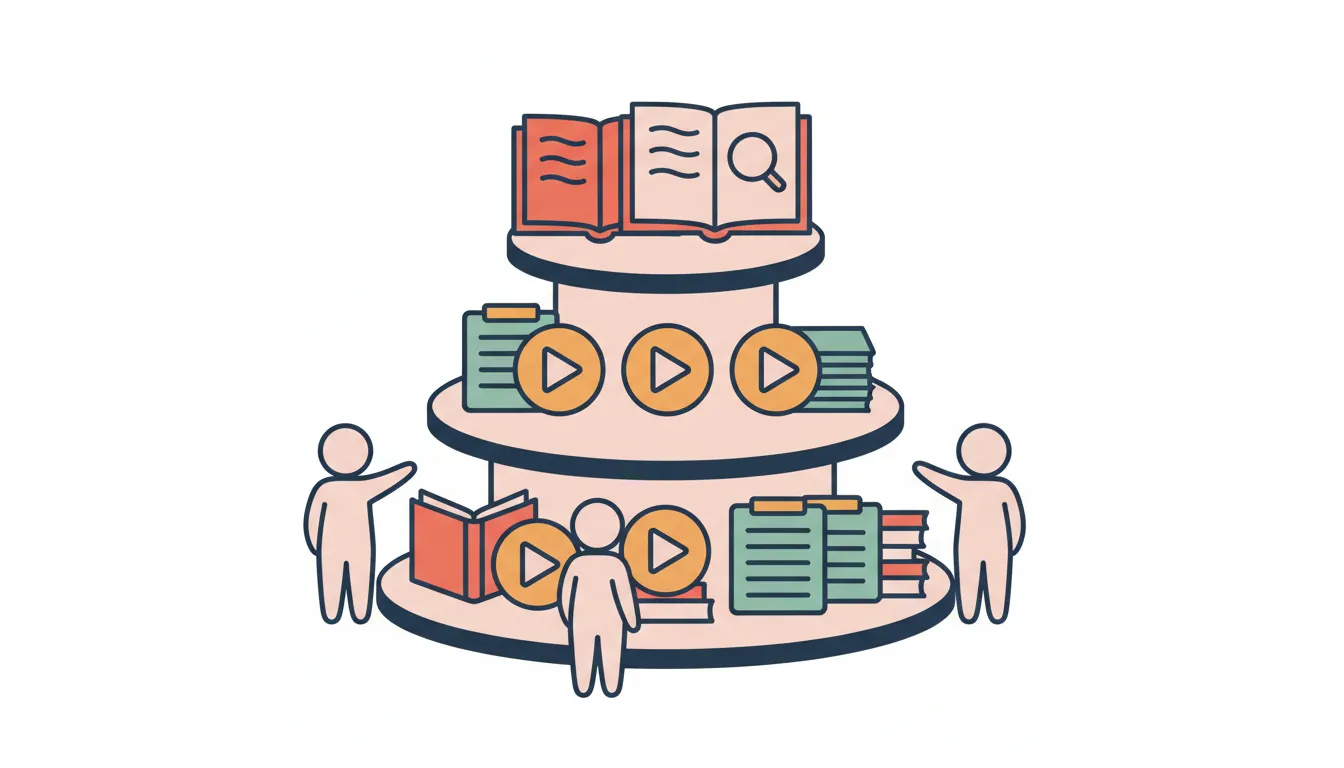
ESL Brains’ library contains 1,000+ video-based lesson plans covering levels A1 to C2, with roughly 17 new lessons added every month. Each lesson is available as a printable PDF and an interactive e-lesson format for flexible teaching.
Perfect starting lessons for new A1 classes
Begin with lessons that teach the language students need immediately in class and for basic introductions. These create confidence and establish useful communication patterns from day one.
This first lesson for A1 students covers essential classroom language alongside personal introductions. Students learn to ask for help, spell names, and give basic personal information — the survival skills they need in every subsequent lesson.
The lesson uses authentic video of real introductions rather than scripted dialogues, giving students exposure to natural pronunciation and interaction patterns they’ll encounter outside class.
Build on this foundation with this question formation lesson that teaches students to ask ‘Are you…?’ and ‘Where are you from?’ questions. These structures let them initiate conversations rather than just responding.
Essential everyday vocabulary lessons
Focus on vocabulary sets that adults use constantly — food for social situations and shopping, weather for daily conversation, clothes for describing people and situations, and transport for navigation.
This weather vocabulary lesson teaches students to describe current conditions and talk about weather preferences through authentic video clips. The vocabulary immediately enables small talk with colleagues and neighbours.
Follow with this clothes vocabulary lesson that connects clothing words to personal style and appropriate dress for different situations. Students learn practical vocabulary while discussing their own preferences.
Round out essential vocabulary with this neighbourhood vocabulary lesson that teaches places in town through authentic descriptions of local areas. Students practise giving directions and describing their own neighbourhoods.
Foundation grammar through real contexts
Teach A1 grammar through contexts that matter to adults — talking about work routines, describing abilities for job situations, and asking questions that build relationships.
The verb ‘to be’ lesson teaches positive forms through talking about friends and family relationships. Students learn the grammar while sharing personally meaningful information.
Progress to this modal verbs lesson that teaches abilities through authentic video of people demonstrating talents. The grammar serves immediate communication needs in job interviews and social situations.
| Lesson Title | Level | Type | Duration | Focus | Plan Required |
|---|---|---|---|---|---|
| What’s your name? (first lesson for A1 students) | A1 | Standard Lesson | 60 min | Vocabulary - classroom language | Premium |
| What’s your favourite food? | A1 | Standard Lesson | 60 min | Vocabulary - talking about food | Premium |
| What’s the weather like? | A1 | Standard Lesson | 60 min | Vocabulary - basic weather words | Premium |
| They’re my friends (‘to be’ positive) | A1 | Standard Lesson | 60 min | Grammar - ‘to be’ positive | Unlimited |
| Are you American? (‘to be’ questions) | A1 | Standard Lesson | 60 min | Grammar - questions with ‘be’ | Unlimited |
| A day in the life (Present Simple affirmative) | A1 | Standard Lesson | 60 min | Grammar - Present Simple affirmative | Unlimited |
| Dress or jeans: clothes we wear | A1 | Standard Lesson | 60 min | Vocabulary - clothes | Unlimited |
| In my neighbourhood | A1 | Standard Lesson | 60 min | Vocabulary - places in town | Premium |
| Do you often take the bus to work? | A1 | Standard Lesson | 60 min | Vocabulary - transport | Premium |
| Show your talent! (can, can’t) | A1 | Standard Lesson | 60 min | Grammar - can and can’t | Premium |
Frequently Asked Questions
What is A1 level in English?
A1 is the beginner level on the CEFR scale where learners can understand and use familiar everyday expressions and basic phrases. Students can introduce themselves, ask simple questions about personal details, and interact in a basic way when others speak slowly and clearly.
How long should an A1 English lesson be?
Most A1 lessons work best at 60 minutes, giving enough time for vocabulary introduction, video comprehension, controlled practice, and speaking activities. Shorter 45-minute lessons can work but may require cutting some practice activities.
What are good speaking activities for A1 ESL students?
Effective A1 speaking activities include simple information gaps, basic role-plays like ordering food, describing pictures using target vocabulary, and asking personal questions with sentence starters provided for support.
How do I teach beginner ESL students?
Use lots of visual support, speak slowly and clearly, pre-teach vocabulary before activities, provide sentence frames for speaking tasks, and focus on high-frequency words that students can use immediately in real life.
What topics should I cover at A1 level?
Essential A1 topics include personal information, family, food and drink, weather, clothes, daily routines, hobbies, and places in town. Choose topics that adults encounter regularly and can practice outside class.
Ready to start teaching with one of these carefully designed A1 lessons? Open this lesson on food vocabulary — a complete 60-minute video-based lesson that builds essential vocabulary through authentic material. Perfect for new A1 classes, this Premium Plan lesson includes both printable PDFs and interactive e-lesson format for flexible teaching.